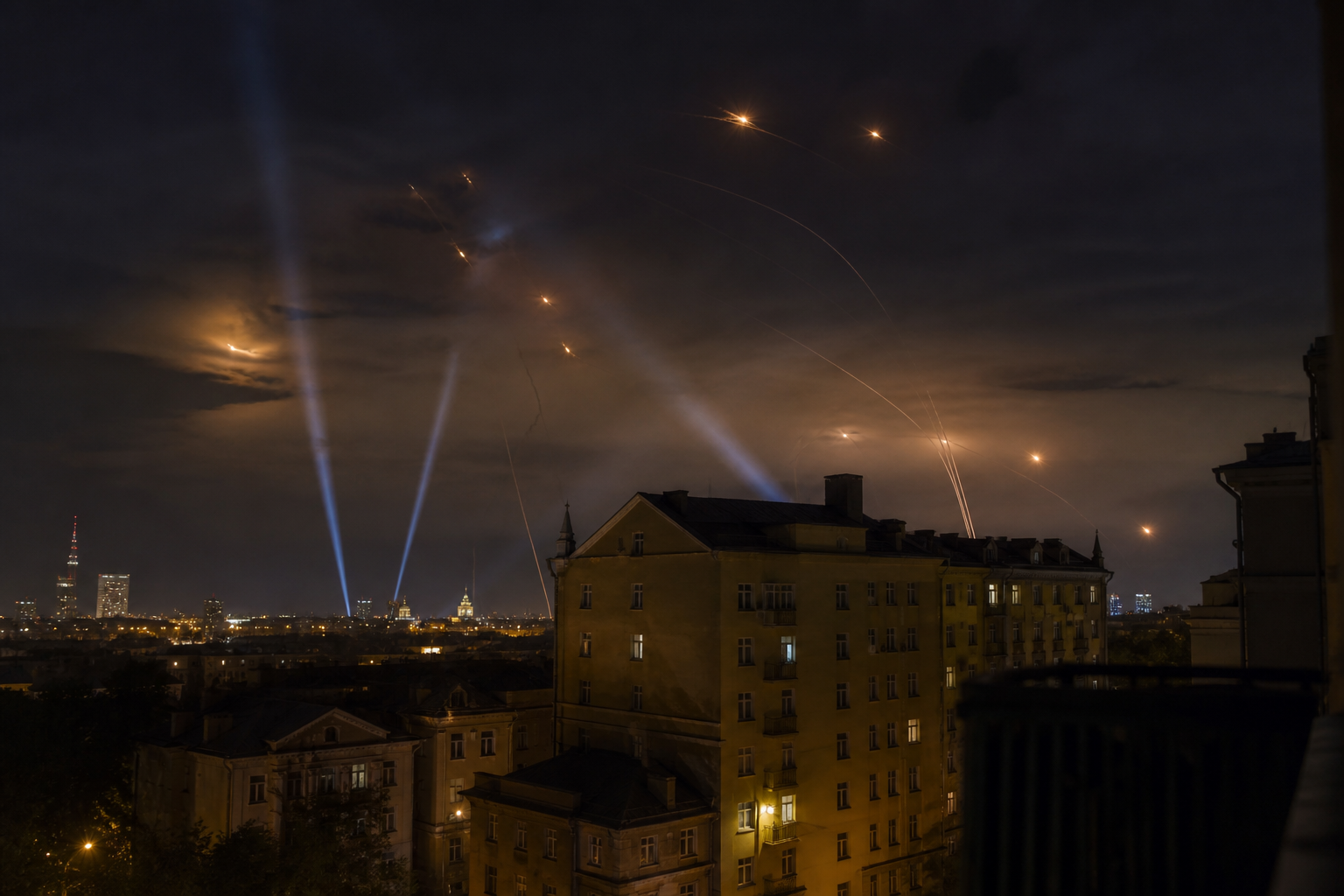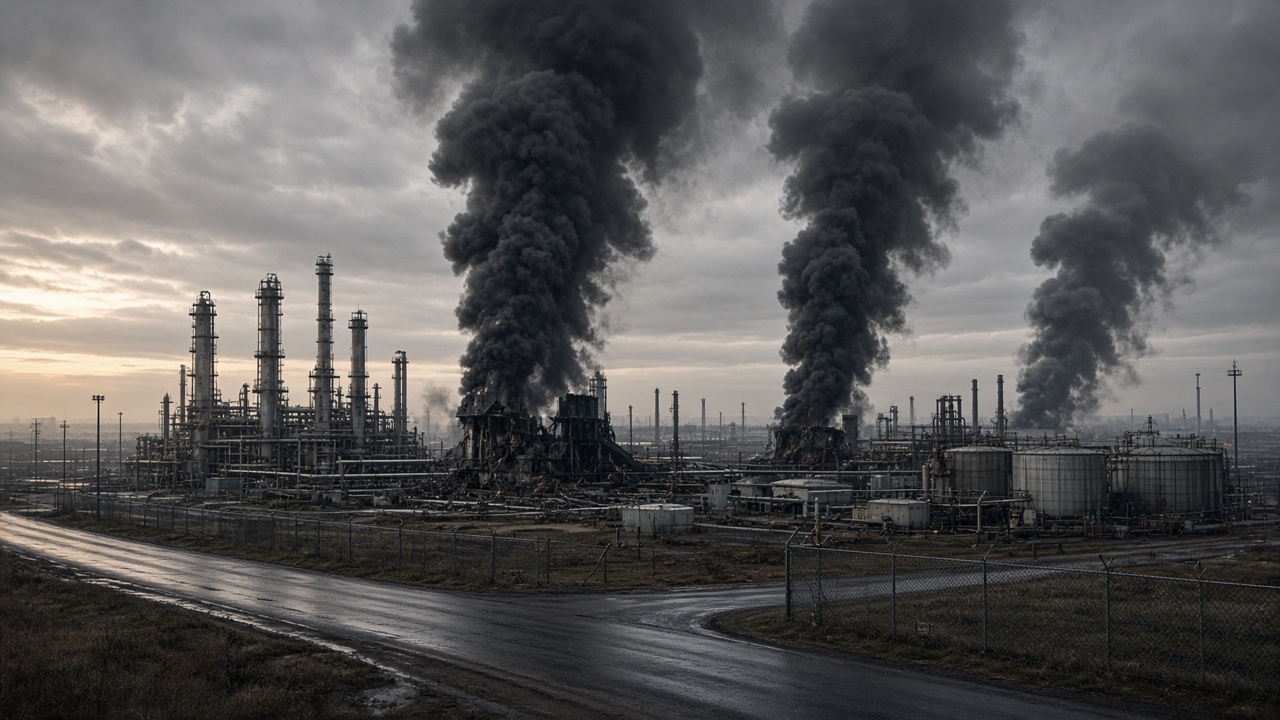
MOSCOW / KYIV — September 21, 2026. Ukraine hit the Russian capital with what Moscow Mayor Sergei Sobyanin called an “unprecedented” drone assault Saturday night, saying some four hundred fifty unmanned aircraft approached the city in an attack he claimed was planned to disrupt State Duma elections — even as fires broke out at the Moscow Refinery and damage spread to a nearby power station, warehouse and market, with residential areas and eleven suburban towns also reporting impacts on the final day of Russia’s three-day wartime parliamentary vote.
Sobyanin insisted the “enemy did not succeed” in derailing the ballot, framing the intercept effort as proof that the capital could vote under fire. Moscow Region Governor Andrei Vorobyov reported two dead and twenty injured, including three children. Russia’s Defense Ministry claimed one thousand one hundred ten drones were downed nationwide in the broader defensive tally — a figure that, if accurate, would mark one of the densest Ukrainian salvos of the war and that Ukrainian officials have not independently confirmed in matching detail. Airports around the capital were grounded as air defenses worked the approaches and debris fell across the metropolitan ring.
Ukrainian President Volodymyr Zelenskyy described the campaign as a mix of domestic drones and cruise missiles aimed at facilities that earn billions for Russia’s war machine. He said an energy de-escalation plan remains “on the table” and needs political will — a line that sits awkwardly beside earlier U.S. claims that both sides had agreed to halt energy strikes. In practice, both sides continued hitting energy and industrial targets, and Saturday’s refinery fire in Moscow made the gap between announced restraint and battlefield behavior impossible to ignore. For Kyiv, striking a capital refinery on election weekend is attrition and messaging at once: show Russians that the war’s cost reaches the ring road, not only the front.
The political calendar sharpened the blow. The State Duma’s three-day vote was closing Sunday after balloting across eleven time zones and in occupied Ukrainian territory Moscow claims to have annexed. Noon turnout stood near forty-eight percent. Yabloko, the last explicitly anti-war party, remained barred. With protests banned and opposition sidelined, the Kremlin sought a managed mandate; Kyiv sought to puncture the narrative that wartime voting proceeds in calm. Irish Times coverage of the capital strike and related reporting placed the Moscow wave inside a weekend of Ukrainian mass drone use that Russian officials tried to absorb as election theater rather than strategic shock.
Russia answered with its own bloodshed in Ukraine. A Russian strike on Kyiv killed a mother and two children, and a vehicle-borne drone attack in Sumy killed four, Ukrainian officials said — reminders that the reciprocal campaign does not pause for Duma ballots. Separate overnight tallies of Russian drones fired into Ukraine belong to a distinct reporting window and should not be collapsed into Sobyanin’s four-hundred-fifty capital figure; the Moscow assault and Russia’s subsequent packages are sequential pressure, not a single spreadsheet.
What Saturday night measured is leverage over a closing wartime vote. For Moscow, intercept claims, grounded flights and “enemy did not succeed” language are meant to show the state can finish a Duma election under the densest capital drone wave it has publicly described. For Kyiv, a burning refinery, suburban casualties and grounded airports are meant to make the war audible inside the capital on the ballot’s last day. Until energy de-escalation moves from Zelenskyy’s “on the table” phrase into verified mutual restraint, Moscow’s sky and Ukraine’s cities will keep trading the same currency: drones, debris and political narratives built on top of the fires.