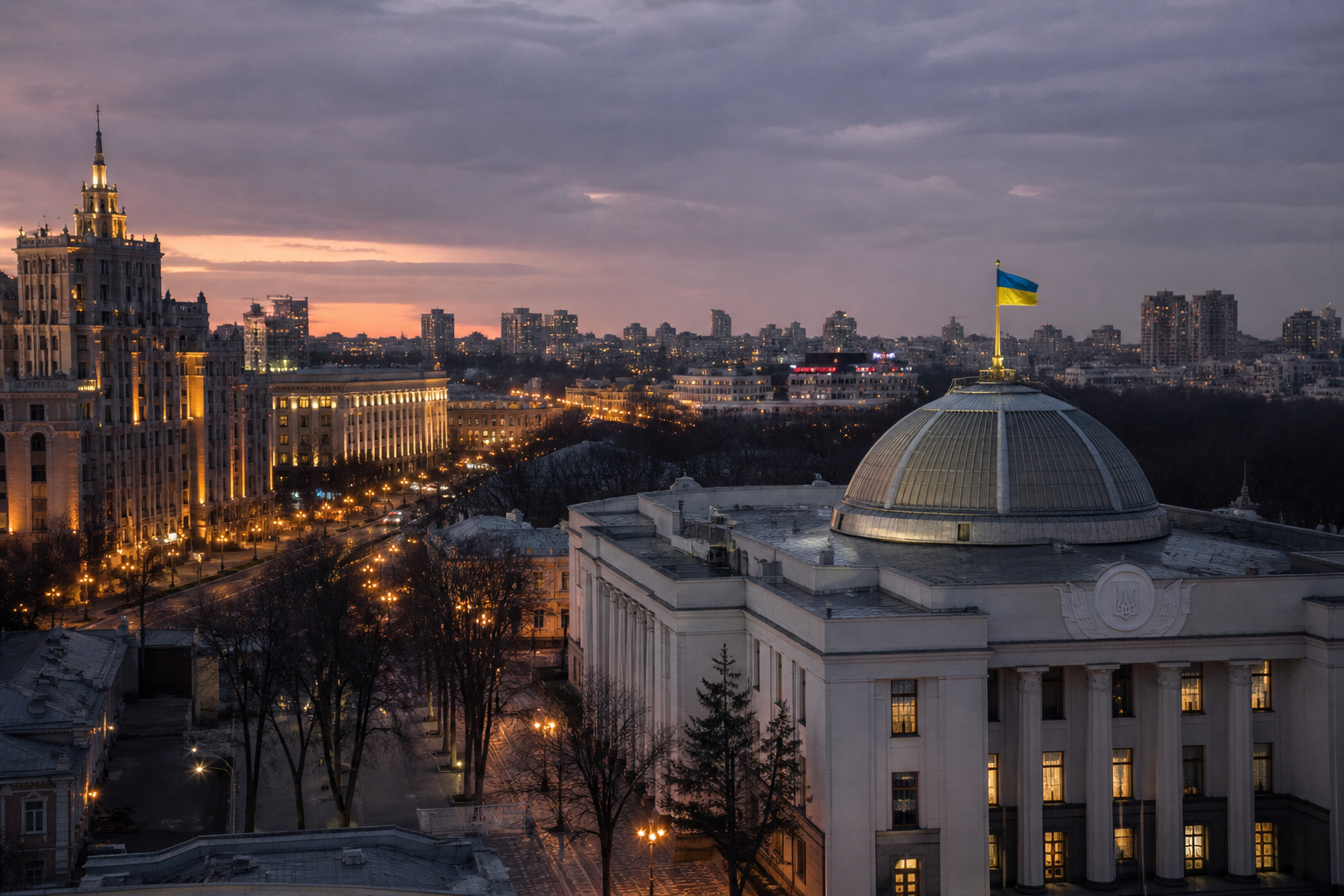
MOSCOW / KYIV — September 18, 2026. Ukraine opened Russia’s first wartime State Duma election with a night of mass drone strikes that Moscow Mayor Sergei Sobyanin said sent more than 350 unmanned aircraft toward the capital, even as polls began across eleven time zones and in occupied parts of Ukraine for a three-day ballot that excludes every anti-war party.
Sobyanin reported on social media that most of the drones launched overnight were destroyed on distant defensive lines, with sixty-four intercepted as they approached Moscow itself. Russia’s Defense Ministry went further, claiming air defenses downed six hundred twenty-nine Ukrainian drones across Russia and Crimea between Thursday evening and Friday morning — a figure that, if accurate, would mark one of the densest single-night Ukrainian salvos of the war. Ukrainian President Volodymyr Zelenskyy separately said Ukrainian forces struck the Yaroslavl oil refinery and damaged aircraft and helicopters at a military airfield in Rostov, while claiming “good results” in the Black Sea without elaborating.
The timing was deliberate politics as much as attrition. Voting for the four hundred fifty seats of the State Duma opened Friday in the Far East and will run through Sunday evening, the first parliamentary election since President Vladimir Putin ordered the full-scale invasion in February 2022. Only parties that back the war were allowed onto the ballot; Yabloko, the last explicitly anti-war formation, was barred in August. Balloting is also being staged in Russian-occupied Ukrainian territory that Moscow claims to have annexed. With protests banned and opposition sidelined, the Kremlin is seeking a managed mandate rather than a contest — and Kyiv is trying to make Russians feel the war’s cost on the very days that mandate is cast.
Disruption followed the drones inland. Sochi Mayor Andrei Proshunin said election workers and voters were ordered into shelters Friday morning after an air-raid alert paused polling in the Black Sea resort. Central Election Commission chair Ella Pamfilova told reporters of “small incidents”: one Krasnodar-region station was relocated after drone damage shattered its windows, and fourteen stations in occupied Luhansk briefly lost power when energy infrastructure was hit before switching to backup generators. Pamfilova had already warned of mobile-internet blackouts used to blind drone guidance and insisted such measures were “no reason to cancel the vote.” Moscow’s election authorities separately claimed cyberattacks on remote electronic voting while independent outlets reported terminal failures that could not be independently confirmed.
Russia answered with its own strikes. The Defense Ministry said it hit a Nova Poshta logistics hub near Odesa and a cargo vessel at Chornomorsk, framing both as military targets. Kyiv-region Governor Tymur Tkachenko reported a Friday morning drone attack that injured five people, including three children. Ukrainian officials also reported deaths and damage elsewhere as the mutual attrition campaign continued beneath the election spectacle.
What the barrage measures is leverage over a managed vote. For Moscow, intercept claims and shelter orders are meant to show the state can hold an election under fire while United Russia still dominates the outcome. For Kyiv, hitting refineries, airfields and the approaches to Moscow on day one of Duma voting is meant to puncture the narrative that the war is distant and under control. For voters in Sochi shelters and Luhansk stations on generators, the practical reality is simpler: the first wartime parliamentary ballot opened under air-raid alerts, and the drones arrived before the ballots were counted.