China’s Air Drones: GJ-11, Jiutian Mothership, Swarm Claims
China’s unmanned air fleet: the GJ-11 flying wing, parade wingmen, the Jiutian swarm mothership and WZ-7 flights near Taiwan, with unverified claims flagged.

According to the open-source reporting cited below, China is showing more kinds of uncrewed aircraft than any other country: a stealthy flying-wing strike drone, fighter-sized “unmanned air dominance” designs, a 16-tonne drone mothership and truck-launched swarms. Much of it comes from parades, airshows and state television, so claims often run ahead of verified service. This report, current to 3 October 2026, separates what analysts have seen from what Beijing says, and why it matters across the Taiwan Strait.
At a glance
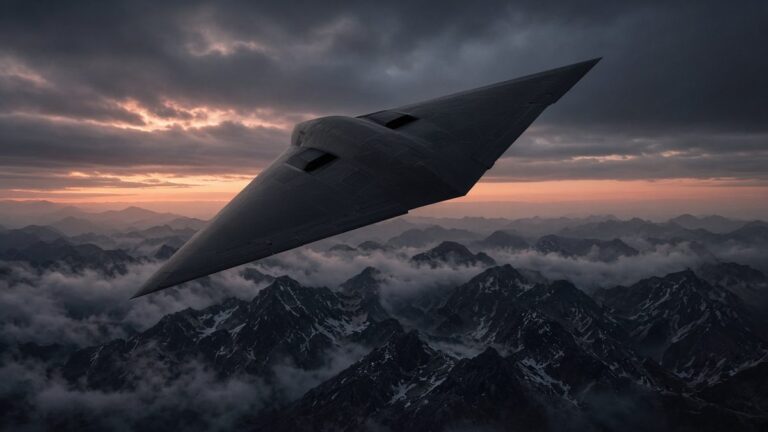
- GJ-11: the flying-wing strike drone, named “Mysterious Dragon”, has been filmed flying with a J-20 stealth fighter (The War Zone).
- Jiutian: AVIC’s heavy drone first flew on 11 December 2025; swarm release is a design aim, not a demonstrated capability.
- Swarms: state media says one system launches 48 drones and controls up to 96. That is an official claim.

The parade drones: what was shown and what is known
The 3 September 2025 Victory Day parade had a large unmanned contingent. Asian Military Review counted two known types, the GJ-11 flying wing and the GJ-2 Wing Loong, plus four new air combat drones (Asian Military Review). Two were tailless, single-engine, fighter-like designs that the parade commentator called “unmanned air dominance fighters”; analysts put the longer one at more than 16 metres, comparable to a J-10. The other two were billed as “loyal wingman” aircraft, closer to the U.S. collaborative combat aircraft idea.
The caveats are large. The designations, makers and development stages of the fighter-like pair are unknown, and it is unclear whether they would fly with crewed jets, be remotely piloted or act autonomously. Some observers suspect real aircraft, since serial numbers point to a Western Theatre Command unit.
GJ-11: from prototype to possible service
The GJ-11 is the best-documented of the group. The War Zone traces a first prototype flight in 2013, a stealthier mock-up in 2019 and regular flying at the Malan test base in Xinjiang. Satellite images showed three at Shigatse Air Base in Tibet from 6 August to 5 September 2025, read as operational testing at least. In November 2025 the PLA Air Force released video of it flying with a J-20 and a J-16D electronic-warfare jet, and named it Mysterious Dragon (The War Zone).
Service entry is unclear. The War Zone said the video alone could not show operational use, yet a month later reported that the PLA had announced the GJ-11 in operational service (The War Zone). Treat that as a Chinese announcement, not an independent finding. A naval version, GJ-21, has appeared in unofficial images with a tail hook.
| System | What sources say | Status / caveat |
|---|---|---|
| GJ-11 “Mysterious Dragon” | Stealthy flying wing for strike and ISR; shown with J-20 and J-16D | Tested at Malan, seen at Shigatse; service claim is Chinese |
| Parade “air dominance” pair | Tailless, single-engine, fighter-sized | Maker and designation unknown; never seen flying before the parade |
| Parade “loyal wingman” pair | Smaller CCA-style drones | Roles unknown; possible mock-ups |
| Jiutian (SS-UAV) | 16 t, 6 t payload, 12 h endurance per AVIC | First flight 11 Dec 2025; swarm release not shown |
| Atlas / Swarm-2 | 48 drones per launcher, 96 per command vehicle, per state media | Demonstration reported by CCTV; no independent check |
| WZ-7 “Soaring Dragon” | High-altitude reconnaissance jet drone | Overflew Pratas on 17 Jan 2026, per Taiwan |
Jiutian and the swarm claims
AVIC says Jiutian weighs 16 tonnes at takeoff, carries up to 6,000 kg, flies 12 hours, has a 7,000 km ferry range and a 15,000 metre ceiling (The War Zone). That dwarfs the Wing Loong 10 (about 3.5 tonnes) and an extended-range MQ-9 (just under six). Chinese state media confirmed that its modular bay, shown at Zhuhai in 2024, is meant for swarm launch, and it has been displayed with PL-12 air-to-air missiles, TL-17 cruise missiles and guided bombs on underwing pylons. All figures are the manufacturer’s, and none of the sources I reviewed reports an actual mass release of drones from it.
Separately, on 25 March 2026 CCTV aired what Global Times called the first full-process demonstration of the Atlas swarm system. Per that report, a Swarm-2 vehicle carrying a CETC logo launches 48 fixed-wing drones, one every three seconds, and a command vehicle can direct up to 96; in the test the swarm picked out a command vehicle among three look-alike targets and struck it (Global Times). That is state media describing a state-run test.
Reconnaissance near Taiwan and the commercial base
The most concrete Strait-area evidence involves the WZ-7. On 17 January 2026 a Chinese WZ-7 flew for four minutes through the airspace above the Pratas Islands, which Taiwan’s defence ministry said was the first PLA overflight of the island, according to retired U.S. Air Force officer Guermantes Lailari writing in the Taipei Times. He argues, as opinion, that Beijing is building a legal precedent. Pratas lies about 440 km from Taiwan’s southern tip, near the southern entrance of the Taiwan Strait (Taipei Times). Track daily PLA activity in our Taiwan and China news hub.
The commercial side is now a U.S. policy fight. DJI says it was added to the FCC’s Covered List in December 2025, which blocks new models. On 21 July 2026 the FCC sought comment on also banning imports and sales of certain “military-grade” foreign drones, including thermal, LiDAR, spraying, docking-station and 55-pound-plus models. DJI says it makes no military equipment; the FCC has not adopted the proposal, and drones already owned would be unaffected (DroneLife).
Why it matters
Analysis: the strongest signal is breadth and pace. The War Zone notes that Chinese firms have taken many designs to first flight and are investing heavily in flying wings. If some parade types reach service, the PLA gains aircraft that can be risked early in a crisis and sent in numbers. The War Zone says a swarm carrier near ships or island outposts would be a hard defensive problem.
Counterweight: parade displays are not units in service, and a staged swarm test says little about jamming, weather or losses.
What to watch: any real swarm release from Jiutian, confirmed GJ-11 basing, the parade fighters flying, and the FCC’s final drone rules.
Takeaway: China is building the broadest uncrewed air fleet on show, but the verified part is still smaller than the displayed part.
Related coverage
- Taiwan and China news hub
- Taiwan Begins MQ-9B SkyGuardian Flight Tests
- PrSM Missile: $1.2B Army Order, Iran Debut and Pacific Role
- Series: China’s ground robots and China’s sea drones
Sources
- The War Zone, China’s Stealthy GJ-11 ’Mysterious Dragon’ Soars Out Of The Shadows, 11 November 2025.
- The War Zone, China’s High-Flying Swarm Mothership Drone Has Flown, 11 December 2025.
- Asian Military Review, New UCAVs in parade illustrate Chinese airpower developments, 5 September 2025.
- Global Times, China unveils full-process demonstration of Atlas drone swarm operations system, 25 March 2026 (state media).
- Taipei Times, Guermantes Lailari On Taiwan: Chinese Drone Overflies Taiwan’s Airspace, 2 February 2026 (opinion).
- DroneLife, DJI Warns FCC Drone Restrictions Could Impact Commercial Models, 10 August 2026.