PrSM Missile: $1.2B Army Order, Iran Debut and Pacific Role
The Army’s $1.2 billion PrSM Increment 2 order follows the missile’s Iran-war debut, a disputed strike and stockpile gaps, as it turns toward ship-hunting.
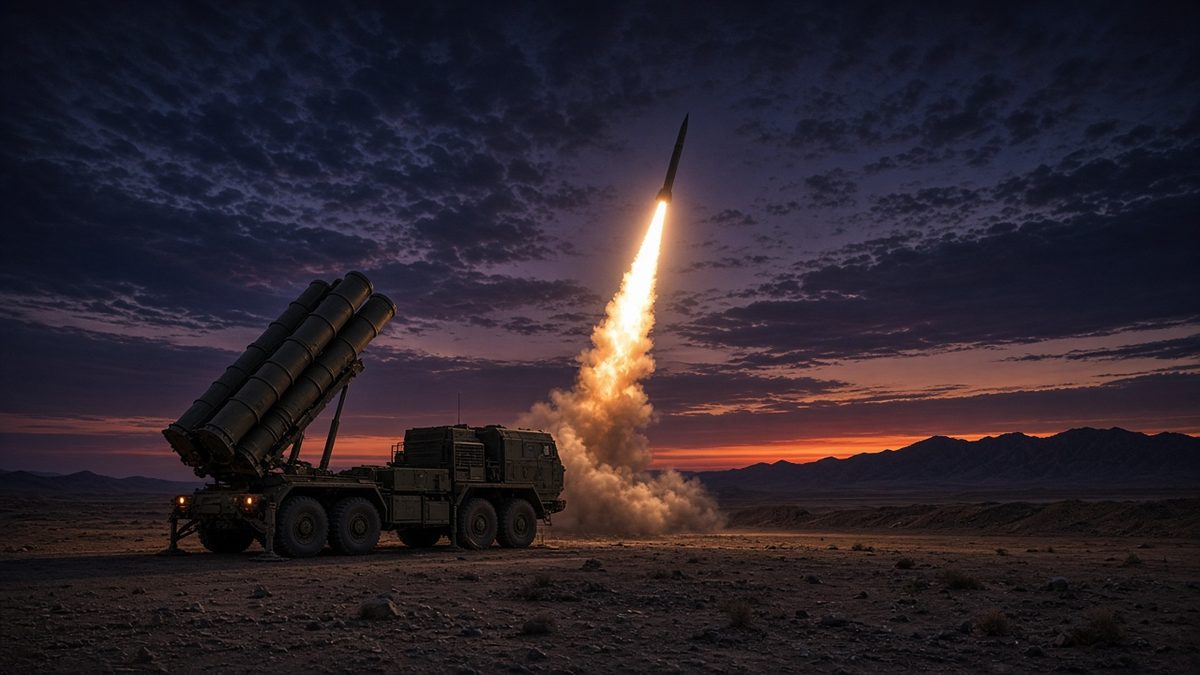
On 21 September 2026 the U.S. Army committed up to $1.2 billion to put the next version of its newest long-range missile into production. The Precision Strike Missile, or PrSM, is a Lockheed Martin ballistic missile meant to replace the Cold War-era ATACMS. The award arrives at an awkward moment. The weapon saw its first combat this year in the Iran war, outside investigators have linked it to a strike that killed civilians, and an Army official says the service used up its inventory early. Meanwhile, the Army is reshaping the missile into a land-based ship hunter.
At a glance
- The deal: an indefinite-delivery, indefinite-quantity contract worth up to $1.2 billion to Lockheed Martin Missiles and Fire Control of Grand Prairie, Texas, for PrSM Increment 2 (U.S. Army).
- The upgrade: a multimode seeker to hit moving land and maritime targets.
- The open questions: a disputed civilian-casualty strike and thin stockpiles.
What the Army actually bought
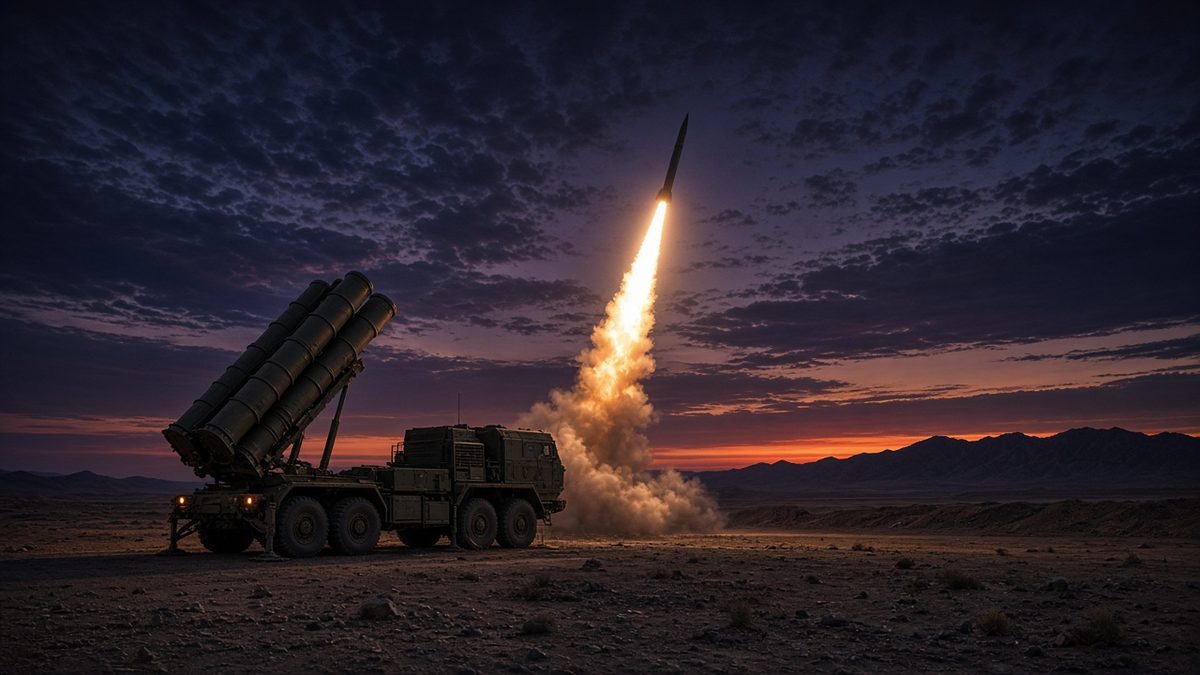
The Army says the award follows a fiscal 2026 flight campaign that validated Increment 2 against moving maritime and relocatable land targets. Lockheed Martin adds that the new version completed its first flight test in March and its second in August, launching from a HIMARS, shedding its protective covers and engaging the target, with more flights scheduled for 2027 (Defense News). Production is therefore being approved while testing continues, and because the contract is valued “up to” $1.2 billion, that figure is a ceiling, not a fixed order.
The seeker is the point. A Congressional Research Service report noted that the Army tested a radio-frequency and imaging-infrared seeker in June 2020, meant for targets “such as ships moving at sea” (CRS).
Key specs
| Item | Detail | Source |
|---|---|---|
| Type | All-weather, surface-to-surface precision-strike ballistic missile | CRS |
| Launchers | HIMARS (M142) and M270 rocket launchers | Defense News |
| Load | Two missiles per launch pod, double the single ATACMS | CRS |
| Range (Increment 1) | About 500 km, against about 300 km for ATACMS | Defense News |
| Increment 2 change | Multimode seeker for moving land and maritime targets | U.S. Army |
| Warhead effect | Airburst; releases tens of thousands of tungsten pellets, per AP | AP via Moneycontrol |
| FY2027 request | 1,134 missiles for about $1.9 billion, roughly $1.7 million each | DefenseScoop |
Combat debut, a disputed strike and an empty magazine
PrSM Increment 1 entered Army service in 2023 and fired in combat in the opening days of Operation Epic Fury, the U.S.-Israeli war on Iran that began on 28 February. Adm. Brad Cooper, head of U.S. Central Command, called one salvo the longest field artillery strike in Army combat history (DefenseScoop).
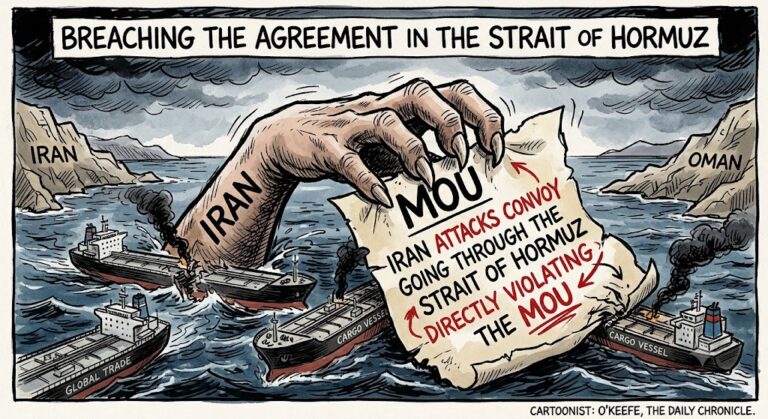
The same opening day produced the weapon’s most serious controversy. Three strikes hit the southern Iranian city of Lamerd, and Iranian officials say at least 21 people were killed. BBC Verify, citing analysts at Janes and McKenzie Intelligence, reported that the munition was likely a PrSM (BBC). An Airwars investigation, independently checked by the Associated Press, found civilians killed as far as 50 metres from the apparent detonation points and damage out to 170 metres; six experts told AP they believed PrSMs struck the city. Neither found reports of military deaths, and the intended target is unclear.
Central Command denies it, saying U.S. forces launched no strikes into Lamerd or within 30 miles that day and that the video shows an Iranian Hoveyzeh cruise missile. Weapons experts told the BBC and AP the footage does not match that missile. These are allegations and counter-claims, not a settled finding.
The supply problem is better documented. In April a representative of the Army Fires Center of Excellence said, “We used up all our PRSM arsenal at the beginning of the war, but we’re already receiving new ones,” and added that the missile was used before finishing its full operational testing (Defence Industry Europe).
Money and production
Washington is trying to buy its way out of the shortage. A March 2026 Pentagon framework with Lockheed, on top of a 2025 contract worth up to $4.9 billion, is meant to quadruple capacity. For fiscal 2027 the Army asks for 1,134 missiles at about $1.9 billion, nearly four times the $546 million Congress provided for 2026, although $692 million of that depends on a future reconciliation bill (DefenseScoop).
The goalposts are also moving. On 29 September the Army chose Anduril, Castelion, Lockheed Martin, Mach Industries and RTX to prototype PrSM Increment 4, an extended-range variant for the Indo-Pacific, with prototypes due in fiscal 2027. The Army wants 1,000 Increment 1 missiles a year between fiscal 2025 and 2032 (USNI News).
Why it matters
The missile was designed with the Indo-Pacific in mind, and analysts have warned that spending it heavily in the Middle East could leave the United States short in that theater (DefenseScoop). Increment 2 sharpens that logic by letting a HIMARS threaten warships. USNI reports that Balikatan 2026 saw at least four HIMARS deployments in and near the Luzon Strait, and that the Army envisions dispersed launchers along the First Island Chain holding vessels at risk in the straits between Japan, Taiwan and the Philippines. In any fight over the Taiwan Strait, that is the intended role.
Retired Marine intelligence officer Hal Kempfer told Military.com that ATACMS is “great against stationary targets, not great at moving targets,” the gap Increment 2 targets. The reality check is quantity: a ship-seeking seeker is only useful if there are enough missiles.
What to watch: the 2027 Increment 2 flight tests, whether Congress funds the 1,134-missile request, and whether the Pentagon ever publishes evidence on Lamerd.
Takeaway: the PrSM is shifting from a replacement for an old artillery missile into the Army’s main land-based answer to China’s navy, but it is being used, questioned and rebuilt in a Middle East war first.
Related coverage
- Key Munition Stockpiles, Production Rates, and Timelines to Rebuild
- Why the U.S. Puts the Indo-Pacific First
- UN Mission Finds Grounds U.S. Committed War Crimes in School Strike
Sources
- U.S. Army, U.S. Army Announces $1.2 Billion Contract for Precision Strike Missile Increment 2 Production, 21 September 2026.
- Defense News, US Army awards Lockheed Martin $1.2B PrSM contract, 22 September 2026.
- USNI News, U.S. Army Picks 5 to Prototype Long-range Maritime Strike Missile, 1 October 2026.
- DefenseScoop, Army looks to quadruple procurement for Precision Strike Missile in 2027, 7 April 2026.
- BBC Verify, Experts dispute US account of deadly Lamerd sports hall strike in Iran, 3 April 2026.