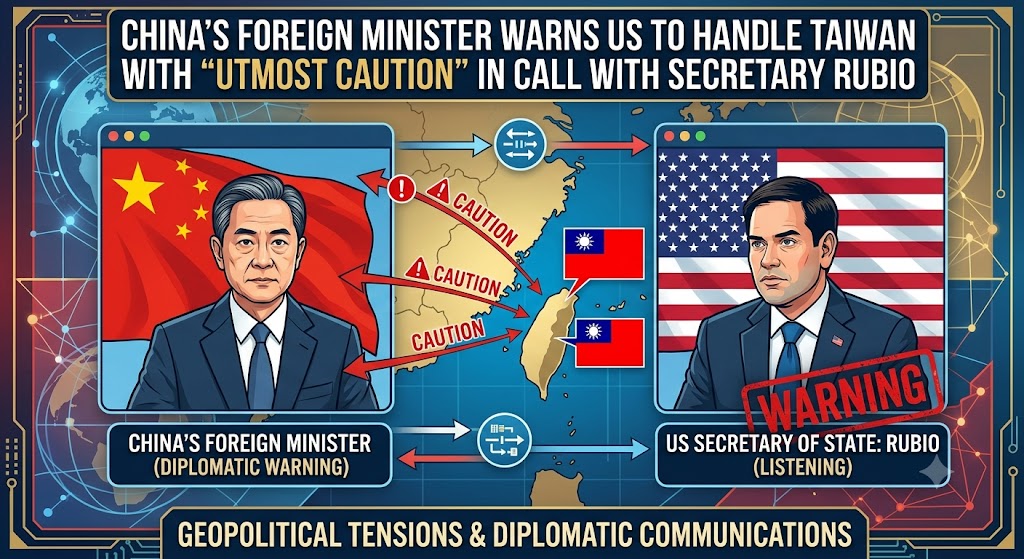
ROME / BEIJING — September 11, 2026. China lodged solemn representations” with Italy and the European Union after Taiwan Vice President Hsiao Bi-khim and Foreign Minister Lin Chia-lung appeared at the Ventotene Conference for Freedom and Democracy on the Italian island of Ventotene, a visit kept quiet until arrival for security reasons. European Parliament Vice President Pina Picierno publicly welcomed the Taiwanese officials and rejected Beijing’s attempt to dictate guest lists. Chinese Foreign Ministry spokeswoman Mao Ning denounced what she called Democratic Progressive Party efforts to seek external support “under the pretext of democracy and freedom,” insisting Taiwan is an inalienable part of China and urging Italy and the EU to honor the one-China principle “with real actions.”
High-level Taiwanese travel to states that recognize Beijing is rare precisely because of this protest cycle. Hsiao’s profile—close U.S. ties, frequent target of Chinese criticism—raises the political cost for hosts even when the format is a democracy forum rather than a bilateral state visit. The secrecy until landing mirrors a broader Taipei practice of shielding senior itineraries after previous interference concerns. For Brussels, the episode lands amid an already fraught China file: trade imbalances, technology controls, and anger over Beijing’s backing of Russia’s war in Ukraine. Supporting Taiwanese democratic participation plays well with European Parliament messaging; absorbing Chinese diplomatic retaliation is a member-state problem Italy now owns in public.
The military backdrop remains steady pressure rather than a single spike: Taiwan’s defense authorities continue to report PLA aircraft and vessel activity around the median line even as the diplomatic fight plays out in Italy. Ventotene will not change formal recognition maps, but it does test whether European capitals will keep hosting Taiwan’s second-highest official when Beijing demands “real actions.” In a week defined by Hormuz diversion counts and Red Sea port seizures, the Taiwan–EU flare is a reminder that great-power competition still has a Pacific and European parliamentary theater running in parallel to the shooting wars.