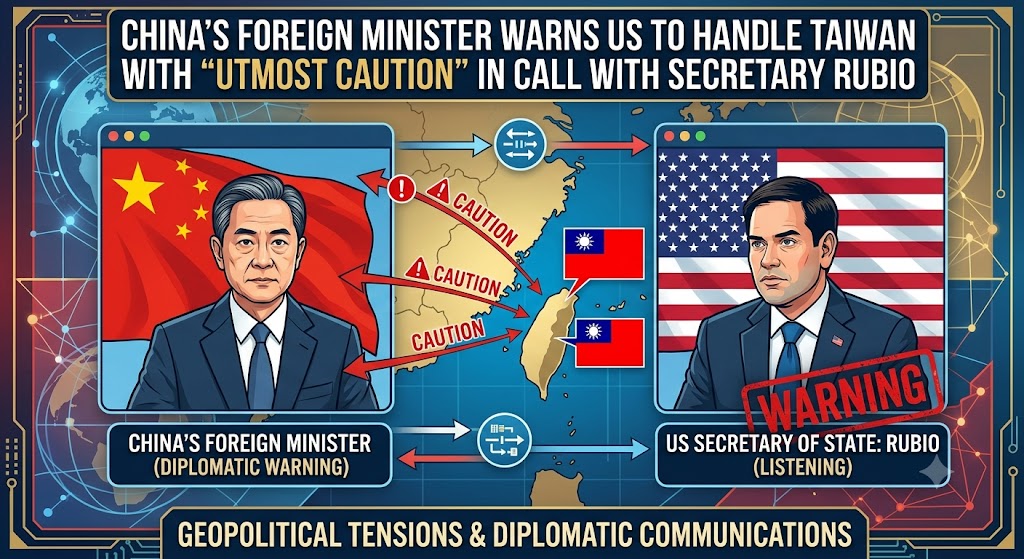
In a fresh reminder of the enduring sensitivities surrounding Taiwan, China’s top diplomat, Foreign Minister Wang Yi, urged the United States to exercise “utmost caution” on Taiwan-related issues during a telephone conversation with U.S. Secretary of State Marco Rubio.
According to a readout from Chinese state broadcaster CCTV, Wang stressed that “the Taiwan question has far-reaching implications” and called on Washington to treat the matter with care. He also framed broader U.S.-China relations as requiring concrete action rather than rhetoric, stating that “building a constructive relationship of strategic stability is not just a slogan; it requires action, moving towards each other and persistent efforts.”
Context of the Diplomatic Exchange:
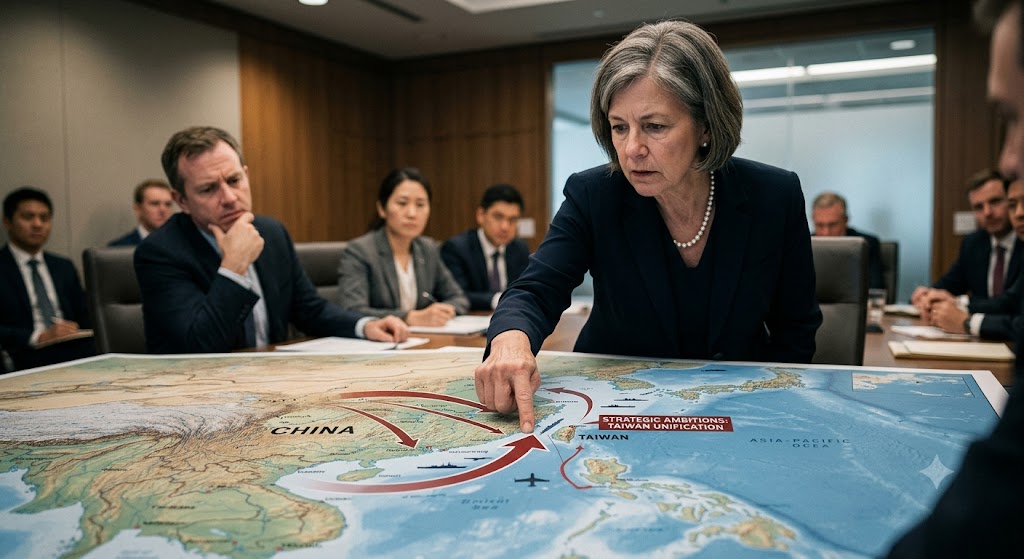
The call comes amid ongoing U.S.-China strategic competition, with Taiwan remaining the most volatile flashpoint. Under the current Trump administration, the U.S. has maintained support for Taiwan’s defense capabilities while navigating a complex bilateral relationship that includes trade, technology restrictions, and regional security concerns in the Indo-Pacific. This latest warning echoes Beijing’s standard diplomatic language on Taiwan, which it considers a core interest and an internal affair. China has repeatedly opposed any moves it perceives as encouraging “Taiwan independence” or strengthening unofficial U.S.-Taiwan ties. The timing aligns with sustained Chinese gray-zone pressure on Taiwan—including frequent military incursions into Taiwan’s Air Defense Identification Zone (ADIZ), naval activities, and political influence operations—alongside U.S. intelligence assessments downplaying the immediacy of a full-scale invasion. (understandingwar.org)
Broader Background
- U.S. Intelligence View: Earlier in 2026, the U.S. Office of the Director of National Intelligence (ODNI) assessed that Chinese leaders do not currently plan an invasion of Taiwan in 2027 and lack a fixed timeline for unification, preferring coercive measures short of war to achieve their goals.
- China’s Response Pattern: In March 2026, Chinese Foreign Ministry spokesperson Lin Jian similarly told the U.S. to “exercise caution” following the ODNI report. Beijing consistently rejects external involvement in what it views as a domestic issue.
- Diplomatic Framing: Wang Yi’s emphasis on mutual effort toward “strategic stability” reflects Beijing’s desire to manage tensions without derailing economic or other bilateral cooperation, while firmly drawing red lines on Taiwan.
ImplicationsThis statement serves multiple purposes for Beijing:
- Signaling Resolve — It reinforces China’s unwavering position that Taiwan is non-negotiable.
- Deterrence — It aims to discourage further U.S. arms sales, high-level contacts, or military support for Taiwan.
- Managing Relations — By pairing the cautionary note with calls for constructive engagement, China seeks to compartmentalize Taiwan from other areas of potential cooperation under the Trump administration.
For the United States, the message underscores the need for careful calibration: supporting Taiwan’s self-defense (consistent with long-standing policy) without crossing perceived Chinese red lines that could escalate tensions. Secretary Rubio, known for a firm stance on China, will likely balance alliance commitments in the Indo-Pacific with efforts to stabilize great-power relations.Taiwan, for its part, continues to bolster its defenses and international partnerships, viewing such diplomatic exchanges as part of Beijing’s broader pressure campaign.
Outlook
Taiwan remains a potential catalyst for U.S.-China conflict, though current assessments suggest Beijing favors sustained coercion over immediate kinetic action. Diplomatic calls like Wang Yi’s highlight the delicate balancing act required by both sides. As military activities around Taiwan persist and great-power competition intensifies, such statements are likely to remain a regular feature of bilateral communication.The full trajectory will depend on actions on the ground—PLA exercises, U.S. policy decisions, and cross-strait dynamics—rather than words alone. Vigilance and clear communication will be essential to prevent miscalculation in one of the world’s most critical geopolitical relationships.