The recent Iranian attacks on commercial shipping in the Strait of Hormuz have once again exposed the limits of air power and sanctions alone. As of July 7–8, 2026, Iran struck at least three tankers transiting this critical chokepoint — including the Marshall Islands-flagged M/T Al Rekayyat, the Saudi-flagged M/T Wedyan (which suffered an oil spill), and the Liberian-flagged M/T Cyprus Prosperity. One vessel caught fire after a drone or projectile strike. (centcom.mil)
In direct response, U.S. Central Command launched precision strikes against more than 80 Iranian targets on July 7, hitting air defense systems, command-and-control nodes, coastal radars, anti-ship missile sites, and over 60 Islamic Revolutionary Guard Corps (IRGC) small boats. President Trump declared the recent Memorandum of Understanding (MoU) to end the 2026 Iran war “over” and a “waste of time,” while warning of further escalation, including potential strikes on infrastructure and even hints at reimposing a blockade or action involving key oil facilities. (aljazeera.com)
These events are not isolated. They fit a clear pattern throughout 2026: repeated Iranian harassment, drone strikes, and seizures of merchant vessels in the Strait of Hormuz and surrounding waters, met by U.S. airstrikes, naval interdictions, and temporary ceasefires that Iran quickly violates. The result is a dangerous cycle that threatens global energy supplies and freedom (whereig.com)
The Strait of Hormuz remains the world’s most vital oil artery. Roughly 20% of global petroleum liquids transit this narrow waterway between Iran and Oman. When Iran attacks tankers or threatens closure, oil prices spike, economies suffer, and seafarers’ lives are endangered. Air strikes can degrade Iranian capabilities temporarily — as seen in the destruction of radars and IRGC boats — but they cannot physically control the waterway or prevent Iran from rebuilding asymmetric threats like fast-attack boats, drones, and mines.History in this conflict shows the pattern clearly. Earlier in 2026, the U.S. imposed a naval blockade, seized Iranian vessels (such as the Touska), and Iran responded by seizing international ships like the MSC-Francesca and Epaminondas. Marines from units like the 31st Marine Expeditionary Unit were already involved in ship seizures and interdictions.
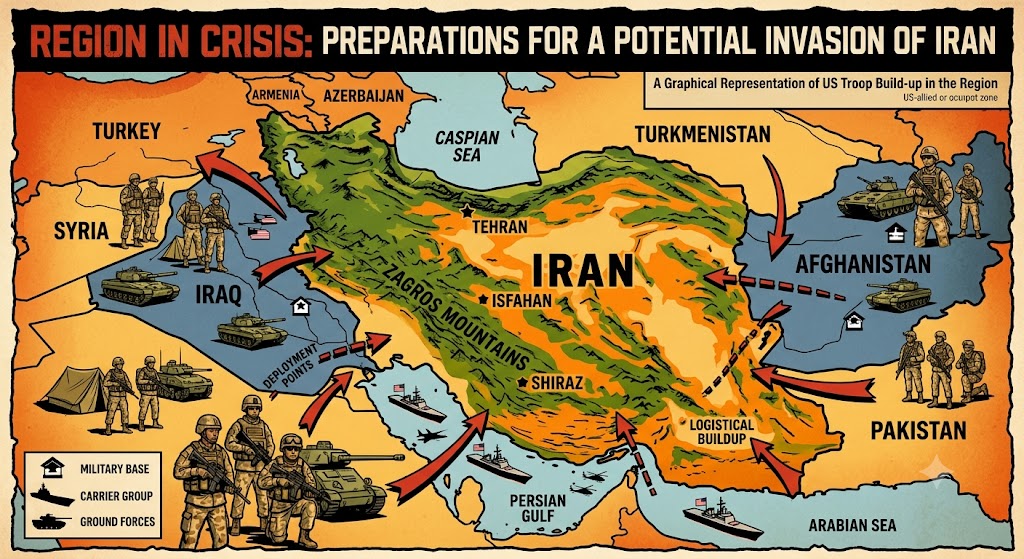
Discussions have long circulated about deploying U.S. forces to secure Iran’s Kharg Island — the country’s primary oil export terminal — or to enforce control over the strait itself. President Trump has repeatedly refused to rule out “boots on the ground,” and troop buildups in the region have continued.Airstrikes and sanctions are useful tools, but they are reactive. Iran has demonstrated it can absorb punishment, rebuild quickly, and resume attacks on shipping. The only way to break this cycle and truly secure the Strait of Hormuz is to establish physical control on the ground at key chokepoints and infrastructure. Limited, targeted deployments — focused on protecting global shipping lanes, securing oil terminals like Kharg Island, and deterring further IRGC aggression — would send an unmistakable message that the United States will not tolerate repeated threats to the world economy.
Critics will warn of quagmires and endless wars. But the alternative — allowing Iran to hold the global oil supply hostage through repeated attacks on civilian vessels — is far more dangerous and costly in the long run. The 2026 conflict has already shown that half-measures prolong the fighting. With the latest ceasefire in ruins and Iran once again targeting tankers, the trajectory is clear.
America will have boots on the ground in Iran. It is not a question of if, but when and how the decision is made. The sooner we recognize that air power and diplomacy have reached their limits against this regime’s aggression, the sooner we can impose a durable solution that protects American interests and global stability.The Strait of Hormuz cannot remain a perpetual battlefield. Ground forces are the missing piece that will finally force Iran to respect international norms — or face the consequences of direct confrontation on its own soil.
This is not warmongering. It is realism in the face of repeated Iranian provocations and the hard lessons of 2026. The time for half-measures is over.