B-21 Raider: Production Ramps Up as Fleet Size Debate Grows
Two B-21 Raiders are flying, a new Utah plant is open and Ellsworth gets the first jet in 2027, while the Pentagon weighs a fleet far bigger than 100.
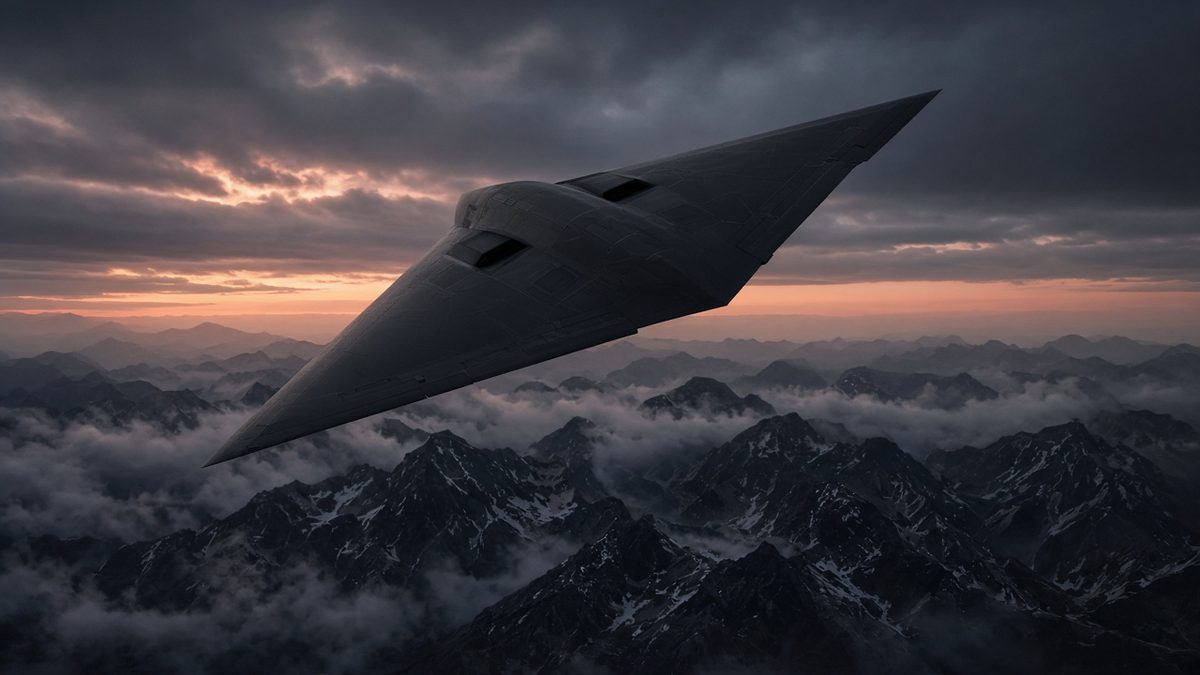
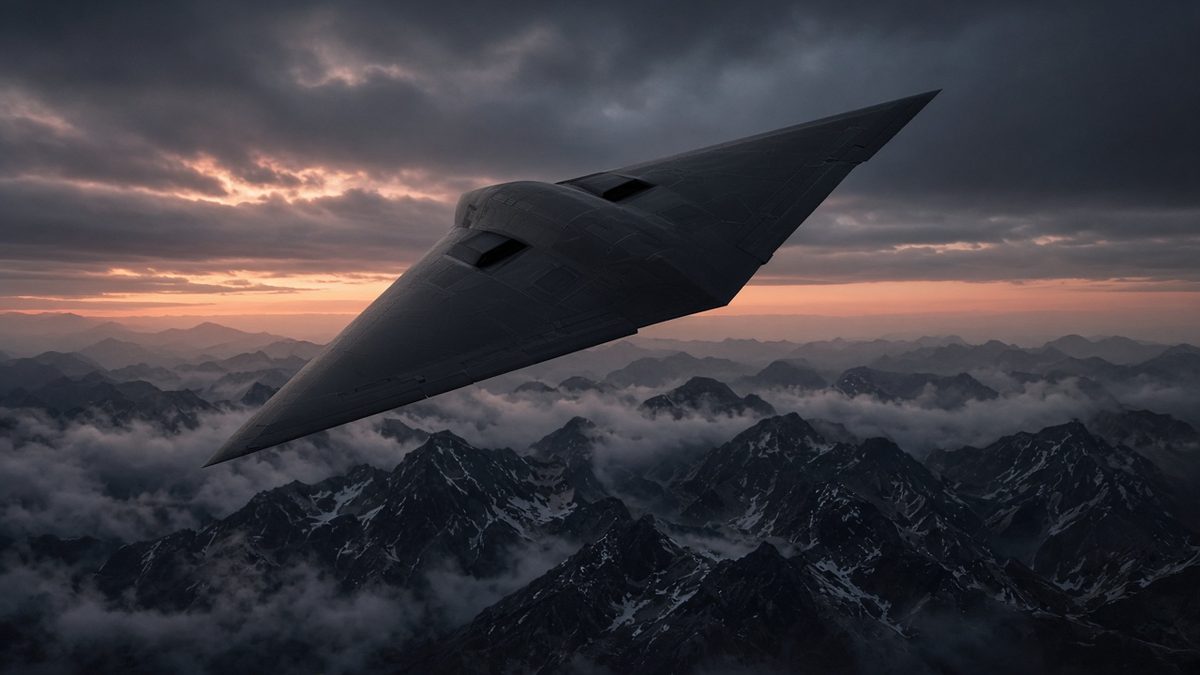
The B-21 Raider has moved from promise to production line. Northrop Grumman’s flying-wing stealth bomber is being tested by two aircraft in California, built at a growing industrial base in Utah and Palmdale, and prepared for its first home in South Dakota. The open question, as the House committee and STRATCOM’s commander have framed it, is how many aircraft the Air Force will buy. The official floor is “at least 100,” yet senior officials are openly talking about much more.
At a glance
- Status: low-rate initial production runs alongside flight testing; two Raiders are flying at Edwards Air Force Base (Army Recognition).
- Next milestone: the first operational aircraft is due at Ellsworth Air Force Base, South Dakota, in 2027.
- Money: the fiscal 2027 request is about $6.1 billion for the program.
- Open question: whether the fleet grows past 100, with STRATCOM’s commander citing 145.
Where the program stands
The first B-21 flew on 10 November 2023, and a second test aircraft arrived at Edwards on 11 September 2025, according to Army Recognition’s program review. That report says a developmental campaign planned for 180 days took 73, and that a 10 March 2026 sortie of 5 hours 33 minutes included a refueling contact with a test tanker. Treat those figures as that outlet’s account rather than an Air Force scorecard.
The service is describing the effort as a success story. Gen. Dale White, who manages critical weapons programs for the Air Force, told an industry event in Dayton on 29 July that the first operational Raiders will be “on the ramp” at Ellsworth in 2027, and called the bomber proof that the service’s acquisition approach “can and will work” (Military Times).
Preparation on the ground has started. On 9 September the Air Force activated B-21 Integration Detachment 1 at Ellsworth to coordinate construction, communications, training, logistics and accreditation. Aerospace and Mechanical Insider stresses that this is a base-readiness step, not proof that a Raider has arrived or been certified, and that no new readiness date was announced (Aerospace and Mechanical Insider). Ellsworth still flies the B-1 Lancer, and later B-21 bases are planned at Whiteman and Dyess.
Key specs and numbers
| Item | Detail | Source |
|---|---|---|
| Maker / user | Northrop Grumman; U.S. Air Force | Air & Space Forces |
| Role | Sixth-generation bomber for conventional and nuclear penetrating strike | Air & Space Forces |
| Crew | Two pilots | Army Recognition |
| Size (estimates) | About 54 ft long, 145 to 155 ft wingspan, versus 69 ft and 172 ft for the B-2 | Army Recognition |
| Weight (estimates) | About 70,000 lb empty, 180,000 lb maximum takeoff, 20,000 lb internal weapons | Army Recognition |
| Planned weapons | LRSO nuclear cruise missile, B61-12 and B61-13 bombs, JASSM-ER and other conventional arms | Army Recognition |
| Production rate | Gradual rise to roughly seven aircraft a year | Military Times |
| Unit cost | Average procurement unit cost of $692 million (FY2022 dollars) for 100 aircraft, including support, not flyaway cost | Army Recognition |
| Final assembly | Air Force Plant 42, Palmdale, California | Air & Space Forces |
Production, cost and the fleet-size fight
In February the Air Force and Northrop agreed to raise production capacity by 25 percent, using $4.5 billion from the 2025 reconciliation law. Northrop opened a new 845,000-square-foot facility, East Gate 3, in Layton, Utah on 9 September. It is meant to support up to 1,500 jobs by 2032, and the company says it has put more than $5 billion into digital and manufacturing infrastructure for the program (Army Recognition). The fiscal 2027 request is $6.109 billion, of which $3.246 billion is for procurement.
Money has not always been smooth. Northrop took a $477 million charge on the B-21 in the first quarter of 2025, tied to production-process changes aimed at building faster. CEO Kathy Warden said on 28 May that it caused some rework, but that the program is “performing exceptionally well” and that Northrop is investing $2.5 billion of its own money in facilities (Air & Space Forces).
The bigger story is fleet size. Defense Secretary Pete Hegseth told lawmakers in April that the Air Force will need “a lot more” than 100. STRATCOM’s Adm. Richard Correll said in March the requirement is 145 and that a second production line is being considered. Lt. Gen. David Tabor said revised numbers will probably appear with the fiscal 2028 budget in spring 2027, and a draft House defense bill would demand a Pentagon report by December 2026 on how many B-21s the nuclear and conventional missions need. The House committee wrote that 100 “may be insufficient” for the National Defense Strategy, a goal unchanged since 2015.
Why it matters
Neither the Air Force nor Northrop names a rival in the sources reviewed here, so this section is analysis, not an official statement. Analysis: The B-21 is built to penetrate defended airspace deep inside an adversary’s territory, the mission that matters most in planning against China and Russia. In a Pacific crisis, whether over the Taiwan Strait or the wider First Island Chain, distance and numbers are the problem. Analysis: The Raider will replace the B-1B and the B-2, and Army Recognition counts only 19 B-2s today, so even 100 Raiders would be a far larger force.
Bombers sit alongside missiles in that planning. The Army’s long-range PrSM is covered in our earlier look at the PrSM missile, and the broader strategic logic is in Why the U.S. Puts the Indo-Pacific First.
What to watch: the first Ellsworth delivery in 2027, the December 2026 fleet-size report, the spring 2027 budget numbers and any sign that the program is slowing under its faster rate.
Takeaway: the B-21 is in production and scaling up; the decision ahead is whether 100 bombers is enough, and STRATCOM’s commander (citing 145) and a House committee (which wrote that 100 “may be insufficient”) have both questioned that number.
Sources
- Army Recognition, Northrop Grumman opens East Gate 3 facility in Utah to accelerate B-21 Raider bomber production, 11 September 2026.
- Air & Space Forces Magazine, Northrop: Faster B-21 Production Allows Air Force to Consider a Bigger Fleet, 28 May 2026.
- Military Times, B-21 Raiders set to be ’on the ramp’ at Ellsworth Air Force Base in 2027, 30 July 2026.
- Aerospace and Mechanical Insider, Air Force Activates Ellsworth Unit for B-21’s Planned 2027 Arrival, 16 September 2026.