M1E3 Abrams: Lighter, Three-Man Tank Heads to Soldier Tests
The Army’s M1E3 Abrams swaps the turbine for hybrid power and an autoloader crew of three. Soldier tests begin this fall, with production possibly in 2027.
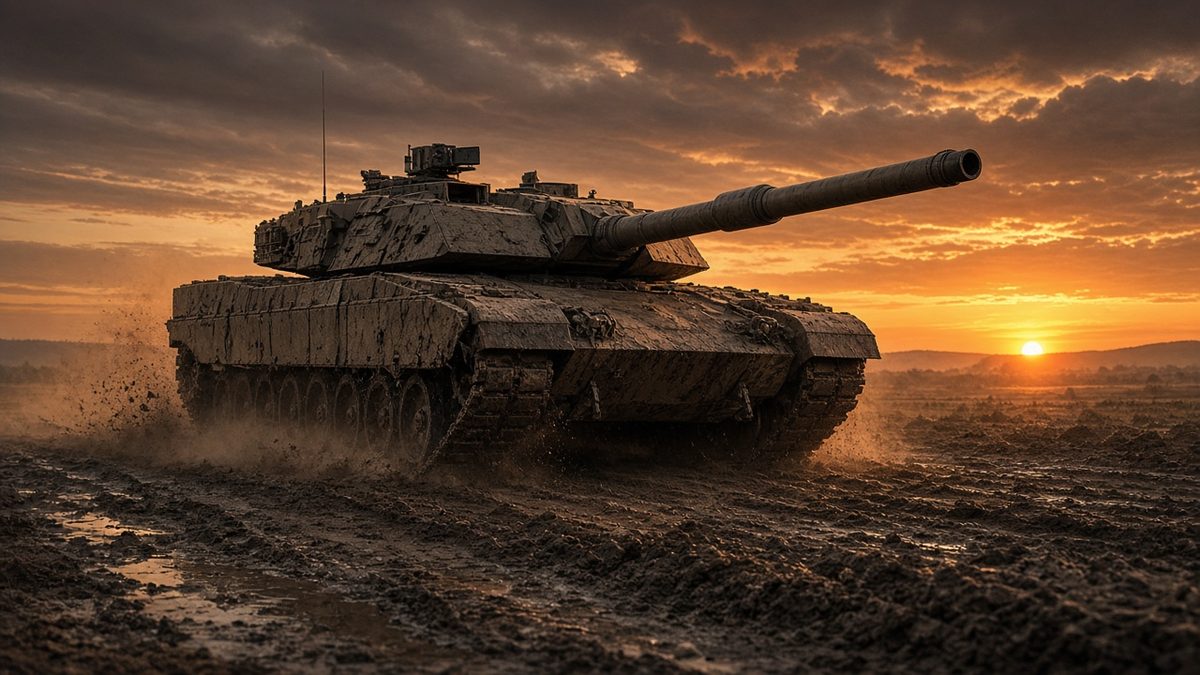
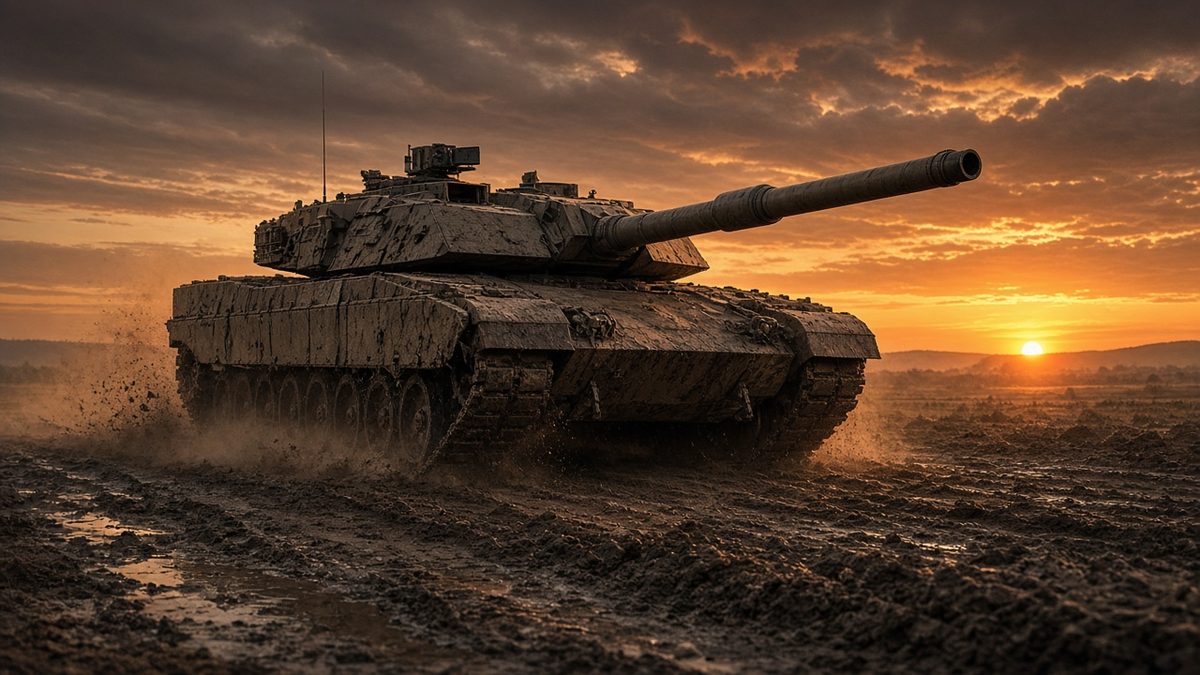
The U.S. Army is rebuilding its main battle tank for the first time in a generation. The M1E3 Abrams, unveiled as an early prototype in Detroit in January 2026, trades the thirsty gas turbine for a hybrid powertrain, moves the crew out of the turret and aims to cut tens of thousands of pounds from a tank that has grown heavier with every upgrade. As of early October, the vehicle is still a prototype: soldier tests are about to start, and the final design may not match what the public has seen.
At a glance
- What it is: a next-generation Abrams that replaces the cancelled M1A2 SEPv4 upgrade (CRS).
- Big changes: hybrid propulsion, unmanned turret, autoloader, three-person crew and an integrated active protection system.
- Timeline: troop tests this fall; the Army’s acquisition chief hopes for production roughly 12 months after testing ends.
Why the Army dropped SEPv4
For years the plan was incremental: build the M1A2 SEPv3 and develop a SEPv4 to follow. On 6 September 2023 the Army instead said it would close out SEPv4 and develop the M1E3. Maj. Gen. Glenn Dean said then that the Abrams “can no longer grow its capabilities without adding weight,” and that the war in Ukraine showed a need for protection “built from within instead of adding on” (CRS).
SEPv3 production continues at a reduced rate until the new tank takes over. CRS notes that the original goal was initial operational capability in 2030, which the Army has since sought to shorten sharply. The Army’s own January announcement stresses a government-owned open systems architecture, so software and hardware can be swapped quickly (U.S. Army).
Key specs
| Item | M1E3 early prototype | Source |
|---|---|---|
| Weight | Army aims for about 60 tons, versus 78 tons for the M1A2 SEPv3 | TWZ |
| Power | Hybrid drive: modified Caterpillar C13D diesel with a SAPA transmission and electric motor | TWZ |
| Fuel | Army officials cite 40 to 50 percent better efficiency | TWZ |
| Crew | Three, seated in the hull; autoloader replaces the loader | TWZ |
| Main gun | Same 120 mm smoothbore as today’s Abrams | TWZ |
| Protection | Version of Iron Fist active protection, designated XM251 | TWZ |
| Secondary | Remote weapon station with 40 mm grenade launcher, 7.62 mm machine gun and Javelin | TWZ |
| Budget | $474 million RDT&E requested for FY2027 | CRS |
Three crew, an autoloader and a game-pad
The most visible break is the turret. In the prototype it is remotely operated, and the crew of three sits low in the front of the hull; TWZ notes that Russian and Chinese tanks have long used autoloaders, while Western armies mostly avoided them. TWZ also observed that the crew layout resembles Russia’s T-14 Armata, which has seen very limited service (TWZ). Program manager Col. Ryan Howell says a young soldier can learn to drive it in 30 seconds, since the driver uses a game-style controller. CRS cautions that the Army has said an autoloader could take extra time to integrate.
Hybrid power matters as much as the crew. Breaking Defense reports the engine cuts fuel requirements by 50 percent, and Col. Todd Hertling, who commands the first brigade to get the tank, called the unmanned turret a “game changer” (Breaking Defense). Fully uncrewed tanks are not part of the plan in these sources; a 2019 Army Science Board study cited by CRS only imagined pairing future tanks with robotic vehicles.
Lessons from Ukraine
The 31 Abrams the United States sent to Ukraine became the case study. In April 2024 the Associated Press reported that Kyiv had pulled them from the front because ubiquitous Russian surveillance and hunter-killer drones made them hard to hide: five of the 31 had been lost already. Adm. Christopher Grady said massed armor is at risk when drones are everywhere, while adding that tanks remain important. A U.S. official also said Ukraine used them only in limited fashion and without full combined-arms tactics (Defense News/AP).
The M1E3 answers with design, not just doctrine: active protection built into the hull rather than bolted on, a crew away from the ammunition, and cameras around the vehicle. TWZ adds that Iron Fist’s maker says the system has some ability to defeat kamikaze drones. That is a capability claim, not proof, and no single system will stop swarms. For wider context, see our Russia-Ukraine war report and special report on Russian hybrid attacks and NATO.
Timeline and what comes next
General Dynamics Land Systems delivered the first prototype in December 2025. According to Breaking Defense, the Army said GDLS will deliver an undisclosed number of prototypes by year-end, and four Roush-built tanks are due at the 1st Armored Brigade Combat Team, 1st Cavalry Division, the “Iron Horse” brigade, later in 2026. CRS says the brigade will then take them to the National Training Center through March 2027.
Brent Ingraham, the Army’s acquisition chief, said in March that production could start within about 12 months of testing finishing, depending on how the tanks perform (TWZ). CRS asks whether the M1E3 will replace Abrams one for one and how long it would take to equip the Army’s 16 armored brigade combat teams, each with 87 tanks.
Why it matters
A tank 18 tons lighter is easier to ship, and the Army says that means faster moves from port to front. That is the practical interest in the Pacific, where heavy armor must cross water, bridges and island ports, whether in a Taiwan Strait contingency or elsewhere; this is analysis, not an Army statement. The larger test is whether three soldiers and a software-defined hull can survive a battlefield full of cheap drones. The Army’s other big modernization bet is covered in our PrSM missile report.
Takeaway: the M1E3 is the Army’s wager that a lighter, smaller-crew, drone-aware Abrams can be fielded quickly, but until the Iron Horse brigade tests it, it remains a prototype.
Sources
- Congressional Research Service, The Army’s M-1E3 Abrams Tank Modernization Program, updated 23 April 2026.
- TWZ, M1E3 Next-Gen Abrams Tank Production Could Begin Next Year, 25 March 2026.
- Breaking Defense, Army’s Iron Horse brigade prepares to test M1E3, XM30 prototypes, 13 August 2026.
- U.S. Army, US Army unveils early Abrams prototype at North American International Auto Show, 16 January 2026.
- Defense News (AP), Ukraine pulls US tanks from front lines over Russian drone threats, 26 April 2024.