Columbia-Class Submarine: 2028 Delivery, Cost and Deterrence
The first Columbia-class missile submarine is tracking to a 2028 delivery after delays, with a $29.5B order for five more boats and a strained workforce.
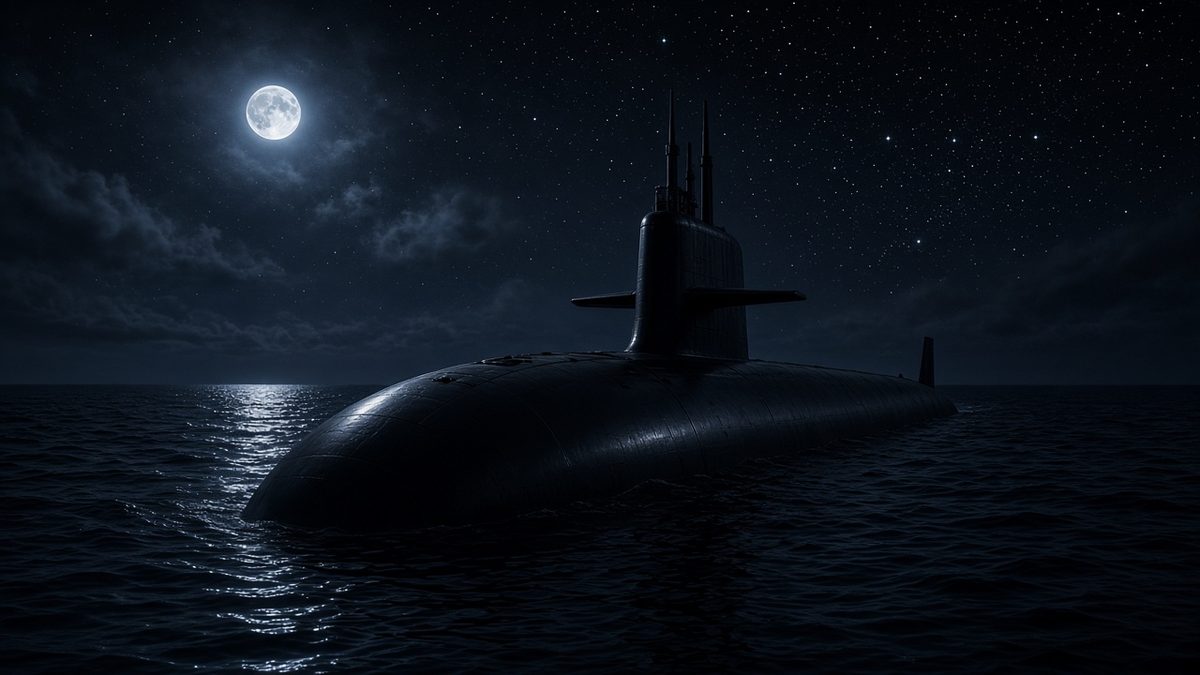
The first Columbia-class ballistic missile submarine, USS District of Columbia (SSBN-826), is now expected to be delivered to the Navy in 2028, a year later than the 2027 date the program was built around. The Navy’s own budget paperwork is less optimistic and points to March 2029. The gap matters because Columbia replaces the aging Ohio-class boats that carry the sea-based leg of the American nuclear deterrent. As of October 2026 the program has a fresh $29.5 billion order for five more submarines and a workforce that still has to grow.
At a glance
- The schedule: General Dynamics says the lead boat is on a path to deliver by the end of 2028; the Navy’s fiscal 2027 budget estimate says March 2029 (USNI News).
- The money: a $29.5 billion contract for five Build II boats, announced 29 July (Breaking Defense).
- Risks the sources cite: shared shipyards, thin suppliers and workforce retention.
Where the lead boat stands
In 2024 the Navy disclosed that workforce and supply-chain problems would delay the lead Columbia by 12 to 16 months (Breaking Defense). Late steam turbines and late bow and stern sections were named as causes, and in April 2025 Rear Adm. Todd Weeks told senators delivery might slip to 2029.
Since then the Navy and its builders, General Dynamics Electric Boat and HII’s Newport News Shipbuilding, ran an acceleration plan to deliver all 26 modules of the lead boat to the Groton, Connecticut, assembly yard by the end of 2025. Weeks said that was achieved. In February he put the boat at about 65 percent complete, with the pressure hull due by the end of 2026, launch in 2027 and delivery in 2028 (USNI News). The second boat, Wisconsin (SSBN-827), was about 35 percent complete and one of only two Navy ships under construction on schedule.
Not everyone is promising too much. Vice Adm. Robert Gaucher, the Pentagon’s first submarine portfolio manager, called a 2028 delivery a “wicked heavy lift” and said the Navy would not chase that date “at the expense of the class,” because a one-per-year rhythm matters more than the first hull.
Key specs and program facts
| Item | Detail | Source |
|---|---|---|
| Builders | Electric Boat builds the central section and does final assembly at Groton; Newport News builds the bow and stern | USNI News |
| Planned fleet | At least 12 boats; the Pentagon is weighing three more | Arms Control Association |
| Missile | Trident II D5, with a second life-extension (D5LE2) meant to last through 2084 | Arms Control Association |
| First patrol | Planned for 2030 | USNI News |
| Cost | Navy now estimates $146 billion in procurement for the class | Arms Control Association |
Cost, contracts and the missile in the tubes
The price keeps climbing. A 2017 Defense Department estimate put development and purchase at $128 billion; the fiscal 2027 request puts procurement alone at $146 billion (Arms Control Association). That request seeks about $15 billion for the Columbia line, including full funding for the fourth boat.
On 29 July the Navy awarded $29.5 billion for five Build II Columbia boats alongside $42.1 billion for nine Block VI Virginia-class attack submarines, which together with $5 billion for shipyard improvements add up to $76.6 billion. Electric Boat’s president, Mark Rayha, said the awards give suppliers the “demand certainty” needed to invest and hire.
The submarine is only half of the system. The Trident II D5 missile can carry up to eight warheads, and the Navy’s D5LE2 life extension, announced in 2019, is meant to keep it flying for 60 more years; the Trident upgrades since 2002 cost at least $61 billion. On land, the Air Force’s Sentinel ICBM is also behind. Its cost reached $141 billion in 2020 dollars after a 2024 breach review, and officials said in February that a new estimate would wait until the program returns to its next milestone near the end of this year (Defense One).
The workforce and the supply chain
Gaucher’s four-pillar plan targets one Columbia a year by 2030 and two Virginia-class attack boats a year by 2031; the Chief of Naval Operations has said the full rate should arrive around 2032 (Naval News). The classes compete for the same labor: “you’re sharing workforce, it’s the same shipyard,” Gaucher said.
People are the hardest part. The Navy’s Submarine Industrial Base office told B-17 News that major yards such as Electric Boat and Newport News see baseline attrition of 10 to 20 percent, peaking at 30 percent or more in some critical trades, mostly among young workers in their first year. It estimates a need to hire 250,000 skilled workers over a decade (B-17 News). The October Proceedings adds that many critical components depend on single suppliers and that a 2027 ban on Chinese-origin magnets will narrow options further.
Why it matters
Columbia carries the most survivable part of the deterrent. The Ohio-class fleet reaches the end of its service lives at roughly one boat a year between 2027 and 2040, and the Navy has examined extending five of them as a buffer. The urgency is sharper because the New START treaty limiting U.S. and Russian arsenals lapsed in February; the head of U.S. Strategic Command said “nothing’s changed” since.
There is also a Pacific angle, and it is my own reading rather than a Navy claim: the Virginia-class attack boats that would operate near any Taiwan Strait crisis come from the same yards as Columbia, so delay on one program competes with the other, and a magnet supply chain running through China is a weakness in its own right.
What to watch: the lead boat’s pressure-hull milestone by the end of 2026, a launch in 2027, the Sentinel cost estimate and whether Electric Boat’s hiring keeps pace.
Takeaway (analysis): delivery is now expected in 2028, and the Navy’s budget papers point to March 2029; either date depends on workers and suppliers the Navy has not yet shown it can retain.
Related coverage
- B-21 Raider: Production Ramps Up as Fleet Size Debate Grows
- Russia Warns NATO of Nuclear Response Over Kaliningrad
- Why the U.S. Puts the Indo-Pacific First
Sources
- USNI News, First Columbia-class Sub Tracking to 2028 Delivery, 29 April 2026.
- USNI News, Navy Says Columbia-class Sub Construction Schedule Improving, 11 February 2026.
- Breaking Defense, Navy awards $76.6B in contracts for new Virginia, Columbia-class subs, 29 July 2026.
- Naval News, Sub Tsar Unveils Four-Pillar Plan, 21 September 2026.
- Arms Control Association, U.S. Nuclear Modernization Programs, reviewed May 2026.