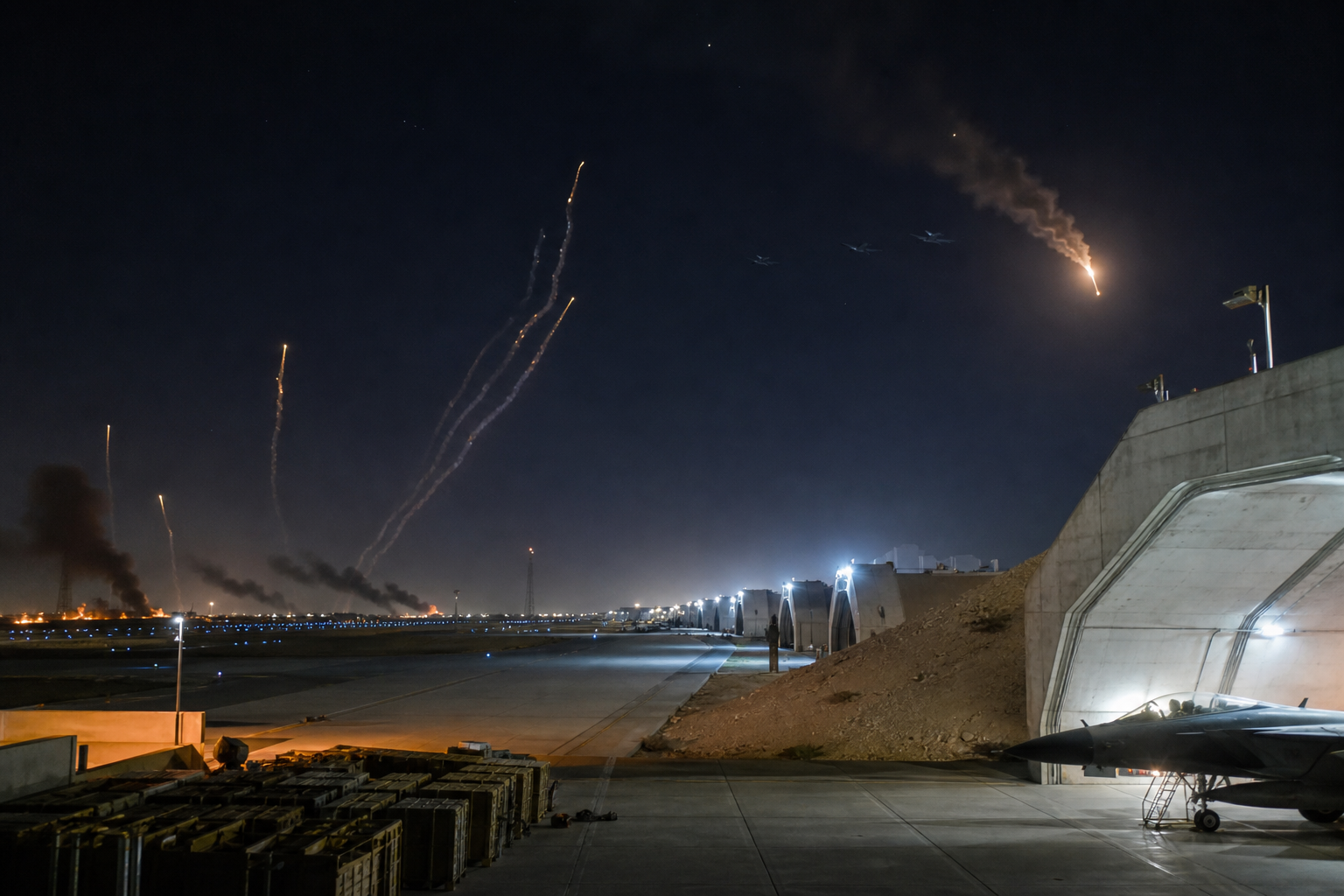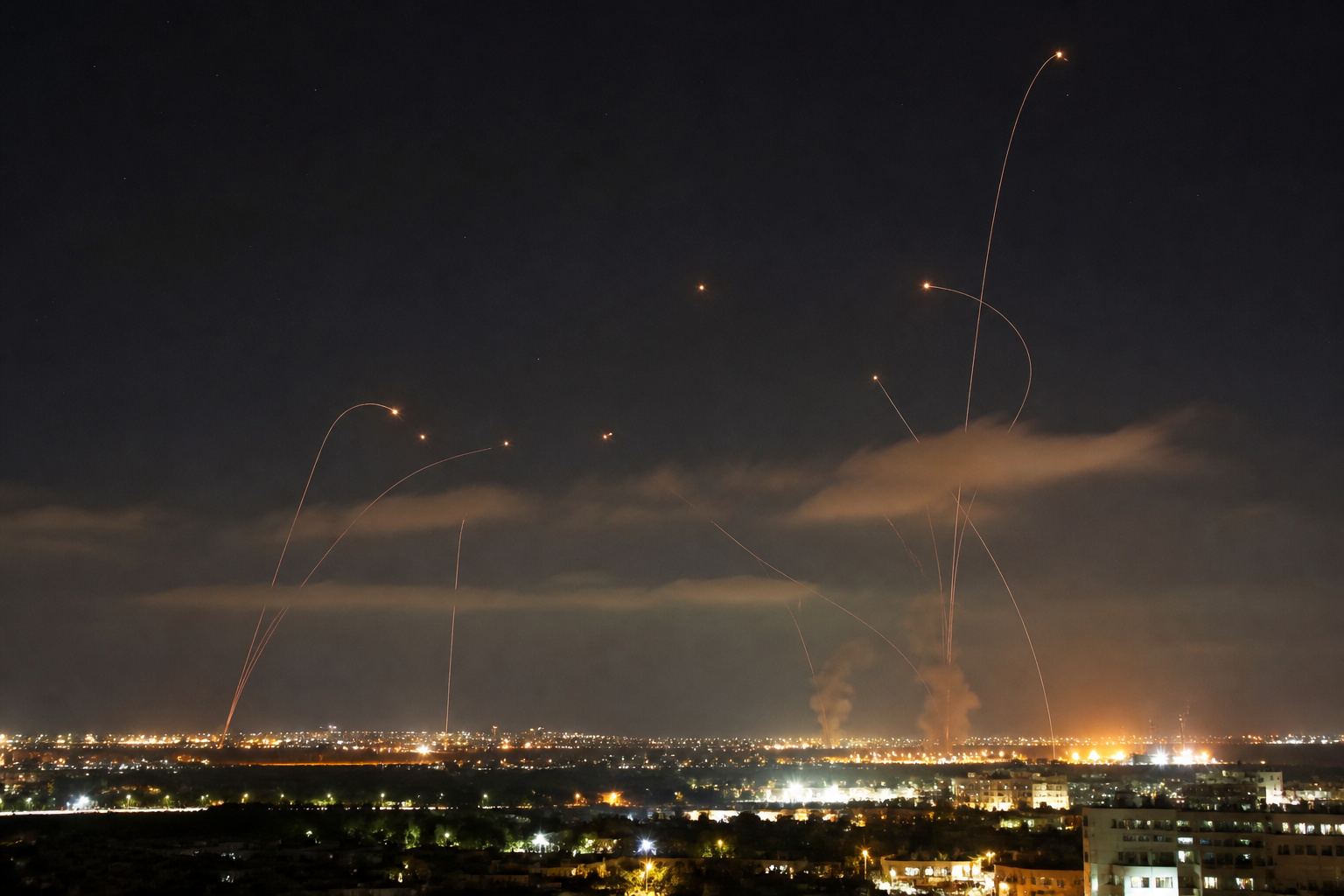
AMMAN — September 9, 2026. Iran’s Islamic Revolutionary Guard Corps claimed a ballistic-missile strike on the Al-Azraq (Al Azraq) U.S. base in Jordan, a retaliation framed in Tehran as self-defense after U.S. tanker strikes—and met in Amman with a detailed air-defense tally that undercut Iranian damage claims. Jordan Armed Forces said they engaged twenty ballistic missiles, intercepted eighteen, and reported that the remaining two fell in unpopulated areas with no casualties. IRGC messaging, carried by Fars and IRNA and summarized by Al Jazeera and AFP/France24, asserted hangar damage at the base; Jordan’s public account emphasized empty skies after the intercepts and empty casualty lists.
The geography is deliberate. Al-Azraq sits far enough from Iran’s western launch arcs to force a long ballistic shot, yet close enough to U.S. logistics and air operations to serve as a political target when Tehran wants to answer tanker losses without immediately widening a Hormuz naval fight. Jordan’s decision to publish precise intercept numbers—twenty engaged, eighteen killed, two down in empty desert—reads as both transparency for a domestic audience and a quiet rebuttal to IRGC hangar imagery. AFP and France24 relayed the Jordanian figures alongside Iranian claims, leaving readers with a familiar Middle East pattern: one side sells destruction, the other sells interception.
Iran’s Foreign Ministry folded the Al-Azraq attack into a self-defense narrative tied directly to the CENTCOM tanker strikes, arguing that U.S. hits on Iranian oil hulls justified missile replies against American regional footprints. That legal-political packaging matters for mediation tracks involving Qatar and others, because it tries to cast further Iranian launches as reciprocal rather than initiatory. Washington, for its part, has treated tanker destruction as enforcement against IRGC revenue after missiles aimed at U.S. ships; Amman’s intercept story sits awkwardly between those two scripts, proving Jordan can defend its airspace even when great-power retaliation arcs overhead.
What Al-Azraq clarifies is escalation geography. The fight is no longer confined to Gulf shipping lanes or Lebanese ridgelines; it is testing Jordanian skies and, by extension, every host-nation base that underwrites U.S. posture east of the Mediterranean. If Tehran keeps answering tanker losses with ballistic salvos, and if Amman keeps knocking most of them down, the next crisis may be decided less by hangar photos than by whether Jordan—and other partners—can sustain interceptor stockpiles through a longer war.