The security situation in the Strait of Hormuz has deteriorated significantly following a series of reported attacks on commercial shipping that have heightened fears of a broader regional conflict.
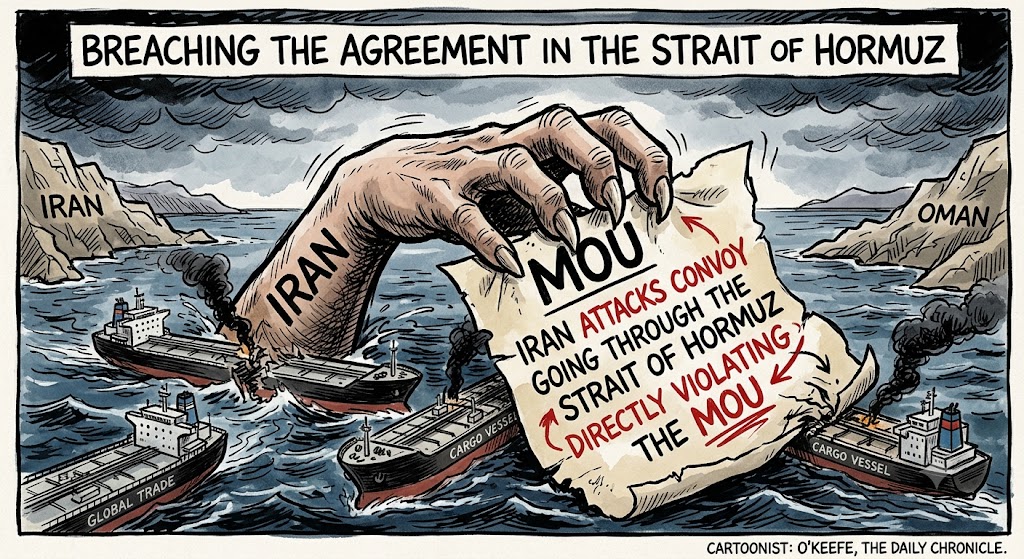
According to U.S. officials, Iran struck three commercial vessels operating near the Strait of Hormuz, an action described by Washington as a blatant violation of the recently established memorandum of understanding (MOU). The United States is reportedly evaluating its response as military and diplomatic options remain under consideration.
The attacks prompted the Joint Maritime Information Center (JMIC) to raise the maritime security threat level in the Strait of Hormuz to “Severe,” warning that commercial shipping faces an elevated risk as tensions continue to rise.
Qatar has also taken diplomatic action. Doha summoned Iran’s deputy ambassador following an attack involving a Qatari tanker in the Strait of Hormuz, demanding that Tehran immediately halt actions that threaten regional security and freedom of navigation. The move highlights growing concern among Gulf states over the safety of one of the world’s most important energy corridors.
Further escalating tensions, an Iranian official told Press TV that all maritime traffic through the Strait of Hormuz is now being conducted under Iran’s arrangements. The official warned that any U.S. “provocative action” would receive an “immediate and decisive” response, signaling that Tehran intends to maintain an aggressive posture despite mounting international pressure.
Meanwhile, Israeli Prime Minister Benjamin Netanyahu struck a cautious tone during an interview with CNN, stating, “It’s too early to predict what will happen with Iran.” His comments reflect the uncertainty surrounding how Israel, the United States, and regional allies may respond if the situation continues to deteriorate.
Analysis
In my opinion, recent events suggest that Iran is unlikely to fully comply with the memorandum of understanding. Instead, Tehran appears willing to continue testing the limits through attacks on commercial shipping, coercive maritime operations, and increasingly confrontational rhetoric.
If these violations continue, the probability of a direct U.S. military response will likely increase. The Strait of Hormuz is one of the world’s most strategically important waterways, with a substantial portion of global oil exports passing through it. Sustained attacks on commercial vessels threaten not only regional stability but also global energy markets.
Iran also appears to remain committed to advancing its nuclear ambitions despite years of sanctions, diplomatic negotiations, and military pressure. Unless there is a significant change in Tehran’s strategic calculations, continued maritime provocations combined with nuclear development could further increase the likelihood of confrontation between Iran and the United States.
The coming days and weeks will likely determine whether diplomatic efforts can contain the crisis or whether repeated violations and escalating military activity push the region toward a broader conflict.