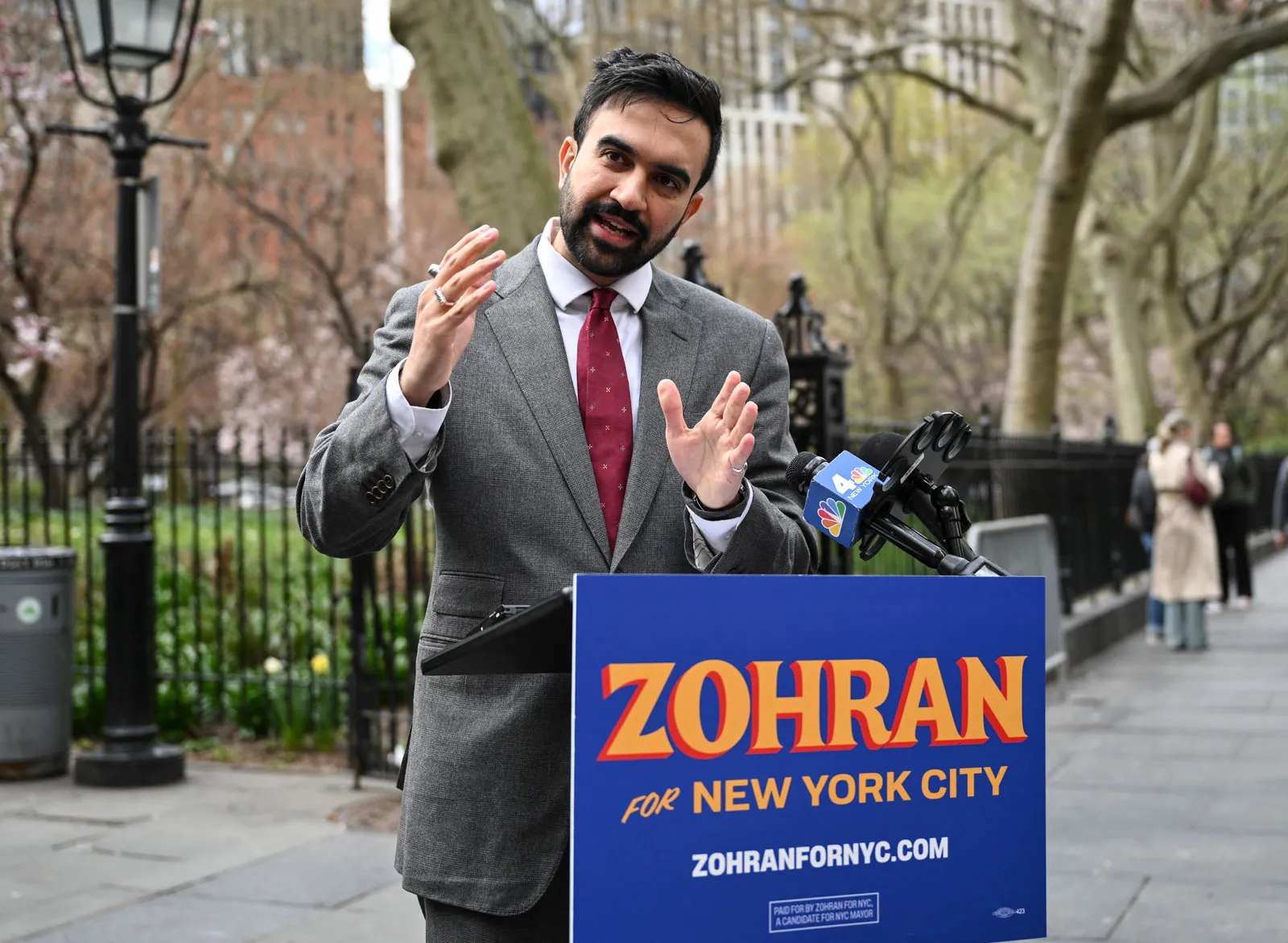
He moved to New York City at age 7, attended Bronx High School of Science, and earned a degree in Africana Studies from Bowdoin College (where he co-founded a Students for Justice in Palestine chapter). Before politics, he worked as a housing counselor in Queens and released music as the rapper Young Cardamom.Mamdani joined the Democratic Socialists of America (DSA) and won election to the New York State Assembly (36th District, Queens/Astoria) in 2020, serving until 2025. In 2025, he won the Democratic primary for NYC mayor in an upset and was elected, becoming the city’s first Muslim mayor, first South Asian/Indian American mayor, and one of its youngest in modern history. He was sworn in on copies of the Quran.
Mamdani’s Political PositionsMamdani describes himself as a democratic socialist, influenced by Bernie Sanders, historical “sewer socialists,” and figures like Fiorello La Guardia. His platform emphasizes affordability, equity, and progressive reforms:
- Economic/Housing: Rent freezes/stabilization, construction of 200,000+ new affordable/social housing units, city-owned grocery stores, higher taxes on corporations and high earners, $30 minimum wage by 2030, free or fare-free buses, and public banking/utilities.
- Social Services: Universal childcare, single-payer healthcare (New York Health Act), expanded tenant protections, and community-based public safety (mental health teams over heavy policing).
- Social Issues: Strong support for LGBTQ+ rights, reproductive freedom, immigrant protections/sanctuary policies, and anti-discrimination measures.
- Environment: Green New Deal-style policies linking climate action to equity (e.g., all-electric buildings, school retrofits).
- Foreign Policy/Israel-Palestine: Vocal critic of Israel. He has accused it of apartheid and genocide in Gaza, supports the BDS movement, called for ending the occupation and settlements, and advocated a single multi-ethnic democratic state with equal rights for all (rather than a Jewish state as such). He condemned Hamas’s October 7, 2023, attacks but focused criticism on Israeli actions, joined a hunger strike for a Gaza ceasefire, and skipped the 2026 Israel Day parade. He has said he cannot support any state that privileges one religion over others.
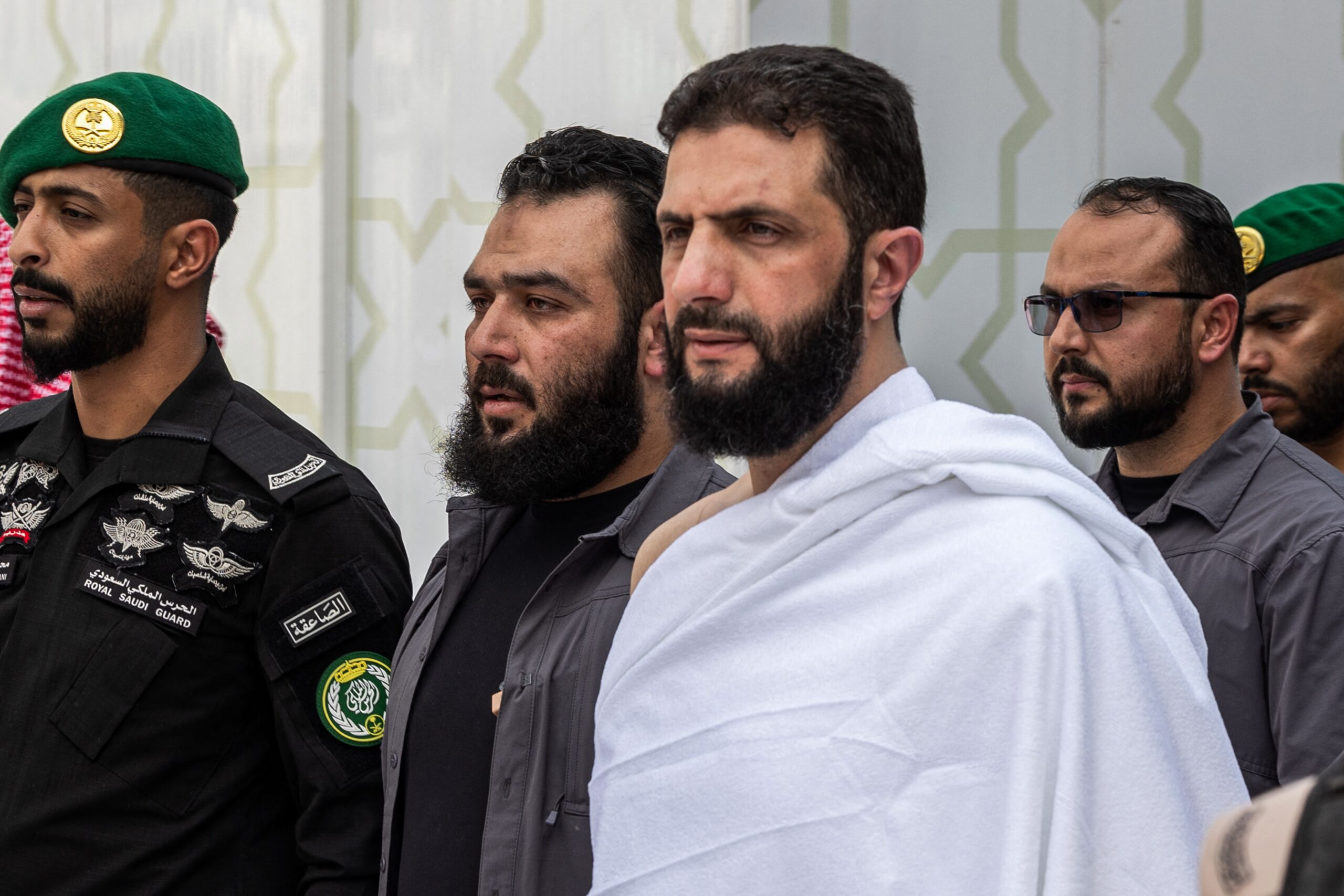
On Iran specifically (as mayor in 2026): Mamdani condemned the Iranian regime as “brutal” for repressing protesters and killing dissenters. He also strongly criticized the U.S.-Israeli military strikes that killed Khamenei, calling them an “illegal war of aggression” and “catastrophic escalation,” while warning against regime-change wars.Ayatollah Ali Khamenei: Background and RuleAli Hosseini Khamenei was born in 1939 in Mashhad, Iran, into a religious clerical family. He studied in seminaries in Mashhad, Najaf, and Qom under Ayatollah Ruhollah Khomeini and became politically active against the Shah. He was arrested multiple times and exiled briefly.
He played a key role in the 1979 Iranian Revolution, held various posts afterward (including a brief command role with the IRGC), and served as President of Iran (1981–1989) during the Iran-Iraq War. After Khomeini’s death in 1989, he was elected Supreme Leader by the Assembly of Experts (with constitutional amendments to fit his qualifications). He held the position for nearly 37 years until his death.Core Ideology: Velayat-e Faqih (Guardianship of the Islamic Jurist) — rule by a senior Shia cleric. He promoted Shia Islamism, “export of the revolution,” self-sufficiency, and opposition to Western influence (“Great Satan” for the U.S.).Domestic Record:
- Centralized power through the IRGC (which he expanded for internal control and external operations).
- Economic policies included some privatization while maintaining state dominance in key sectors; Iran became an energy power but faced sanctions and inflation.
- Severe repression of dissent: Crackdowns on protests (1999 students, 2009 Green Movement, 2022 Woman, Life, Freedom, and later waves), imprisonment or worse for critics, journalists, and activists. Compulsory hijab, gender segregation, and restrictions on women’s rights. Persecution of religious minorities (e.g., Baha’is). Homosexuality treated as a moral issue (with some support for “treatment” via surgery in certain cases).
Foreign Policy:
- Strong anti-Israel stance: Rhetorical calls for Israel’s destruction, support for the “Axis of Resistance” (Hezbollah, Hamas, Houthis, etc.), proxy conflicts, and alleged antisemitic tropes in statements. He backed Palestinians but through militant groups.
- Nuclear program: Supported civilian use; issued a fatwa against nuclear weapons.
- Alliances: Closer ties with Russia, China, and North Korea; opposition to U.S. influence.
Khamenei was assassinated on February 28, 2026, during U.S.-Israeli strikes on Iranian targets amid escalating conflict. His son Mojtaba was later chosen as successor.Direct Comparison
|
Aspect
|
Zohran Mamdani
|
Ayatollah Ali Khamenei
|
|---|---|---|
|
Background
|
Born in Uganda to interfaith Indian family; raised in NYC; identifies as Twelver Shia Muslim
|
Born in Iran to clerical family; trained Shia cleric
|
|
Ideology
|
Democratic socialism + progressivism
|
Shia Islamism + Velayat-e Faqih (theocratic rule)
|
|
Governance
|
Elected mayor in democracy; limited executive power with checks and balances
|
Unelected Supreme Leader with near-absolute control over military, judiciary, foreign policy
|
|
Views on Israel
|
Political criticism (apartheid/genocide accusations, BDS support, calls for equal-rights state)
|
Eliminationist rhetoric; state support for armed proxies against Israel
|
|
Social Policies
|
Supports LGBTQ+ rights, women’s reproductive freedom, anti-discrimination
|
Enforced religious law; restrictions on women, LGBTQ issues, religious minorities
|
|
Human Rights Record
|
Advocates progressive reforms and equity
|
Long record of protest suppression, executions, and authoritarian control
|
|
Power & Scope
|
Local U.S. politician focused on NYC affordability
|
Head of state influencing regional and global affairs via proxies and military
|
|
On the U.S./West
|
Criticizes specific foreign policies (e.g., regime change) but works within U.S. system
|
Ideological opposition (“Death to America”)
|
|
Recent Context (2026)
|
As mayor, called Iranian regime “brutal” but condemned strikes that killed Khamenei
|
Assassinated in U.S.-Israeli operation
|
Key Shared Elements:
- Shia Muslim identity.
- Vocal opposition to Israeli policies and strong pro-Palestinian stance.
- Criticism of aspects of U.S. foreign policy.
Fundamental Differences: Mamdani functions as a democratic socialist reformer within a pluralistic, secular-leaning system. His anti-Zionism is framed through lenses of colonialism, human rights, and equality. Khamenei embodied a revolutionary theocratic system that fused religion and state power, using it to enforce domestic control and project influence through militancy. Mamdani has explicitly condemned the Iranian regime’s brutality toward its own people; Khamenei’s rule was defined by that system of control.Media commentary has occasionally drawn superficial parallels due to shared anti-Israel rhetoric or Mamdani’s Muslim background, but these overlook the enormous gulf in ideology, methods, and outcomes. Mamdani’s positions align with Western left-wing progressivism; Khamenei’s aligned with Islamist revolutionary governance.Sources for this report include Wikipedia summaries on both figures and their positions, news reporting on Mamdani’s mayoralty and statements (including his 2026 comments on Iran), and biographical details from established outlets. Facts reflect the situation as of mid-2026.This comparison highlights how similar-sounding foreign policy critiques can stem from entirely different worldviews and power structures.