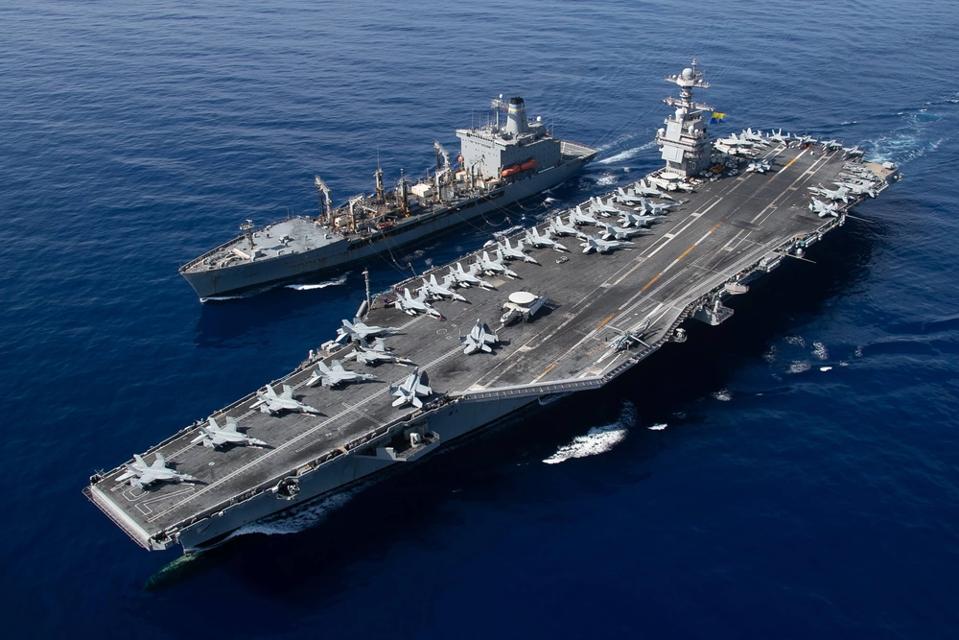
Current Condition and Repairs (Updated July 2026)The world’s largest and most advanced aircraft carrier, USS Gerald R. Ford (CVN-78), returned to its homeport at Naval Station Norfolk, Virginia, on May 16, 2026, after completing a historic 11-month (326-day) deployment that began on June 24, 2025. The deployment spanned the U.S. 2nd, 4th, 5th, and 6th Fleet areas of responsibility and included high-tempo operations in the Mediterranean, Red Sea, and other regions amid ongoing global tensions.Upon return, the carrier entered a scheduled post-deployment maintenance period at Norfolk Naval Shipyard. Key issues addressed include general wear and tear from the record-length deployment, damage from a March 2026 fire in the ship’s laundry and berthing areas (repaired during a five-day port visit in Split, Croatia, in late March/early April 2026), and upgrades to the ship’s beleaguered sewage and plumbing systems (including fixes for failing toilets, similar to work performed on other carriers).In June 2026, the U.S. Navy awarded a $17.6 million contract to Metro Machine Corp (General Dynamics NASSCO) in Norfolk for “Fiscal 2026 Emergent Maintenance Availability” to cover unplanned repairs.(forbes.com)
Sources indicate that the Ford will be ready for action sooner than expected. Despite the extensive post-deployment work required after the prolonged at-sea period, Navy officials and defense analysts have assessed that efficient shipyard planning, the carrier’s strong performance during deployment, and prioritized emergent repairs are accelerating the timeline for returning the ship to full operational readiness ahead of typical post-deployment schedules.https://artifacts.grokusercontent.com/third-party-image (bostonglobe.com)
- Electromagnetic Aircraft Launch System (EMALS) — Replaces steam catapults for more efficient and less stressful aircraft launches.
- Advanced Arresting Gear (AAG) — Improves recovery of aircraft.
- Dual Band Radar and advanced command systems.
- Greater electrical power generation capacity for future weapons and systems (e.g., directed energy weapons).
- Larger flight deck and improved sortie generation rates compared to Nimitz-class carriers.
With a displacement of over 100,000 tons, a length of 1,092 feet, and a crew of approximately 4,600 (including air wing), the Ford is designed for sustained high-tempo operations with reduced maintenance demands over its service life.Recent Deployment Highlights (2025–2026)The 2025–2026 deployment was the longest for a U.S. carrier since the Vietnam War era. During the 326 days at sea, the ship:
- Sailed more than 57,713 nautical miles.
- Conducted 23 replenishments-at-sea.
- Embarked Carrier Air Wing 8, which logged over 5,760 flight hours and 12,200 aircraft launches/recoveries.
- Supported U.S. operations across multiple theaters, including presence in the Red Sea and Mediterranean amid regional conflicts.
Current Status and Future Outlook (July 2026)As of early July 2026, the Ford remains pierside in Norfolk undergoing maintenance and upgrades. The shipyard work focuses on restoring full mission capability, addressing systems stressed by the extended deployment, and preparing the carrier for its next operational cycle.While the full scope and exact completion date of the maintenance availability have not been publicly detailed, sources indicate that the Ford will be ready for action sooner than expected. Shipyard officials have adjusted schedules to accommodate the carrier, and early assessments suggest the vessel’s overall condition is better than anticipated given the demands of the deployment. This positions the Ford to potentially rejoin the fleet on an accelerated timeline compared to standard post-deployment norms.The carrier is expected to undergo further testing and workups once maintenance concludes, followed by another deployment in the coming years as part of the Navy’s carrier strike group rotation.SummaryThe USS Gerald R. Ford continues to prove its value as the flagship of the modern U.S. Navy carrier fleet. Despite the challenges of a record-breaking deployment and the subsequent repair period, the ship’s advanced design and the Navy’s responsive maintenance efforts are enabling a faster-than-expected return to operational readiness. The Ford remains a cornerstone of U.S. power projection and will play a critical role in future naval operations once its current maintenance phase concludes.Sources: U.S. Navy official releases, DVIDS, USNI News, Breaking Defense, Stars and Stripes, and contract announcements (as of July 2026). This report reflects the most recent publicly available information. Developments in shipyard progress may provide further updates on the accelerated readiness timeline in the coming weeks.