OverviewOn June 26, 2026, the United States, Israel, and Lebanon signed a 14-point trilateral framework agreement in Washington, D.C. This US-brokered deal provides a structured path to end hostilities between Israel and Hezbollah, restore Lebanese state sovereignty in southern Lebanon, achieve verified disarmament of non-state armed groups, and enable a phased Israeli military withdrawal.
state.govThe agreement includes a Security Annex detailing implementation mechanisms. It builds on prior ceasefires and negotiations amid the broader regional conflicts involving Hezbollah and Iran.Admiral Brad Cooper’s Visit to LebanonAdm. Brad Cooper, Commander of U.S. Central Command (CENTCOM), conducted a high-level visit to the Middle East in late June 2026. On June 29, he traveled to Lebanon (following engagements in Israel) and met with President Joseph Aoun and Lebanese Armed Forces (LAF) Commander Gen. Rodolphe Haykal. (facebook.com)
Discussions centered on launching implementation of the framework agreement, including verification processes, pilot zones, and coordination mechanisms. Cooper was joined in related meetings by Lt. Gen. Joseph Clearfield (Chairman of the newly established Military Coordination Group for Lebanon). The visit underscored strong US military commitment to supporting the deal’s rollout. (lb.usembassy.gov)
Cooper also visited deployed U.S. troops in Israel during the same regional trip and recognized outstanding performers. CENTCOM noted that more than 50,000 American service members are currently operating across the Middle East region. (reutersconnect.com)
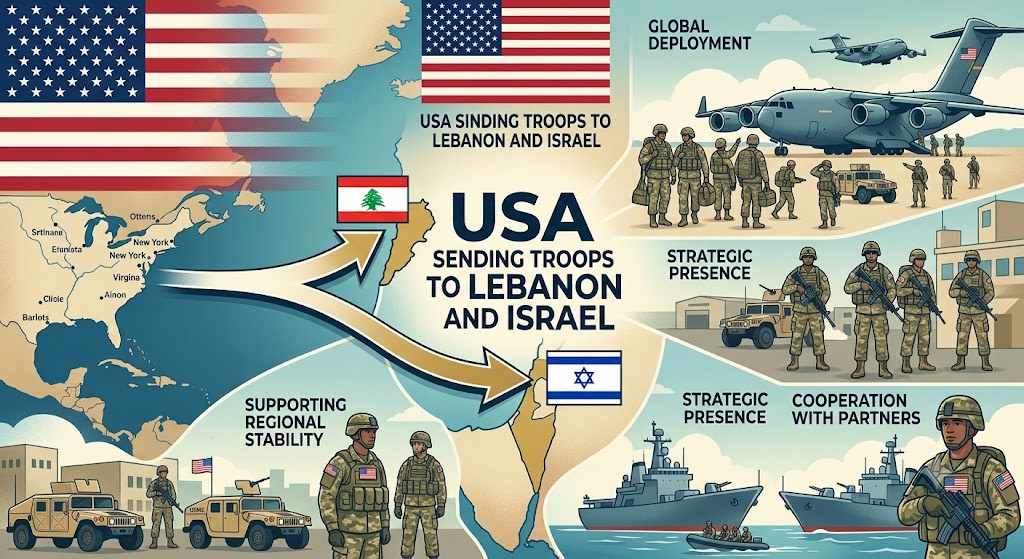
A US official confirmed to The Washington Post on June 29, 2026, that ground forces would be sent to monitor implementation. This presence aims to enable faster verification of any violations, support political engagement, and strengthen the trilateral Military Coordination Group (which includes US participation). (understandingwar.org)
This builds on the existing substantial US regional military footprint. The deployments are tied directly to the agreement’s verification and support provisions rather than constituting a large-scale combat role.Major Parts of the Trilateral Framework AgreementThe agreement (full text available on state.gov) outlines a reciprocal, sequenced, and verifiable process. Here are the key elements:
- Mutual Recognition and End of Conflict — Israel and Lebanon affirm each other’s right to exist in peace and security as sovereign neighbors and declare intent to formally end any state of war.
- Phased Sovereignty Restoration and Withdrawal — Lebanon (via the LAF) will restore effective control over all its territory pending verified disarmament of non-state armed groups (primarily Hezbollah) and dismantlement of their infrastructure. This enables progressive IDF redeployment out of Lebanese territory. Details are in the Security Annex.
- Pilot Zones Mechanism — The LAF will gradually assume full security responsibility in designated “pilot zones” (two initial zones already agreed upon by the IDF and LAF). After verified disarmament and dismantlement in these zones:
- Reconstruction begins.
- Lebanese civilians can safely return under exclusive LAF/state control.
- This serves as the model for phased IDF withdrawal.
- US Verification and Support Role — The United States will work closely with both parties to verify and support the process, including through the Military Coordination Group.
- Lebanese Commitments — Full state monopoly on arms; complete and verified disarmament of all non-state armed groups; no military or security role for such groups anywhere in Lebanon. Lebanon welcomes conditional US and international support for LAF capacity-building.
- Israeli Commitments — No territorial ambitions in Lebanon. Military actions were responses to threats from non-state groups. Once the threat is removed through disarmament and security arrangements, there will be no need for IDF presence or action in Lebanon.
- Military Coordination Group — A trilateral group (with US support and participation) to oversee overall implementation.
- US Assistance and Reconstruction — Conditioned US support for the LAF (tied to verifiable milestones, transparency, and oversight). Immediate US pledges include $100 million in humanitarian assistance (coordinated with the UN) and over $30 million to reimburse/support the LAF. The US will rally international partners for broader reconstruction and economic recovery. Strict measures to prevent reconstruction funds from reaching non-state armed groups. aljazeera.com
- Additional Provisions — Working groups for a future comprehensive peace and security agreement; good-faith measures (e.g., cessation of hostile actions in international forums); right to self-defense for both parties; appreciation for US/Trump leadership.
Success depends on verifiable progress in the pilot zones, LAF deployment and capacity, and sustained US facilitation. The framework is described by US officials as a “first step” toward lasting stability, with potential for a full peace agreement.This report is based on official statements from the US State Department, CENTCOM, and contemporaneous reporting as of early July 2026. Developments are ongoing and subject to verification on the ground.