The United States has further strengthened its naval presence in the Middle East with the arrival of the Wasp-class amphibious assault ship USS Boxer and associated vessels, even as indirect peace negotiations with Iran continue in Qatar. The deployment underscores the dual-track U.S. approach of maintaining robust military pressure while pursuing diplomacy to end the conflict, secure the Strait of Hormuz, and address Iran’s nuclear program.
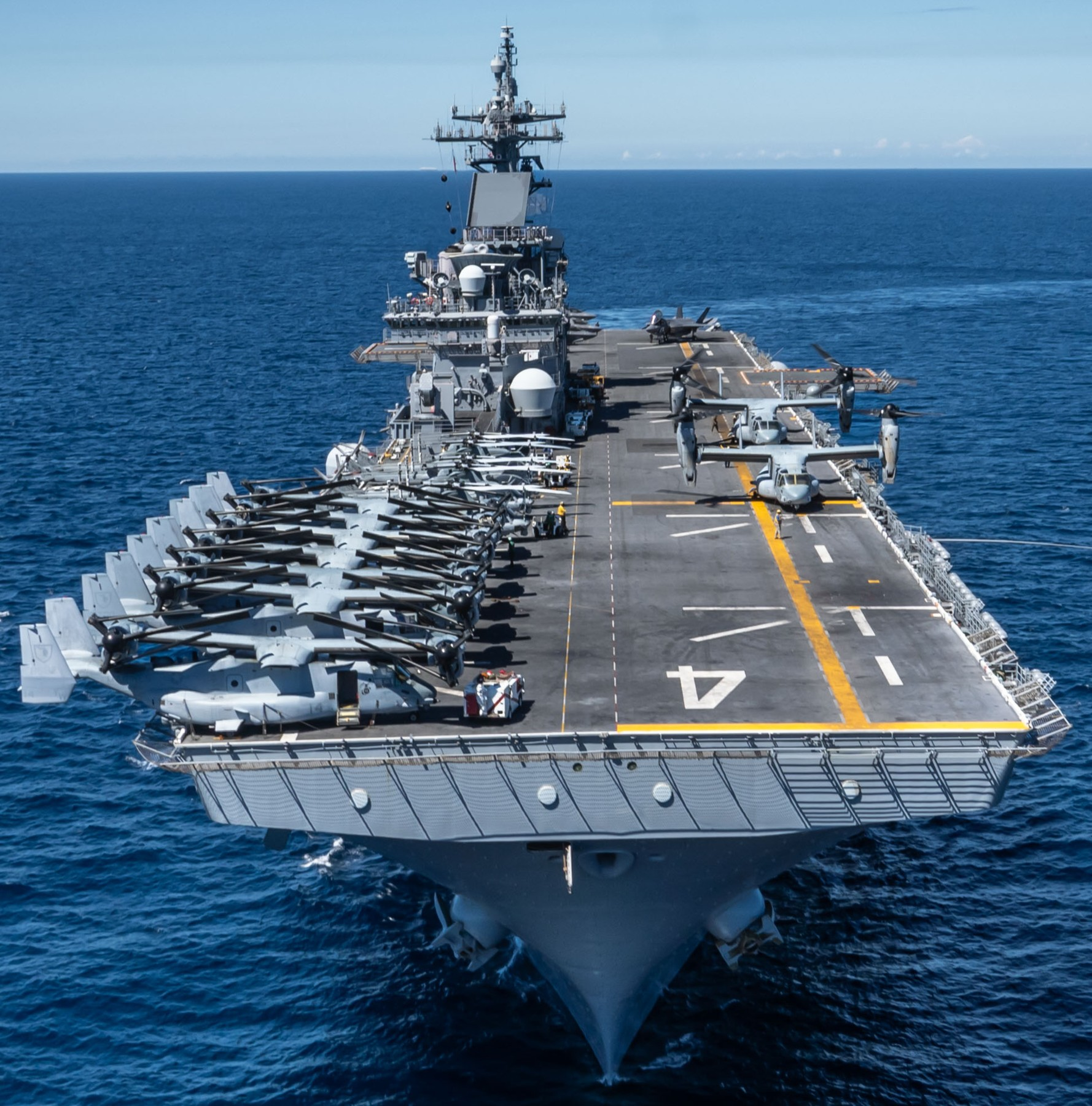
According to U.S. Central Command (CENTCOM), the USS Boxer and the amphibious transport dock USS Portland, carrying the 11th Marine Expeditionary Unit (MEU), were transiting the Indian Ocean on their way to the region as of late June. The transport dock USS Comstock, also part of the Boxer Amphibious Ready Group (ARG), had already been operating in the Middle East since early May. This marks the arrival of a second amphibious ready group, joining the Tripoli ARG with the 31st MEU already active in the Arabian Sea.
Scale of U.S. Forces
The addition of the Boxer brings the total number of U.S. Navy warships in the Middle East to at least 24, including two aircraft carriers (USS Abraham Lincoln and USS George H.W. Bush) and 15 destroyers, according to U.S. Naval Institute (USNI) News tracking. This figure excludes support ships such as oilers and two additional destroyers in the eastern Mediterranean. Overall, nearly half of the Navy’s deployed battle force ships worldwide are currently concentrated in the region. Approximately 50,000 U.S. service members are operating across the Middle East.
A crew chief signals from the flight deck of the USS Boxer during operations in the Indian Ocean. (U.S. Navy photo)Context: Diplomacy Backed by StrengthThe buildup occurs against a backdrop of fragile ceasefire arrangements and ongoing indirect talks in Doha, Qatar. Negotiations aim to end hostilities that escalated in February 2026, reopen the critical Strait of Hormuz, and dismantle aspects of Iran’s nuclear ambitions.Recent weekend Iranian attacks on commercial shipping in the strait and U.S. installations prompted U.S. retaliatory strikes. While a 60-day ceasefire has been strained, both sides have worked to de-escalate. President Donald Trump has kept diplomacy as the primary path but has repeatedly warned of severe consequences if talks fail, including statements on Truth Social threatening that failure could mean “the Islamic Republic of Iran will no longer exist.” (stripes.com)
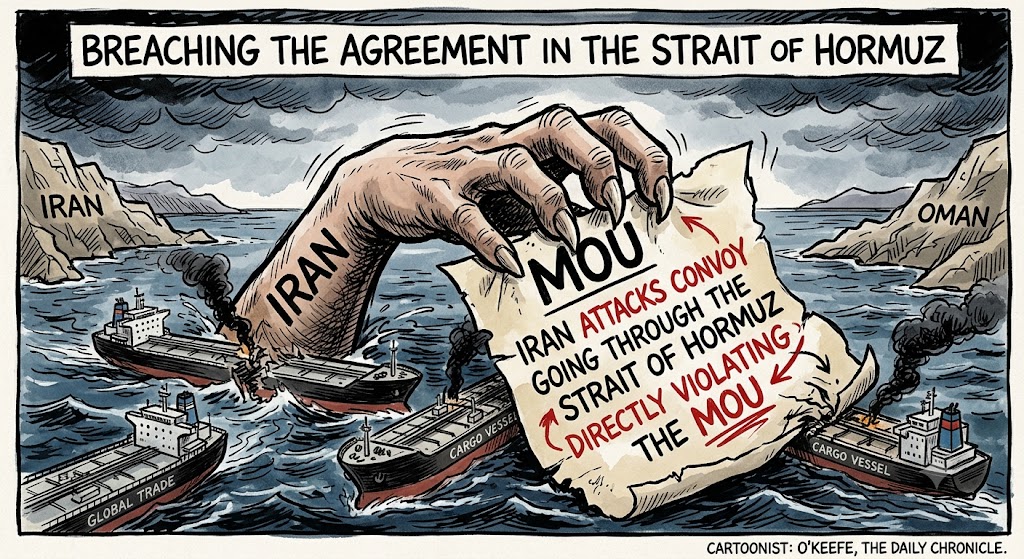
The Strait of Hormuz remains a central issue.
Iran seeks the ability to charge fees or tolls on transiting vessels, while the U.S. insists on free passage as existed prior to the war. Traffic through the strait has continued at reduced levels with U.S. facilitation—46 vessels on one recent weekend day—but remains below historical averages, with the security threat level assessed as “substantial.”
Strategic Implications
Amphibious assault ships like the Boxer provide significant flexibility, capable of launching Marine operations, supporting helicopters and fixed-wing aircraft (including F-35B STOVL jets), and serving as command platforms. Their presence enhances deterrence, humanitarian response options, and power projection in a volatile region still dealing with mine threats and disrupted shipping.Analysts view the sustained naval concentration as leverage in negotiations while preparing for contingencies. The U.S. has not ruled out further military action if Iran proves unreasonable, but current emphasis remains on talks.As negotiations progress, the enhanced U.S. naval posture signals readiness to protect freedom of navigation, support allies, and respond to provocations—while hoping diplomacy can yield a lasting resolution to the crisis. The coming weeks will test whether military strength and dialogue can converge to stabilize one of the world’s most strategically vital waterways.
This article draws directly from reporting by Stars and Stripes and supporting fleet tracking data.