Fawzia Amin Sido (Kurdish: Fewziya Emîn Seydo; Arabic: فوزية أمين سيدو) is a Kurdish Yazidi woman from northern Iraq whose life was shattered at age 10 during the Islamic State’s 2014 genocide against the Yazidi people. Kidnapped from her home in Sinjar, she endured years of sexual slavery, forced marriage, and captivity — first under ISIS in Syria and later in the Gaza Strip under Hamas-affiliated networks — before her dramatic rescue in 2024 and relocation to Germany. Her story highlights the enduring scars of the Yazidi genocide and the complex international efforts required to bring survivors home. (en.wikipedia.org)
Early Life and Abduction
Fawzia was born around September 2003 in the Sinjar region of northern Iraq, home to one of the world’s oldest religious minorities, the Yazidis. On August 3, 2014 — just weeks before her 11th birthday — ISIS militants overran Sinjar District as part of their genocidal campaign. Thousands of Yazidi men were executed, while women and girls were abducted for sexual slavery and forced conversion.Fawzia and two of her brothers were captured that day. Her brothers were later released after eight months, but Fawzia was sold repeatedly — first raped by one captor, then transferred multiple times to “a Syrian, a Saudi, another Syrian,” before being given to a 24-year-old Palestinian militant from Gaza known as Abu Amar al-Makdisi. She was taken to Raqqa, Syria, where she was forcibly married in early 2015. (en.wikipedia.org)
Captivity in Syria: Abuse, Motherhood, and LossFawzia endured severe physical and sexual abuse in her forced marriage. She later recounted that her husband drugged her and raped her repeatedly. She became pregnant and gave birth to two children before turning 15. The abuse intensified after her husband took a second wife.Following the defeat of ISIS’s territorial caliphate in 2018–2019, her husband fled and was later reported killed. Fawzia and her children ended up in the Al-Hawl refugee camp before being smuggled through Idlib and Turkey with the help of jihadist networks. Using a fake Jordanian passport, she was taken to Cairo and then smuggled into the Gaza Strip around 2020 by her late husband’s family. (bbc.com)
Captivity in Gaza
In Gaza, Fawzia was treated as a domestic slave by her husband’s family and subjected to control by Hamas authorities. She reported constant harassment due to her Yazidi background, phone seizures, and investigations. She described being forced to work as a slave in a hospital after the October 7, 2023 attacks, where hospitals allegedly served as Hamas bases. She attempted suicide multiple times amid the abuse and isolation, and was once hospitalized against her will for a month.Hamas and Gaza’s government media office have denied she was held captive, claiming she lived in Gaza voluntarily and only sought to leave because of the war. However, her own accounts, interviews with Kurdish media (including Rudaw), and statements from U.S. and Iraqi officials contradict this narrative. (en.wikipedia.org)
Rescue from Gaza (October 2024)During the Israel-Hamas war, an IDF airstrike destroyed the family home where she was held. Fawzia fled alone to another shelter in Gaza. After months of failed attempts due to security conditions and diplomatic tensions between Iraq and Israel, she was rescued on or around October 1–3, 2024, in a complex multinational operation involving the United States, Israel, Iraq, and Jordan.She crossed into Israel via the Kerem Shalom border crossing, received medical care and support, and was escorted by U.S. officials to Jordan before returning to Iraq. She reunited with her family in the Sinjar/Mosul area on October 2, 2024. Videos of the emotional reunion circulated widely. Iraqi officials praised the effort but downplayed Israeli involvement in some statements, while the IDF and U.S. officials highlighted the coordination. (nadiasinitiative.org)
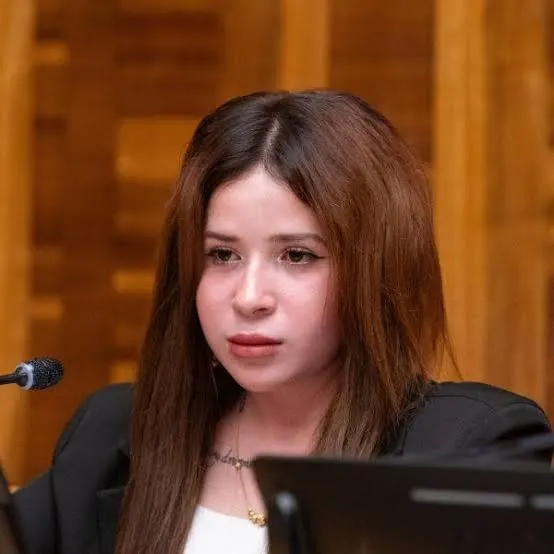
Emotional reunion of Fawzia Amin Sido with family members after her rescue from Gaza in October 2024.Life After Rescue: Germany and AdvocacyFawzia was initially reunited with her surviving family in Iraq. Her father had passed away months earlier amid the stress of her captivity and failed rescue attempts. In February 2025, she relocated to Germany under humanitarian protection, where she has been receiving support.On June 26, 2026, she testified at a UN Watch side event during the 62nd session of the UN Human Rights Council in Geneva, titled “Women’s Rights Under Extremism and Conflict.” In a powerful speech, she described her stolen childhood, repeated rapes, beatings, electric shocks, and forced labor:
“I was only ten years old — a child whose childhood was stolen — sold from one man to another as if I were a piece of furniture… One thing kept me alive: my mother tongue, my identity, and the memory of my mother.”
She called on the German government and international community to facilitate humanitarian reunification with her sick mother and brother still in Iraq, stating that family reunification was “the only cure and the final step in healing my broken soul.” She also urged continued efforts to find the thousands of Yazidis still missing. (unwatch.org)
Fawzia Amin Sido testifying at the UN Human Rights Council side event in Geneva, June 2026.Broader Context and LegacyFawzia’s case is unique as the first known Yazidi survivor rescued from Gaza. It underscores the long-term consequences of ISIS’s genocidal campaign, which killed thousands and enslaved over 6,000 Yazidi women and children. While thousands have been rescued or freed, many remain missing.Her rescue involved delicate diplomacy across conflicting parties, and her ongoing advocacy highlights the need for sustained international support for survivors’ mental health, family reunification, and accountability for perpetrators.Fawzia’s journey from a terrified 10-year-old in Sinjar to a resilient young woman speaking at the United Nations serves as a testament to human endurance and a reminder that the fight for justice and healing for Yazidi survivors continues.Sources: Information drawn from her Wikipedia page, interviews with Rudaw and Voice of America, statements by the IDF and Iraqi officials, BBC reporting, a TIME op-ed by Nadia Murad and Sheryl Sandberg, and her June 2026 UN testimony.