Russia’s Drone Fleet: Jet Gerans, Rubikon and the 60% Gap
Russia now launches thousands of jet Geran drones a month. What Ukrainian, Western and Russian sources say on output, Rubikon and Ukraine’s response.
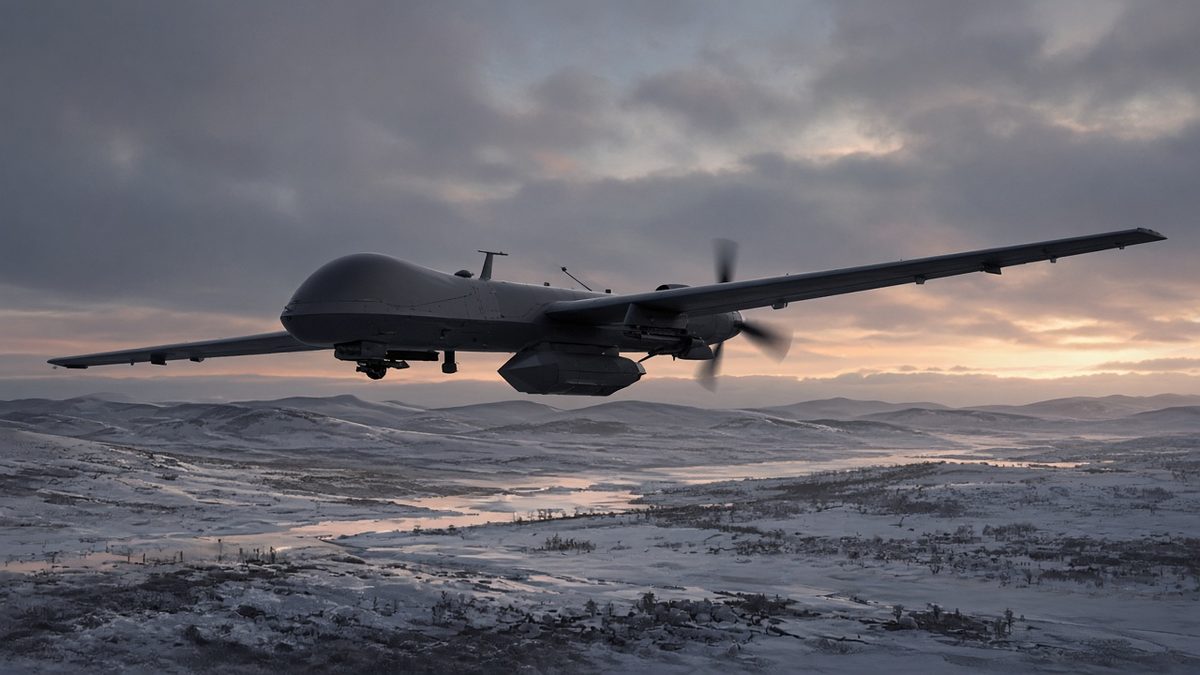
Russia’s unmanned aircraft are an increasingly large part of its long-range strike campaign. According to Ukrainian officials and the reports cited below, Russia shifted over the summer much of its long-range strike drone fleet from propeller-driven Geran-2 (Shahed-type) designs to faster, higher-flying jet Geran-4 and Geran-5 models. As of early October 2026, Ukrainian officials say that shift has cut the share of drones their defenses stop, while new reporting points to still more factory capacity coming.
At a glance
- Jet surge: Ukraine’s air force spokesman Yuriy Ihnat said Russia had launched 7,700 jet-powered drones in total by 23 September, rising from 350 in June to 1,500 in July and 2,850 in August (Business Insider).
- Output: Ukraine’s military intelligence (HUR) estimates about 3,000 Geran-4/5 and 2,800 Geran-2 drones are built each month (Militarnyi).
- Defense gap: Ukraine intercepts roughly 60 percent of jet drones against more than 90 percent of propeller versions, per its air force.
The jet Geran surge
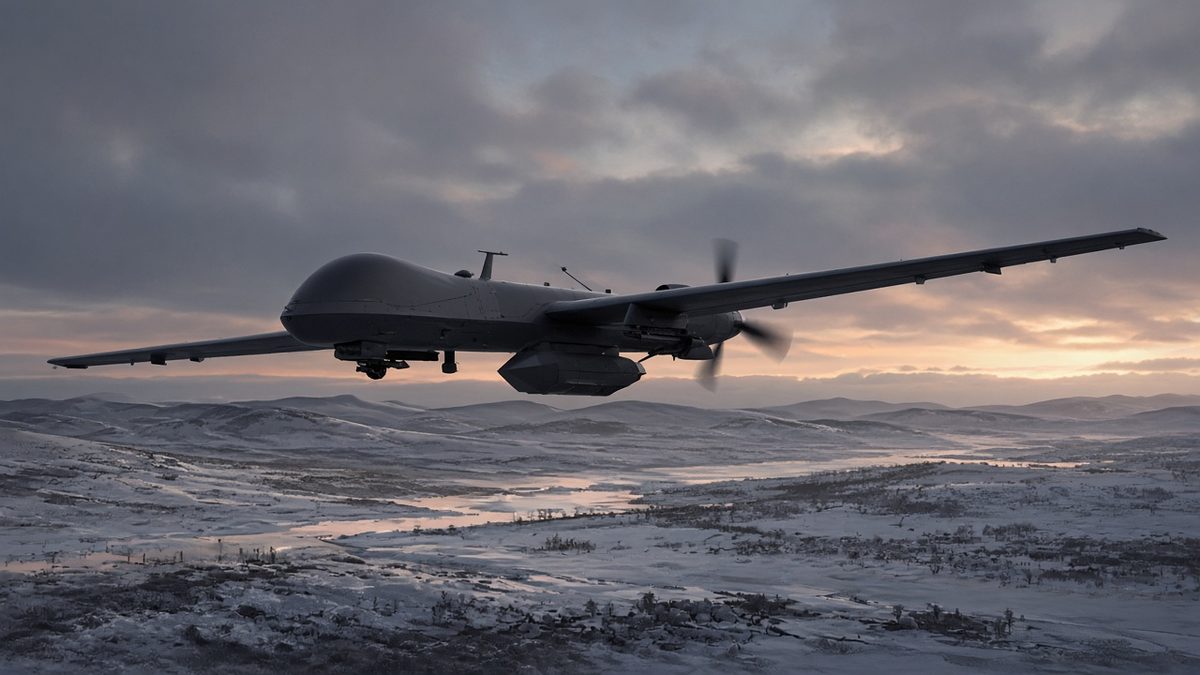
The Geran-2 is Russia’s locally built version of the Iranian Shahed-136. Business Insider notes Ukraine learned to counter that slow propeller drone cheaply with fast interceptor drones. Russia’s answer was speed. Militarnyi reports that in April only 15 to 20 percent of Shaheds launched were jet-equipped; by early June Ukraine had logged 1,400 jet launches, against just 180 incidents in all of 2025. In some summer raids jets made up two-thirds of the drones used, according to Ihnat.
The family has changed fast. The Geran-3 grafted a Chinese Telefly JT80 turbojet onto the Geran-2 airframe; Euromaidan Press reports HUR said it has ceased production, treating it as a transitional step. The Geran-4 has a stronger airframe and a 160 kgf Chinese engine, with a claimed cruise speed of 350 to 500 km/h and range of 850 km, per Militarnyi. The Geran-5 abandons the delta wing for a cruise-missile shape, a roughly 90 kg warhead and a claimed 1,000 km range. Business Insider gives lower figures (about 370 mph, nearly 600 miles), so treat specifications as estimates.
| System | Role | What sources say | Status / confidence |
|---|---|---|---|
| Geran-2 (Shahed-136 type) | One-way attack drone, piston engine | About 2,800 a month (HUR); still more numerous overall than jets (Militarnyi) | In mass use; Ukrainian estimate |
| Geran-3 | Turbojet Geran-2 variant (JT80 engine) | Production ended, per HUR (Euromaidan Press) | Single-source Ukrainian claim |
| Geran-4 / Geran-5 | Jet attack drones; Geran-5 is missile-shaped | About 3,000 a month combined; Chinese engines at $35,000-40,000 each | In mass use; output is an estimate |
| Rubikon detachments | Elite drone formations: FPV, Lancet teams, Orlan/Supercam ISR, EW | About 5,000 personnel, 17 detachments (FPRI) | Analyst estimate, June 2026 |
| Orion | Medium-altitude strike and reconnaissance drone | Ukraine says it destroyed two at Kerch airfield on 2 July (Defense Express) | Ukrainian claim |
Alabuga and the factory race
Nearly every Geran passes through the Alabuga Special Economic Zone in Tatarstan. HUR told Militarnyi that serial assembly of the Geran-4 and Geran-5 is established there, with other Russian firms supplying parts, and that the Defense Ministry wants more capacity.
Politico, citing documents from a Russian state company, reports that Rosatom plans to add 500 tons of aerospace carbon fiber a year at its Alabuga-Volokno plant by 2029, with completion targeted for 2027. Weapons expert David Albright estimates that could supply 28,000 extra Shahed-type airframes annually, a 78 percent rise on the roughly 36,000 Gerans Ukraine says Russia can build each year. A U.S. official told Politico the House China committee judged the documents authentic, and a Ukrainian official confirmed them; Rosatom declined to comment.
Analysis: HUR’s monthly figures add up to far more than 36,000 a year, so the public numbers do not reconcile and are best read as a range. All sources agree on direction: more airframes, faster ones, with imported Chinese engines.
Rubikon and the wider drone force
Rubikon, the Center for Advanced Unmanned Technologies, was set up on 2 August 2024 on the order of Defense Minister Andrey Belousov, according to analysis by Rob Lee and Dmytro Putiata published by FPRI. It grew from about 1,450 people in March 2025 to roughly 5,000 this spring, with 9,000 authorized. A standard detachment now has 474 authorized personnel, with quadcopter and fixed-wing FPV groups and reconnaissance-strike teams that pair Supercam or Zala scouts with Lancet loitering munitions.
FPRI judges Rubikon helped Russia retake the Kursk salient and complicated Ukrainian resupply, but has not produced a breakthrough. It also flags strain: lowered recruiting standards, poached teams, and a rival 50th Unmanned Systems Brigade. The wider Unmanned Systems Forces had about 87,000 personnel at the end of 2025, with a goal of 165,000 by year-end, while missing recruiting quotas.
Two claims deserve labels. TASS quoted the developer of the KVN fiber-optic FPV drone on 9 September saying millions have been delivered since August 2024 and a 42 km model is in full-scale use; that is a manufacturer’s statement, not an independent count. And on 18 September Ukraine’s 3rd Army Corps said it crippled Rubikon elements in northern Donetsk Oblast during Operation Vivaldi, forcing a withdrawal, as reported by the Kyiv Independent. That is a Ukrainian military claim that has not been independently verified. The sources reviewed gave no verifiable current evidence on Forpost or the S-70 Okhotnik-B, so I do not assess them.
Ukraine’s countermeasures
Ukraine’s main answer is the interceptor drone. Business Insider reports that Zelensky said four types of jet-capable interceptor have been tested in combat, though output remains small. Politico quotes CNAS’s Stacie Pettyjohn on why volume matters: mass volleys let Moscow saturate defenses and pressure deep targets. Whether an affordable fix arrives before winter is not settled by the sources reviewed.
Why it matters
The drone war is a production contest. If a few thousand drones a month can be built for tens of thousands of dollars each, defenders need either cheap, plentiful interceptors or expensive missiles, and Patriot stocks are already strained, as our report on the PAC-3 MSE deal shows. Analysis: Russia’s dependence on Chinese engines and carbon fiber is its soft spot, and the sanctions fight now centers there. NATO is pushing for cheaper counter-drone defenses for the same reason.
Takeaway: Russia is scaling jet drones faster than Ukraine can scale the counter, and the next test is whether interceptors and funding catch up by winter.
Related coverage
- PrSM Missile: $1.2B Army Order, Iran Debut and Pacific Role
- Patriot PAC-3 MSE: $58.6B Deal, Stockpile Strain, Output Goal
- NATO’s Rutte Vows Cheaper Counter-Drone Defenses for Eastern Flank
- Companion reports: Russia’s Ground Robots and Russia’s Naval Drones
Sources
- Militarnyi, Production of the Geran-4/5 Jet Drones Has Surpassed That of the Geran-2, 15 August 2026.
- Business Insider, Russia’s once-rare turbojet drones now attack Ukraine by the thousands, 25 September 2026.
- Politico, Russia’s secret plan to supercharge kamikaze drone production, 20 September 2026.
- FPRI, Inside Rubicon: The Structure of Russia’s Elite Drone Center, 12 June 2026.
- Euromaidan Press, Russia builds 3,000 jet drones monthly, HUR says, 12 August 2026.
- Defense Express, Ukrainian Intelligence Destroys Two Russian Orion Combat Drones at Kerch Airfield, 7 July 2026.