Iranian Arms and Chinese Parts Fuel Houthi Red Sea Push
A WSJ report says Quds Force tech and Chinese dual-use drone components help Houthis hold Mokha and press Bab el-Mandeb as Saudi-linked ships are hit.

SANAA / DUBAI — Iranian weapons technology and a growing stream of Houthi Red Sea arms networks—Iranian weapons and Chinese dual-use components—have helped Yemen’s Houthis expand along the Red Sea coast and tighten pressure on the Bab el-Mandeb Strait, the Wall Street Journal reported, according to October 1 summaries by Iran International and earlier Seoul Economic Daily coverage of the same reporting.
The Journal said the Houthis seized Red Sea islands and advanced on Yemen’s mainland coast in recent weeks, including the port city of Mokha (Mocha), after months of moving weapons and thousands of fighters and using telecommunications control to monitor opponents. Reuters had previously reported Iranian arms and advice aiding the seizure of a key Red Sea city; the newer reporting adds Chinese commercial supply chains as a parallel logistics story.
Asymmetric navy without a navy
The Houthis lack a conventional fleet but project power with Iranian-designed ballistic and cruise missiles, anti-ship weapons, explosive drones, sea mines, armed fast boats and unmanned surface vessels, the reports said. Iran’s Quds Force has since around 2015 sent components and trainers so the group can assemble and modify missiles and drones locally, including Shahed-type and long-range Samad systems used against Saudi, Emirati and Israeli targets.
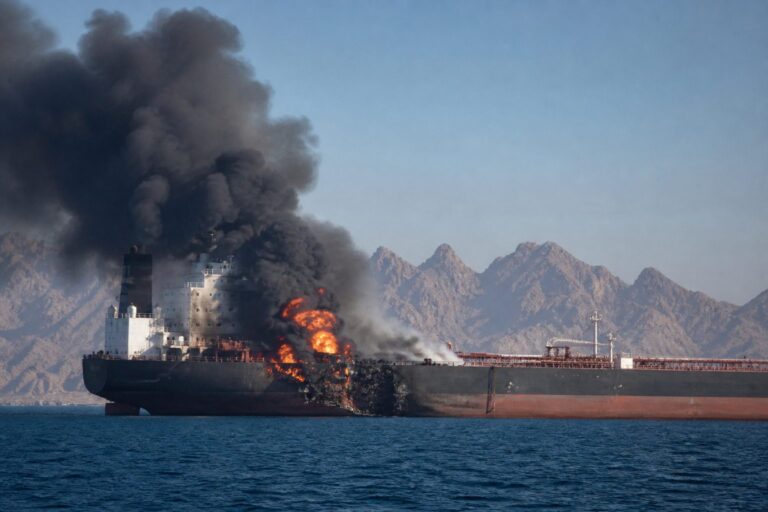
That industrial base matters for shipping risk. Since announcing a blockade on Saudi shipping on July 20, the group has struck seven vessels in the Red Sea and one in the Gulf of Aden, four of them Saudi-flagged, Iran International’s WSJ summary said. Saudi Arabia’s restart of the East-West pipeline to Yanbu—covered earlier by Peter’s World—was meant to hedge Bab el-Mandeb exposure; Houthi coastal gains raise the question of how durable that hedge remains.
China as dual-use backfill
As U.S. forces and anti-Houthi factions intercept more Iranian dhow smuggling, Chinese companies have become a larger source of dual-use electronics and drone-related equipment, according to U.N. reporting and arms experts cited by the Journal. Analysts stress this is not evidence of direct Chinese weapons transfers; it is a commercial component problem that lets local production continue when Iranian pipelines are disrupted. U.N. reporting has also flagged Djibouti transit and contacts with Somalia’s al-Shabaab for small-arms and expertise exchanges.
Peter’s World’s September 28 piece on Houthi grip over Bab el-Mandeb focused on shipping insurance and route diversion. The October supply-chain angle is different: it explains how the group sustains missile and drone inventories while expanding territorially. For Washington, Riyadh and European navies still running Red Sea patrols, interdiction of Iranian boats alone will not dry up production if dual-use imports fill the gap. Export-control enforcement on drone electronics—and pressure on transit hubs—now sits alongside carrier deployments as part of the maritime security toolkit.
The strategic implication is cumulative. Coastal gains near Bab el-Mandeb plus resilient local production raise the cost of any temporary lull in naval patrols. Insurers and shippers already price Red Sea risk; the WSJ supply findings suggest that risk will not fade simply because Iranian dhows are intercepted more often.
Sources
- Iran International: Iranian weapons, Chinese supplies fuel Houthi advance (WSJ)
- Seoul Economic Daily: Houthis grow into sea threat with Iranian arms, Chinese parts