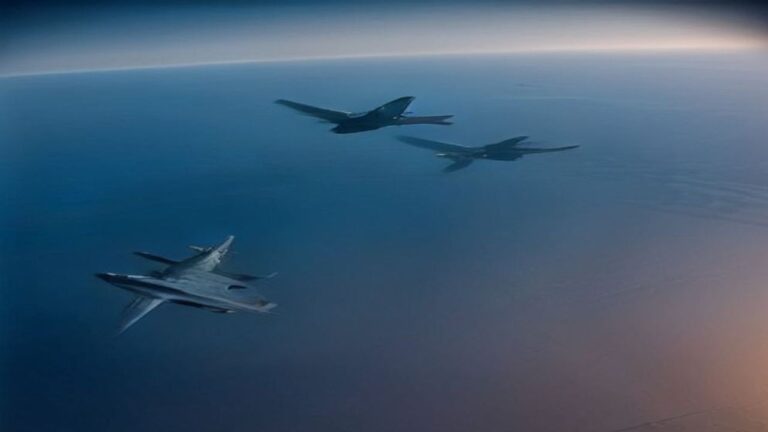
Russia’s Naval Drones: Poseidon Trials, Black Sea Squeeze
Russia’s nuclear Poseidon carrier is on sea trials while Ukrainian sea drones squeeze its fleet. What sources verify on Poseidon, USVs, AUVs and seabed threats.
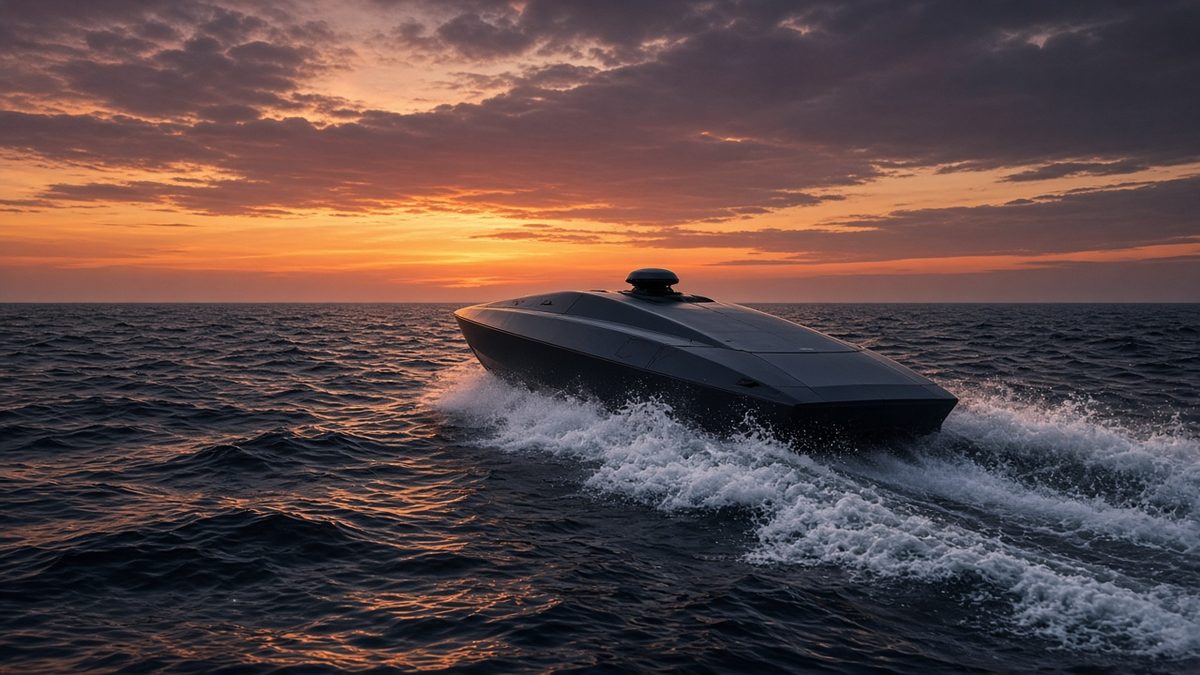
Russia’s unmanned maritime programs run from a nuclear-powered strategic torpedo to small patrol boats copied from Ukraine’s playbook. The headline item this autumn is the submarine Khabarovsk, built to carry the Poseidon, which began sea trials in August. Meanwhile Ukrainian sea and air drones have pushed the Black Sea Fleet into a defensive crouch, and Western officials say Russian undersea units rehearsed attacks on cables near Svalbard. Much of the evidence is claimed or single-source, and this report says so.
At a glance
- Poseidon carrier: Khabarovsk, designed to carry six Poseidon vehicles, began factory sea trials on 17 August, per Defence Blog; it is not yet in service (Defence Blog).
- Unverified test: Vladimir Putin said Poseidon’s nuclear power unit was run in a 28 October 2025 test; that has not been independently verified.
- Black Sea: Russian ships are concentrated at Novorossiysk, which was struck on 12 August and 9 September (Defence Ukraine).
Poseidon and the Khabarovsk trials
Poseidon, known in the West as Kanyon and in Russia as Status-6 or 2M39, is described as a nuclear-powered, nuclear-armed autonomous underwater vehicle. Defence Blog cites Russian media for dimensions of roughly 20 meters long and 110 tons, and analysts for a range near 10,000 km, while stressing that claims of a 100-knot top speed are unconfirmed. Putin said the 28 October 2025 test launched it from a submarine and ran its reactor for a period. Defence Blog notes that Western observers saw six unidentified vessels off Novaya Zemlya that day, but no confirming naval movements were widely reported.
Khabarovsk (Project 09851) has been under construction since 2014, was floated out on 1 November 2025, and was originally due in 2020, according to Defence Blog. It is believed to have six launch tubes; the earlier carrier Belgorod, delivered in 2022, has four. Reports differ slightly on the sailing date, with the Barents Observer later correcting its account to 16 August. Russia’s navy chief, Admiral Aleksandr Moiseyev, said on 26 July that a Poseidon carrier is already in the navy, a claim reported by TASS. Factory trials test propulsion and systems, not combat readiness, and Defence Blog notes a planned Pacific base at Krasheninnikov Bay is still being built. Russia has said it plans five carriers; a follow-on Project 09853 has not been publicly confirmed as under construction.
| System | Role | What sources say | Status / confidence |
|---|---|---|---|
| Poseidon (Status-6, 2M39) | Nuclear-powered, nuclear-armed underwater vehicle | Reactor test claimed by Putin, 28 Oct 2025 (Defence Blog) | Claimed; not independently verified |
| Khabarovsk (Pr. 09851) | Poseidon carrier submarine | Factory sea trials from mid-August 2026 | Under test; not commissioned |
| Katran USV | Patrol, scouting, FPV drone carrier | Two experimental boats given to the Black Sea Fleet in March 2025 (Militarnyi) | Experimental; Ukrainian intelligence data |
| Vizir-700, Zefir/Orkan, BEK-1000 | Attack and multipurpose USVs | Claimed payloads of 400-1,000 kg and ranges up to 500 km (Militarnyi) | Mostly showcase claims |
| Klavesin-2R-PM | Research AUV, 7 m, about 4 tons | Rated to 6,000 m; tested in Crimea, Far East plan (Army Recognition) | 2021 report; current use unknown |
| Surrogat-V | Submarine-escort decoy and search AUV | Claimed 800 nautical mile range (Army Recognition) | Developer claims; deployment unclear |
Surface drones and the Black Sea
Ukraine’s uncrewed boats changed the Black Sea balance, and Russia has copied the idea. Ukraine’s Defense Intelligence Directorate lists a wide range of Russian USVs, from hydrographic craft to the Vizir-700 kamikaze boat and the Murena-300s, and says a wooden 200 kg kamikaze boat may have destroyed the Zatoka drawbridge. Militarnyi relays DIU’s note that Russia planned naval UAV regiments in all fleets in 2025. In July 2026 Moiseyev said a first regiment had formed in the Northern Fleet and that a 500-ton uncrewed anti-submarine vessel is being built; I relied on Militarnyi’s report of his remarks and did not see the original program.
The defensive side is better documented. Defence Ukraine, an analysis site, traces four years of layered harbor barriers, anti-drone cages on Kilo-class submarines at Novorossiysk, and netting over Borei-class strategic submarines at Rybachiy on Kamchatka, thousands of kilometers from the Black Sea. It says the Black Sea Fleet’s main base is now Novorossiysk, where battle-damage imagery after the 9 September strike showed hits on the frigates Admiral Essen and Admiral Makarov and a Buyan-M ship. The site also cautions that sea drones alone did not cause the shift; missiles, aerial drones, mines and ship losses all contributed. Russia and Ukraine still dispute the extent of damage to a Project 636.3 submarine hit on 15 December 2025.
Undersea robots and seabed concerns
Russia’s unmanned undersea fleet is thinly documented. Army Recognition, relaying Izvestia in 2021, reported Klavesin-2R-PM as a roughly 4-ton, 6,000-meter vehicle with an estimated 50 km range. The same outlet, citing a Russian news source in 2024, described Surrogat-V as a Rubin design bureau drone meant to mimic a submarine’s acoustic signature and divert hunters; those performance figures come from the developer. I found nothing in the sources reviewed on Kronshtadt maritime drones, so I make no claim about them.
The more urgent Western worry is the seabed. Defence Matters, relaying a Reuters exclusive, reports that Britain, Norway and the United States disrupted a spring rehearsal near Svalbard by vessels linked to Russia’s Main Directorate of Deep-Sea Research (GUGI), involving an undisclosed cable-disabling technology. Officials said no cable was damaged. Two 1,400 km cables there carry satellite data from the SvalSat ground station, and Norway’s defense minister, Tore Sandvik, said the operation showed Russia cannot act covertly. The Russian Defense Ministry did not respond to Reuters. The report does not say that unmanned vehicles were used.
Why it matters
Analysis: Poseidon is a strategic signal as much as a weapon, and its delays and thin verification mean assessments should rest on trial milestones rather than Russian claims. The Black Sea story shows a mid-sized navy being constrained by cheap robots, a lesson other navies are studying, including the U.S. Navy, whose strategic-submarine plans are in our Columbia-class report. For wider context on Russian pressure on NATO, see our special report on Russian hybrid attacks. See also our reports on Russia’s air drones and ground robots.
Takeaway: Russia’s most publicized maritime drone is still in testing and unverified, while the proven effect of unmanned craft in this war has been Ukrainian.
Related coverage
- Columbia-Class Submarine: 2028 Delivery, Cost and Deterrence
- PrSM Missile: $1.2B Army Order, Iran Debut and Pacific Role
- Special Report: Russian Hybrid Attacks, the Ukraine War and NATO
Sources
- Defence Blog, Russia tests new submarine designed for ultra long-range nuclear torpedo, 17 August 2026.
- Defence Ukraine, Netting the Bay: Russia’s Counter-USV Architecture, 15 September 2026.
- Defence Matters, NATO operation stopped Russian GUGI rehearsal near Svalbard, 10 September 2026.
- Militarnyi, DIU Reveals Details of Russian Naval Drones, 26 August 2026.
- Army Recognition, Russian UUV Klavesin-2R-PM to be tested in the Far East, 7 September 2021.
- Army Recognition, Russia unveils autonomous underwater vehicle Surrogate-V, 29 February 2024.