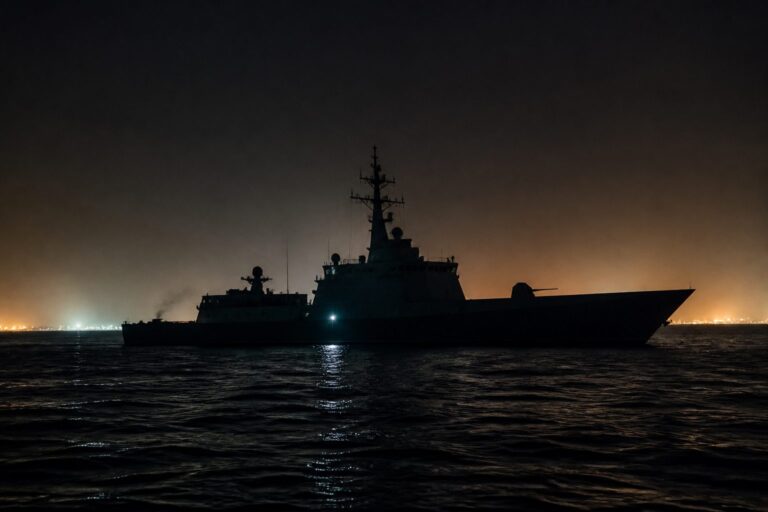
Taiwan Tracks 6 PLA Aircraft and 15 Chinese Ships
MND says four of six aircraft crossed the median line; seven PLAN and eight official ships operated around Taiwan in the latest 24-hour window.
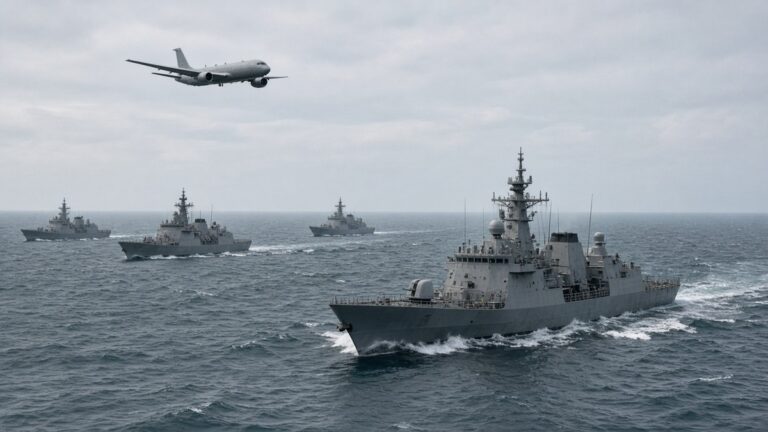
TAIPEI — Taiwan’s Ministry of National Defense reported six People’s Liberation Army aircraft sorties, seven PLA Navy ships and eight official ships around the island between 6 a.m. on October 1 and 6 a.m. on October 2, with four of the six aircraft crossing the Taiwan Strait median line into Taiwan’s southwestern and eastern air defense identification zone.
The official English bulletin posted October 2 said ROC armed forces monitored the activity and responded with combat air patrol aircraft, Navy ships and coastal missile systems. Taiwan News, citing the same window, summarized the maritime picture as 15 Chinese ships in total when naval and official vessels are counted together—a ship-heavy day even as aircraft numbers fell sharply from the previous 24-hour surge.
From surge to gray-zone mix
On October 1, Taiwan tracked 23 PLA aircraft with 16 median-line crossings—coverage Peter’s World published the same day. The October 2 tally shows the opposite end of Beijing’s pressure spectrum: fewer sorties, still a two-thirds median-line crossing rate among those that flew, and a denser surface presence of PLAN and China Coast Guard or other official ships. That mix fits the gray-zone pattern Taipei has described since 2020: incremental normalization of presence without a single headline invasion signal.
Four crossings into the southwestern and eastern ADIZ keep crews cycling through intercept and missile-alert postures even when the raw sortie count looks modest. Official ships operating alongside PLAN hulls complicate rules of engagement and public messaging, because coast-guard and research platforms can sit closer to Taiwanese waters while claiming civilian or law-enforcement roles.
Operational and political context
Taiwan routinely publishes the 6 a.m.–6 a.m. window so partners can track trends rather than isolated peaks. A day with six aircraft after a 23-aircraft surge does not mean de-escalation; it often means tempo management—resting airframes, shifting weight to the surface, and testing whether Taipei and Washington treat “quiet air, busy sea” as relief or as a different form of coercion.
U.S. officials, according to recent Reuters reporting summarized in policy briefs, have judged a Chinese invasion before 2028 increasingly unlikely even as Xi Jinping’s forces prepare for a 2027 readiness milestone. That assessment sits alongside continuous ADIZ probes, median-line crossings and research-ship activity near the Philippines’ Batanes—pressure short of war that still forces Taiwan to spend flight hours, ship days and missile-battery readiness.
Why the ship count matters
For readers tracking the Strait, the useful comparison is not only aircraft versus yesterday. It is whether Beijing is substituting hulls for sorties: seven PLAN ships plus eight official vessels keep presence visible on AIS and in coast-watcher reports when fighter numbers dip. Taiwan’s response package—CAP, Navy ships, coastal missiles—signals that Taipei treats the combined air-maritime picture as one problem set. Partners measuring “how hot” the Strait is should weigh median-line ratio and official-ship density alongside the headline sortie number that dominated October 1.