Taiwan Tracks Six PLAN Ships and Five Median-Line Crossings
Taiwan detected six PLAN ships, six official vessels and ten PLA aircraft sorties in 24 hours, with five aircraft crossing the Taiwan Strait median line.
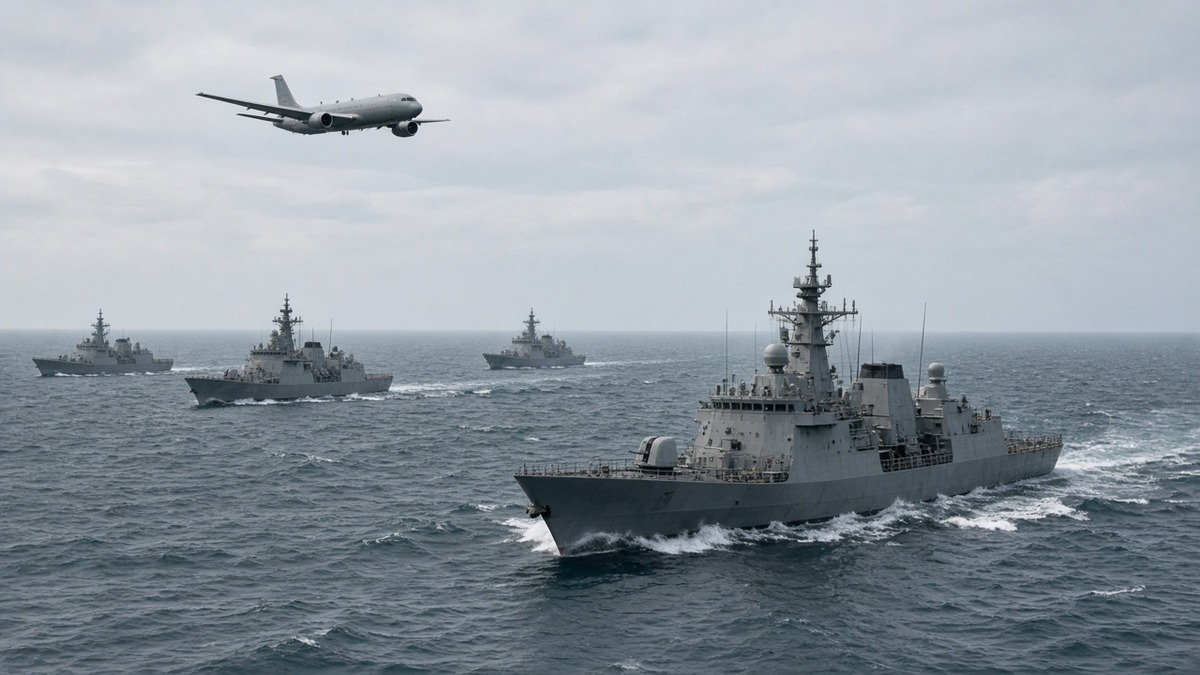
TAIPEI — September 24, 2026. Taiwan’s Ministry of National Defense reported that from 06:00 on September 23 to 06:00 on September 24 it detected six People’s Liberation Army Navy ships, six Chinese official vessels and ten PLA aircraft sorties around the island, with five of those aircraft crossing the Taiwan Strait median line into northern and central airspace — a lower aircraft count than the prior day’s surge but a persistent combined sea-air pressure pattern.
Central News Agency relayed the ministry’s morning bulletin: mission aircraft, naval ships and shore-based missile systems remained on continuous monitor-and-respond posture. The mix of PLAN combatants and “official ships” — typically coast guard or maritime law-enforcement hulls used to normalize presence — continues Beijing’s gray-zone template of pairing gray hulls with white hulls so that Taiwan must answer both military and constabulary tracks without a single clear casus belli.
The September 23–24 package sits one notch below the previous 24-hour window, when Taipei counted ten PLA aircraft with nine median-line crossings and twelve naval/official ships. That oscillation matters more than any single headline number. PLA pressure around Taiwan rarely resets to zero; it breathes — higher surge days for signaling around U.S. arms or UNGA diplomacy, then mid-range days that keep crews fatigued and radars lit. Five median-line crossings into northern and central sectors still require combat air patrols and coastal missile alerts, burning flying hours and maintenance cycles Taiwan can ill afford to waste.
Taipei’s Deliberately Dry Daily Reports
Politically, the daily track lands while Washington and Beijing jockey over arms sales, UNGA messaging and broader Indo-Pacific force posture. Taipei’s public releases are deliberately dry and numerical: sorties, ships, ADIZ sectors, response assets. The dryness is strategy. It documents coercion without theatrical escalation and gives partners a time series for sanctions or arms-package debates. Beijing, for its part, treats median-line flights as routine sovereignty enforcement and rejects the line’s legitimacy — a legal dispute that has become operational fact through repetition.
For U.S. and Japanese planners watching UNGA week, the lesson is continuity. Even when global headlines fix on Iran, Ukraine or Sudan visas, the Strait keeps a baseline of PLAN ships and airborne crossings that would have been crisis-level a decade ago and are now morning briefs. September 24’s six-and-five tally will not dominate cable news; it will add another row to the spreadsheet that measures whether gray-zone tempo is rising into a blockade rehearsal or merely sustaining the new normal.
Until Beijing pauses the combined ship-aircraft pattern or Taipei gains denser long-range sensors and munitions, mornings like this remain the cost of the status quo — measured in five median-line tracks and six gray hulls that never quite leave.
Allied intelligence sharing and commercial satellite revisit rates make these daily tallies harder for Beijing to dismiss as Taiwanese exaggeration; the numbers are independently pattern-matched even when Chinese state media stays silent.
Sources
- Taiwan Ministry of National Defense: PLA activities in the waters and airspace around Taiwan (Sept. 23–24)
- Taiwan News: Taiwan tracks 12 Chinese ships, 10 military aircraft



One Comment