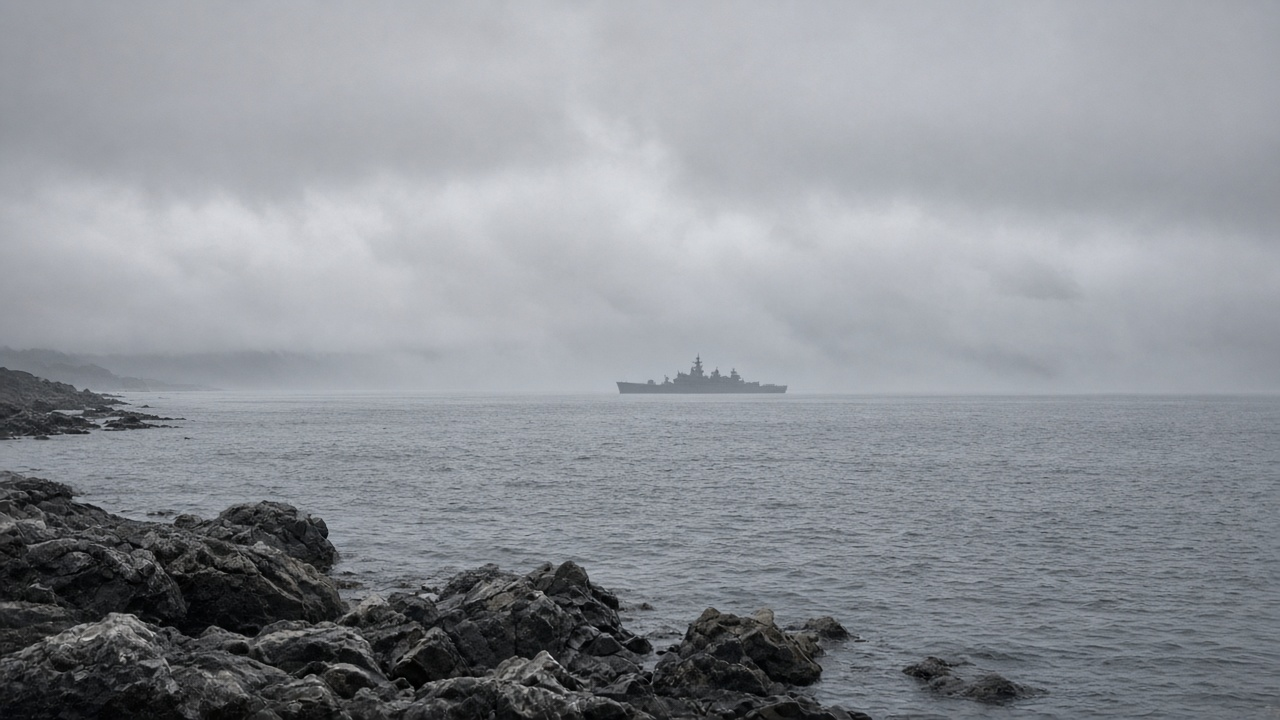
TAIPEI — September 21, 2026. Taiwan’s Ministry of National Defense reported that from 06:00 on September 20 to 06:00 on September 21 it detected seven People’s Liberation Army Navy ships, four official vessels and four PLA aircraft sorties, with three of those aircraft crossing the median line into Taiwan’s central, southwestern and eastern airspace — a daily pressure package that Republic of China Air Force, Navy and shore-based missile units monitored and responded to, according to Central News Agency coverage of the MND release.
The numbers are deliberately dry and that is their power. Seven PLAN ships plus four official vessels keep a constant surface presence around the Taiwan Strait approaches; four aircraft sorties with three median-line crossings keep air-defense crews cycling alerts without the drama of a mass exercise announcement. Taipei’s practice of publishing the previous day’s window each morning turns opacity into a measurable series: readers can compare ship counts, sortie counts and median-line breaches across weeks rather than relying on anonymous “heightened activity” language. CNA’s September 21 write-up stuck to those MND figures, the right anchor for any account that wants to avoid inflating a routine pressure day into an invented crisis.
Secondary reporting should be handled cautiously. Analysts cited by FTNN noted a possible new pattern of PLA helicopter extended flight east of the median line in the R9 zone earlier in the detection window. That observation is useful as hypothesis, not as confirmed doctrine change; helicopter persistence east of the line would matter if it becomes a repeated MND datapoint, but one secondary mention does not rewrite the primary tally of seven ships, four official vessels and four sorties. Prefer the ministry’s numbers; treat pattern commentary as color until it hardens into consecutive daily reports.
Context around the date matters without inventing summits. Indo-Pacific calendars this week include possible contacts involving U.S. and Chinese leaders, and Taipei watches those signals closely because Strait activity often rises or is interpreted more sharply when great-power diplomacy is in the news. This article does not claim a confirmed Trump–Xi meeting outcome or invent itinerary details that are not established; it only notes that median-line flights and PLAN surface presence persist as background pressure while broader U.S.–China diplomacy is discussed. That framing keeps the piece distinct from earlier coverage of Taiwan’s MQ-9B SkyGuardian flight tests and generic median-line stories from mid-September.
Operationally, ROCAF fighters, ROCN ships and shore missile units responding to the package is Taiwan’s standing playbook: detect, shadow, announce. The announcement itself is deterrence theater aimed at domestic audiences and foreign partners who track whether Taipei still owns the narrative of its own airspace. Beijing’s mix of navy ships, official vessels and limited aircraft crossings is gray-zone volume — enough to normalize presence, not enough on this particular day to force a crisis headline on ship collisions or live fire.
What the September 20–21 window measures is persistence, not a singular spike. Seven warships, four official vessels, four sorties and three median-line breaches keep the Strait on a wartime footing of attention without declaring an exercise. Until MND tallies fall for consecutive days or a diplomatic track produces visible de-escalation language, Taiwan will keep publishing dawn-to-dawn counts, partners will keep reading them as barometers, and the gray water under overcast skies will remain the quiet metric of pressure around the island.