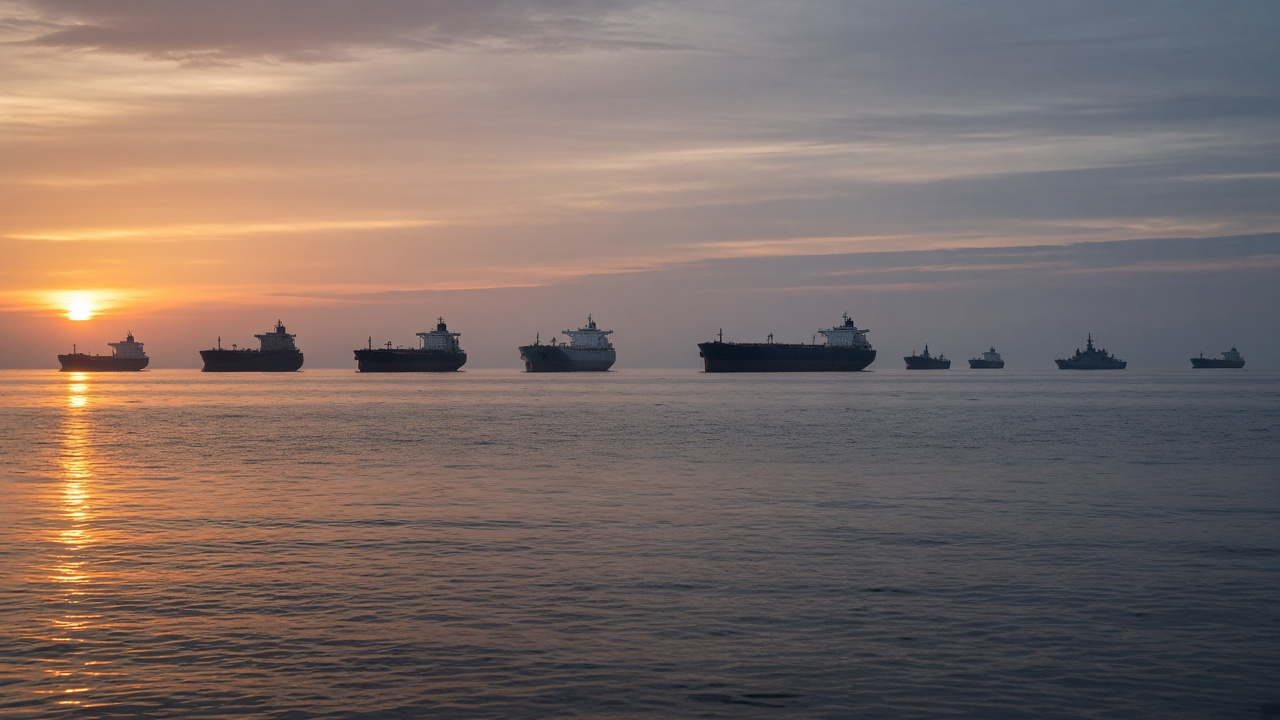
TAMPA — September 11, 2026. U.S. Central Command said American forces had redirected 96 commercial vessels under the naval blockade against Iran as of September 10, while still permitting more than fifty humanitarian-linked passages—an official diversion tally that landed the same week oil markets recorded their steepest jump in nearly two months. Brent futures settled around $107.63 a barrel after a gain of roughly $6.42; West Texas Intermediate closed near $102.48. Those prices are the highest since mid-May and track a simple operational reality: when a chokepoint war meets an enforced blockade, freight and crude reprice together.
Ship-tracking snapshots circulating Friday described Hormuz traffic falling to about seven vessels Thursday from eleven the day before, far below a recent ten-day average near fifteen. Those counts exclude any dark AIS runs—an important caveat after months of IRGC corridor threats and U.S. boarding and diversion pressure. UKMTO’s “severe” threat rating remains the insurer’s headline, but CENTCOM’s 96-ship figure is the policy headline: Washington is measuring success not only in kinetic hits on IRGC-linked tankers but in how many commercial hulls never enter the contested funnel.
Treasury’s “Operation Economic Outcast” added another layer Thursday with fresh designations aimed at networks the United States says aid Hezbollah and other Iran-linked proxies. Tehran calls the campaign economic warfare; Washington presents it as the non-kinetic twin of the blockade. Either way, the combination—diversion numbers, sanctions expansions, and a $100-plus crude complex—compresses Iran’s sea-borne revenue options while raising the global inflation risk of a seventh month of Hormuz attrition. The unanswered question for markets is duration: blockade diversion works until substitute routes, floating storage, and Saudi Red Sea workarounds saturate, or until a parallel Bab al-Mandab shock (see Mocha) turns one chokepoint crisis into two.