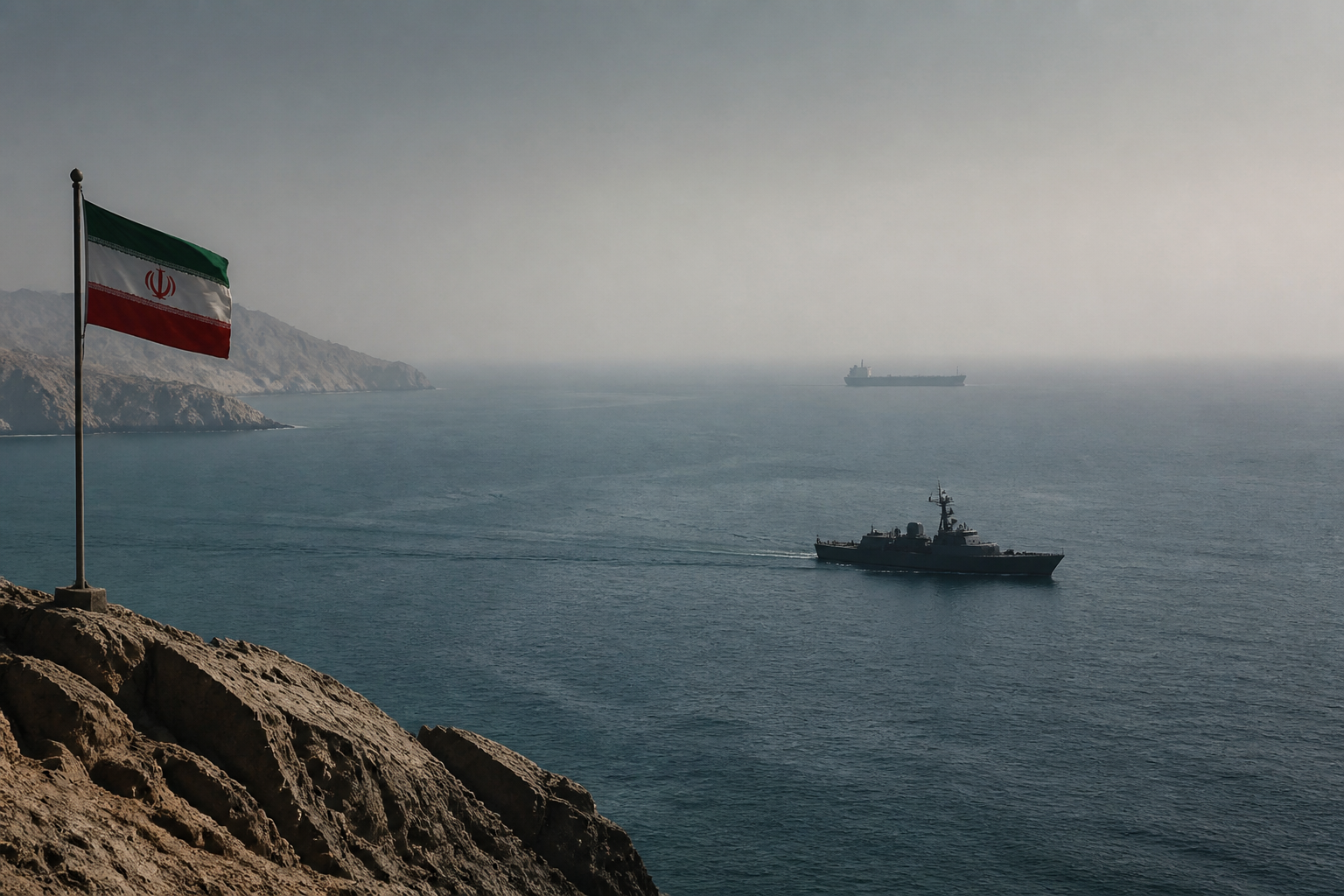
MUSCAT — September 14, 2026. Oman’s foreign minister, Sayyid Badr Albusaidi, said late Sunday that a regional meeting scheduled for Monday between Iran and Gulf partners on Strait of Hormuz shipping arrangements had been postponed in the interests of consensus,” collapsing what had been the week’s clearest diplomatic opening. Iranian foreign ministry official Mohammad Ali Bak, quoted by IRNA, said Tehran and Muscat jointly delayed the gathering at the request of some regional countries. The session was meant to present an Iran–Oman framework for managing contested transit through a waterway that, before the war, moved about a fifth of global oil.
Saudi Arabia has submitted amendments to that Iran–Oman draft, citing lasting implications for other Gulf Cooperation Council exporters, a Gulf official familiar with the talks told France 24/AP on condition of anonymity. Bahrain had already said it would not attend, citing the absence of diplomatic ties with Tehran; only Iraq had publicly confirmed plans to show up before the delay. U.S. Energy Secretary Chris Wright separately downplayed near-term consensus with Iran, telling Bloomberg-linked outlets that counting on a consensual Hormuz deal “is certainly not a good bet.” Iranian President Masoud Pezeshkian, meanwhile, said he held a “good talk” with Abu Dhabi’s crown prince, Sheikh Khaled bin Mohamed bin Zayed, on the sidelines of the BRICS gathering in New Delhi—an outreach that did not unlock Monday’s table.
The postponement matters because diplomacy and kinetic pressure are now moving on the same clock. Tehran has floated fee-and-route schemes that would push inbound Gulf traffic through Iranian waters while splitting outbound lanes with Oman, and has insisted any reopening still requires an end to the U.S. blockade. Gulf capitals want collective leverage without locking in Iranian gatekeeping. With Bab al-Mandab under fresh Houthi pressure and Hormuz already attrited, a missed Muscat meeting is not a pause—it is confirmation that corridor politics remain as contested as the water itself.