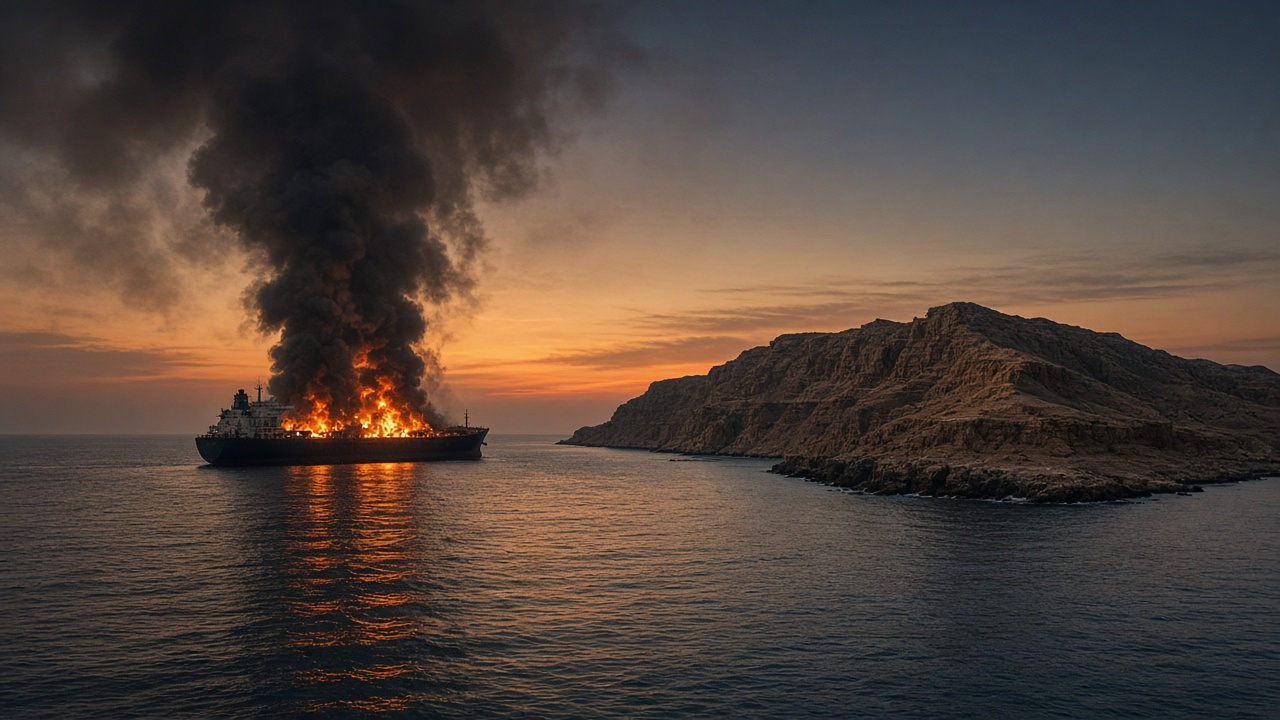
DUBAI — September 14, 2026. An Iranian cargo vessel was struck early Sunday off Qeshm Island in the Strait of Hormuz, Iranian state media said, killing one person and wounding four in an attack Tehran’s Qeshm governor blamed on a “terrorist enemy,” according to IRNA accounts carried by France 24 and the Associated Press. The United Kingdom Maritime Trade Operations centre separately reported a vessel hit by a projectile while transiting the strait, with a severe fire and local authorities evacuating those on board—reporting that may refer to the same incident. Qeshm sits roughly twenty-two kilometers from Bandar Abbas and anchors Iran’s claim to choke-point control after more than six months of the U.S.–Israel war that began February 28.
Washington did not immediately claim or deny the hit. Asked whether U.S. forces struck the Iranian cargo ship, President Donald Trump—speaking Sunday in Doonbeg, Ireland—replied, “I don’t want to say,” before boarding Air Force One for Washington, according to AP pool reporting. Hours earlier, Iranian President Masoud Pezeshkian posted that “Iran won’t surrender” and that the country’s people “can’t be bullied into submission.” The unanswered attribution lands against a backdrop of U.S. blockade enforcement against Iranian ports and Iranian missile threats against American warships, leaving commercial operators with another weekend casualty day regardless of which side fired first.
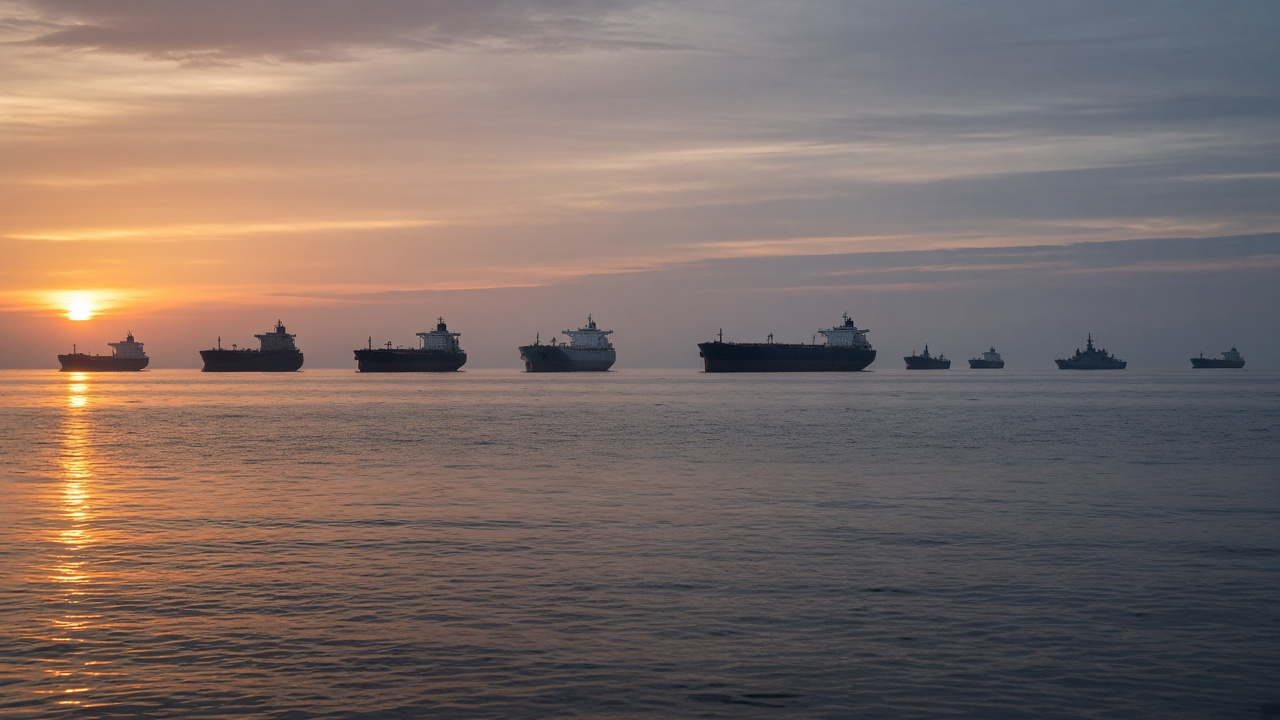
For insurers and shipowners, Sunday’s fire is less a mystery than a pattern. Hormuz traffic has already collapsed into single-digit daily counts while UKMTO ratings stay severe, and each contested hull—whether Iranian-flagged or third-countryraises the premium for any escort hugging Oman’s coast. Tehran’s “terrorist enemy” formula keeps diplomatic flexibility; Trump’s refusal to confirm keeps operational ambiguity. Either way, the strait that once carried roughly a fifth of global oil is again pricing kinetic risk into every AIS track that still dares the funnel.