President Volodymyr Zelensky called an armed confrontation between Ukraine’s Security Service (SBU) and Military Intelligence (HUR) in Kyiv “absolutely disgraceful” on September 2, 2026, ordering prosecutors and the State Bureau of Investigation to establish the facts and hold those responsible to account.
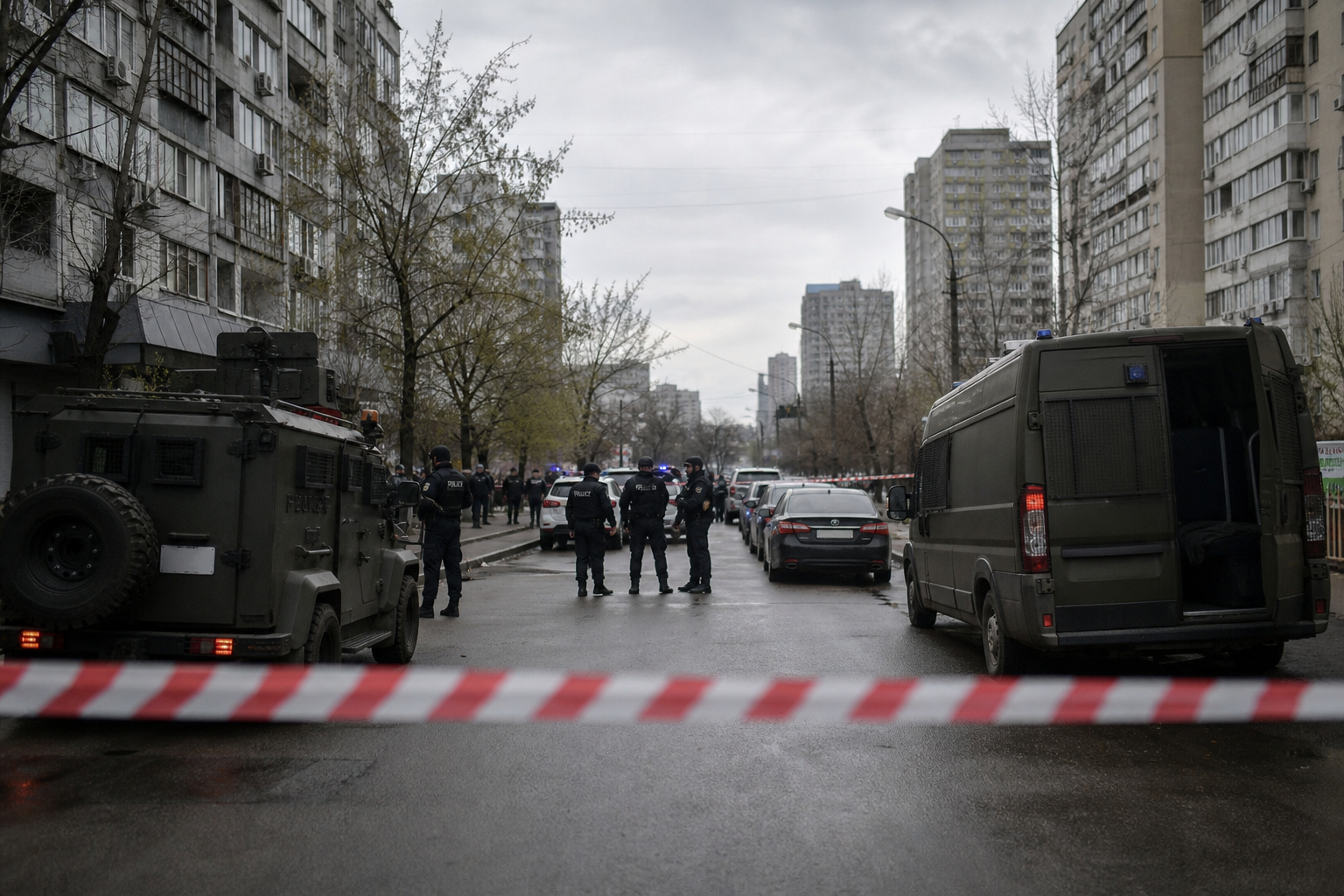
The shooting erupted on Yuriya Shumskoho Street in Kyiv’s Dniprovskyi district. Ukrainian media and officials described a chaotic sequence involving the disputed detention or disappearance of Stepan Kaplunov, deputy commander of the Russian Volunteer Corps (RDK/RVC), a unit of Russian nationals fighting for Ukraine. Reports said three HUR personnel were injured. Police cordoned the area as investigators took over.
Competing narratives emerged immediately. The SBU said its officers were conducting urgent investigative actions tied to an alleged FSB terrorist plot against a Russian opposition-nationalist figure who had come to Ukraine around Independence Day events. According to the SBU, a group attacked the investigative team during a search, prompting deployment of the Alpha special unit, which used weapons while suppressing resistance and detaining attackers later linked to a Defense Forces unit.
HUR-aligned accounts painted the opposite picture: that SBU personnel effectively abducted or improperly detained Kaplunov, that HUR forces responded, and that later SBU actions included detaining unarmed HUR officers and opening fire after an apparent stand-down. Kaplunov’s lawyer publicly contested the handling of the case; later reporting indicated Kaplunov had been released, though his whereabouts were not cleanly established in early statements.
Zelensky’s response mixed criminal process with personnel politics. He said he had spoken with Prosecutor General Ruslan Kravchenko and that the Prosecutor General’s Office and State Bureau of Investigation would reconstruct the incident step by step. He later signed a decree dismissing Oleh Khramov, head of the SBU department for protection of state secrets. Advisers indicated the president had also come down hard on the leadership of both services.
The episode matters beyond one street in Kyiv. Ukraine’s war effort depends on cohesion among intelligence, special forces, and volunteer formations that often operate in legal gray zones. An open gunfight between the country’s own security organs — especially one involving a sensitive Russian anti-Moscow volunteer network — hands Moscow a propaganda gift and raises allied questions about command discipline behind the front.
Zelensky’s line was unambiguous: in Ukraine, weapons are for use against Russian occupiers, not between Ukrainian services. Whether the investigation produces transparent accountability, or merely a managed reshuffle, will signal how seriously Kyiv intends to police the internal rivalries that wartime necessity has allowed to grow.