Russia Fires 282 Drones and Zircon Missiles at Ukraine, Killing Eight
Russia fired 282 drones plus Zircon and ballistic missiles at Ukraine, killing at least eight, as Zelenskyy said about 60% of ballistic missiles were downed.
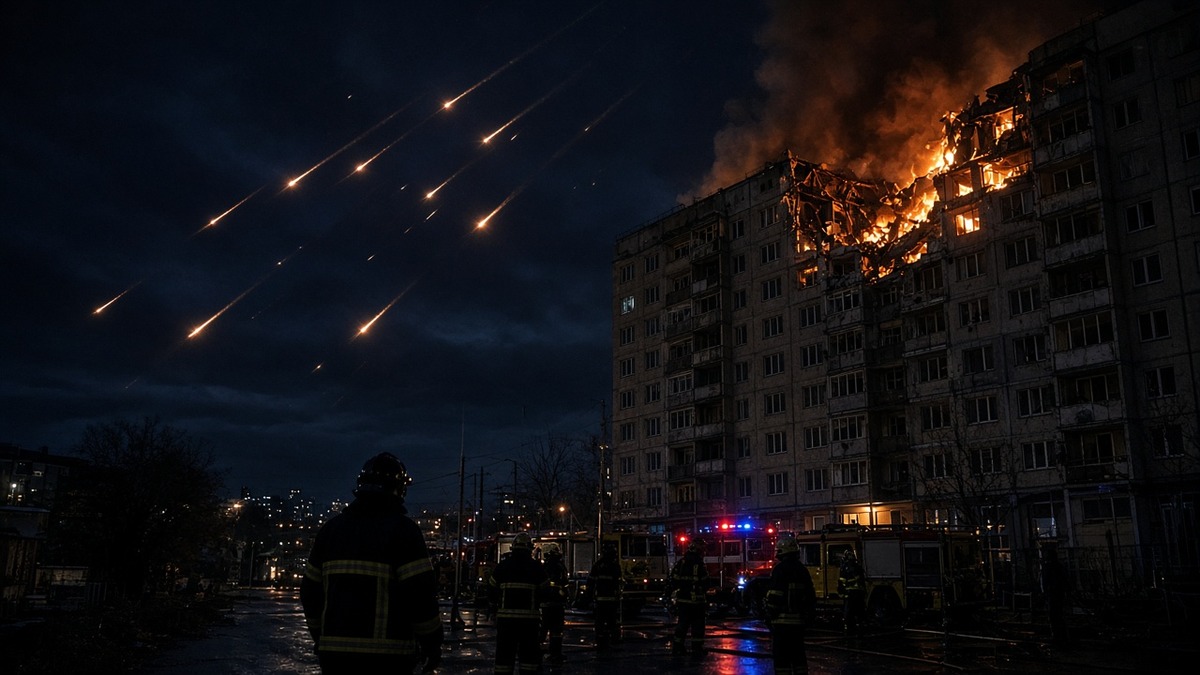
KYIV / NEW YORK — September 24, 2026. Russia launched one of its densest overnight aerial assaults of the autumn, combining 282 attack drones with Zircon anti-ship missiles and ballistic salvos that Ukrainian officials said killed at least eight people across Kyiv and the Kharkiv region even as President Volodymyr Zelenskyy, speaking in New York, claimed air defenses intercepted about 60 percent of the ballistic wave.
Ukraine’s air force described a package that included four Zircon missiles launched from the Kursk, Rostov and Oryol regions, plus Iskander-M, S-400 and KN-23 ballistic types and hundreds of drones. By roughly 08:00 it claimed 227 weapons destroyed or suppressed — all four Zircons, three ballistic missiles, one Banderol/Dan-T cruise weapon and 219 drones — while recording hits at 13 locations and debris at 10 more, with Kyiv and Odesa named as primary axes. The assault continued into the morning, overlapping Zelenskyy’s UN General Assembly diplomacy and meetings with U.S. lawmakers on sanctions pressure.
Casualty figures hardened through the day. Kharkiv Governor Oleh Syniehubov reported six agricultural workers killed and others wounded when a Russian strike hit a farm; Prime Minister Serhiy Koretskiy cited seven dead and ten injured in the same regional attack, while Interior Minister Ihor Vyhivskyi later summarized eight civilian deaths nationwide. In the capital, Mayor Vitali Klitschko said two people were killed in ballistic strikes, including one death in a maternity-hospital parking area in Podil damaged by missile fragments. Emergency services listed additional injuries and damaged apartment and non-residential buildings in Dniprovskyi District.
Moscow’s Defense Ministry said overnight strikes targeted Ukrainian defense industry, logistics and telecommunications hubs and claimed a hit on a Black Sea tanker delivering fuel toward the port of Chornomorsk. Ukrainian and Western reporting treated that maritime claim as part of a broader campaign against coastal logistics. Russian regional officials separately reported Ukrainian drone debris near industrial sites in Krasnodar and an administrative building at a Rostov-region refinery without a major fire.
Zelenskyy Details Three Ballistic Waves
Zelenskyy told journalists in New York that Russia fired three distinct ballistic waves early on September 24 and that he conferred with Armed Forces Commander-in-Chief Mykhailo Drapatyi and Air Force Commander Anatolii Kryvonozhko during the raid. The 60 percent ballistic intercept rate, he argued, is still too low: Ukraine needs higher shoot-down rates and more interceptor missiles from the United States and Europe. He said he had again pressed President Donald Trump for air-defense resupply despite acknowledged allied stock constraints, describing procurement as sometimes arriving “two at a time.”
The timing was deliberate politics as much as targeting. Hours earlier at the UN Security Council, Foreign Minister Sergei Lavrov said Russia would not pause its military operation while negotiating. A joint declaration by 51 countries at the United Nations said Ukraine had accepted a full unconditional ceasefire and called on Moscow to match it. Overnight missiles answered that diplomacy in steel. U.S. officials continued separate UNGA-side contacts with both capitals aimed at limiting the war’s hit to global energy and grain markets, but the September 24 package showed Moscow still treating mass drone-missile nights as compatible with talking.
What the raid measures for Kyiv is interceptor depth versus Russian magazine depth. Claiming 219 drones downed is a success metric that still leaves dozens of leakers, debris fires and hospital-adjacent deaths. For Washington and European suppliers, Zelenskyy’s public 60 percent figure is a shopping list framed as a survival threshold. Until stocks rise or a verified pause appears — neither evident on September 24 — nights built from Zircons, KN-23s and 282 drones remain Russia’s preferred rebuttal to UN ceasefire language.
Sources
- Hromadske: Russian attack kills 2 in Kyiv as Ukraine comes under barrage of 282 drones and missiles
- Kyiv Post: Zelensky: Ukraine intercepted 60% of ballistic missiles in overnight Russian attack
- Ukrainska Pravda: Russia attacks Ukraine with Zircon and Iskander missiles and nearly 300 drones


2 Comments