September 6, 2026. The temporary restraint around Moscow and Kyiv did not translate into a quiet night elsewhere. Ukrainian officials said Russian drones and missiles struck multiple regions, killing and injuring civilians in Zaporizhzhia and Khmelnytskyi, while Russian authorities reported a fatal Ukrainian drone strike in Belgorod. The pattern is the clearest warning attached to the capital pause: the war can be diplomatically insulated in one location while its strike network continues operating across hundreds of miles.
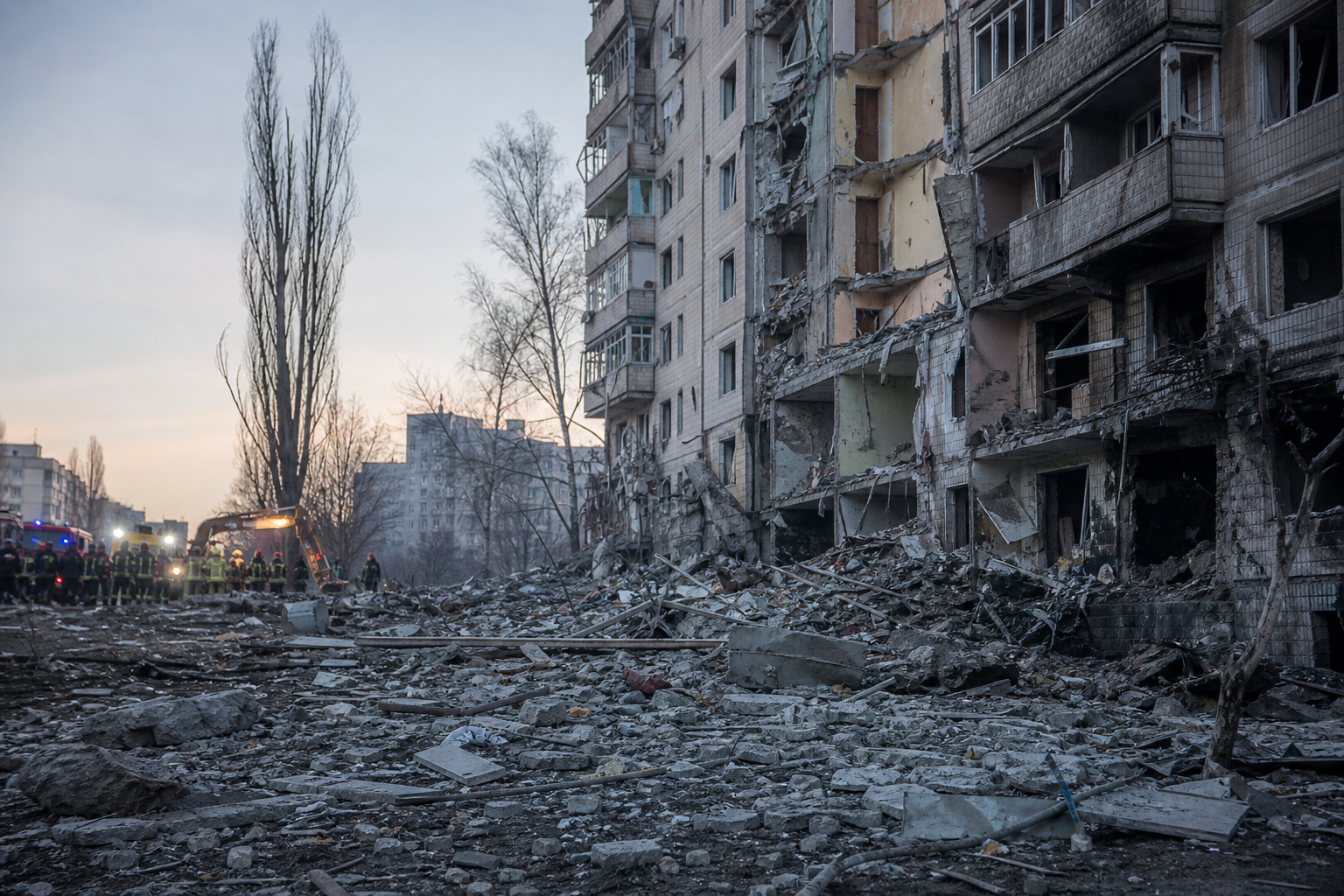
Ukraine’s Air Force said it intercepted 82 of 108 Russian drones overnight, along with six missiles. In Zaporizhzhia, a 74-year-old man was killed and three people were wounded, according to emergency officials. In Khmelnytskyi, debris from a drone hit an apartment building and injured seven residents. Other regional reporting put the wider Ukrainian toll over the preceding day still higher, with attacks in Kharkiv and Kherson adding to the civilian burden. Interception numbers show defensive activity, not an absence of damage.
Russia reported its own losses. Belgorod officials said a Ukrainian drone struck a vehicle, killing a man and seriously injuring a woman. The Russian Defense Ministry separately claimed its air defenses destroyed hundreds of Ukrainian drones across several regions and occupied Crimea. Such figures are military claims rather than independently verified counts, but they illustrate the scale of the reciprocal campaign and the political environment in which each side presents defense as proof of control.
The geography matters because these are not simply exchanges at the front. Long-range drones are now instruments of pressure against logistics, energy systems, military production and public confidence. A capital pause removes neither the launchers nor the targets. It can even sharpen incentives to strike elsewhere, allowing commanders to signal resolve without directly sabotaging the diplomatic event that Washington is watching.
For civilians, the distinction is meaningless. A family in an apartment block does not experience a “limited pause” as restraint when an interceptor misses or fragments fall through a roof. For negotiators, however, the attacks will be evidence in the argument over sequencing: Kyiv will say a real ceasefire must cover the entire country, while Moscow will insist that localized restraint can coexist with military pressure. Until that argument is resolved, the war’s quieter capitals will remain surrounded by a much louder battlefield.