US Sanctions 10 Iran Arms Buyers and Russia’s Yakovlev Bureau
Treasury targets 10 weapons procurers for Iran’s defense ministry; State designates Russia’s Yakovlev and MG-Flot and offers $15 million over IRGC finances.
WASHINGTON — Sep 30, 2026 — The Treasury Department sanctioned 10 individuals and companies on Tuesday for procuring weapons and components for Iran’s armed forces, while the State Department separately designated a Russian aircraft maker and a Russian shipping firm it accused of supplying Tehran’s military, according to official statements from both departments. The State Department also offered rewards of up to $15 million for information on the finances of the Islamic Revolutionary Guard Corps (IRGC) Aerospace Force.
Treasury’s 10 designations
Treasury’s Office of Foreign Assets Control said the targets procured weapons and weapons components for Iran’s Ministry of Defense and Armed Forces Logistics (MODAFL), the body responsible for weapons research, production and acquisition. The list includes Seyyed Asghar Alizadeh Tabatabai, described as a MODAFL representative in Beijing who coordinates purchases of finished weapons systems and dual-use parts in China.
Treasury also named Iran-based Kavoshcom Asia R and D Group, which it said supplied electronics to Iran’s drone and military-aircraft maker HESA and to a unit tied to the solid-fuel ballistic missile program, along with Kavoshcom’s director and a representative. Hong Kong-based EC Mojo Technology and its representative Li Fen were named for supporting Kavoshcom’s purchases. The final group is Pakistani businessman Waseem Pasha Tajammal and three Cavalier Dynamics companies in Pakistan, Saudi Arabia and Türkiye. Treasury said it acted against the Saudi entity “in coordination with Saudi government partners.”
Treasury Secretary Scott Bessent said the department “will continue to identify, expose, and isolate Iran’s enablers.” The action is part of Operation Economic Outcast, which Bessent announced on Aug. 24 and which Treasury describes as severing the remaining economic lifelines of the Iranian government.
State Department targets Russian suppliers
The State Department said it designated one Iran-based and two Russia-based entities under Executive Order 13949, which covers Iran’s conventional arms activities. It announced the move following the first anniversary of the reimposition of UN sanctions on Iran.
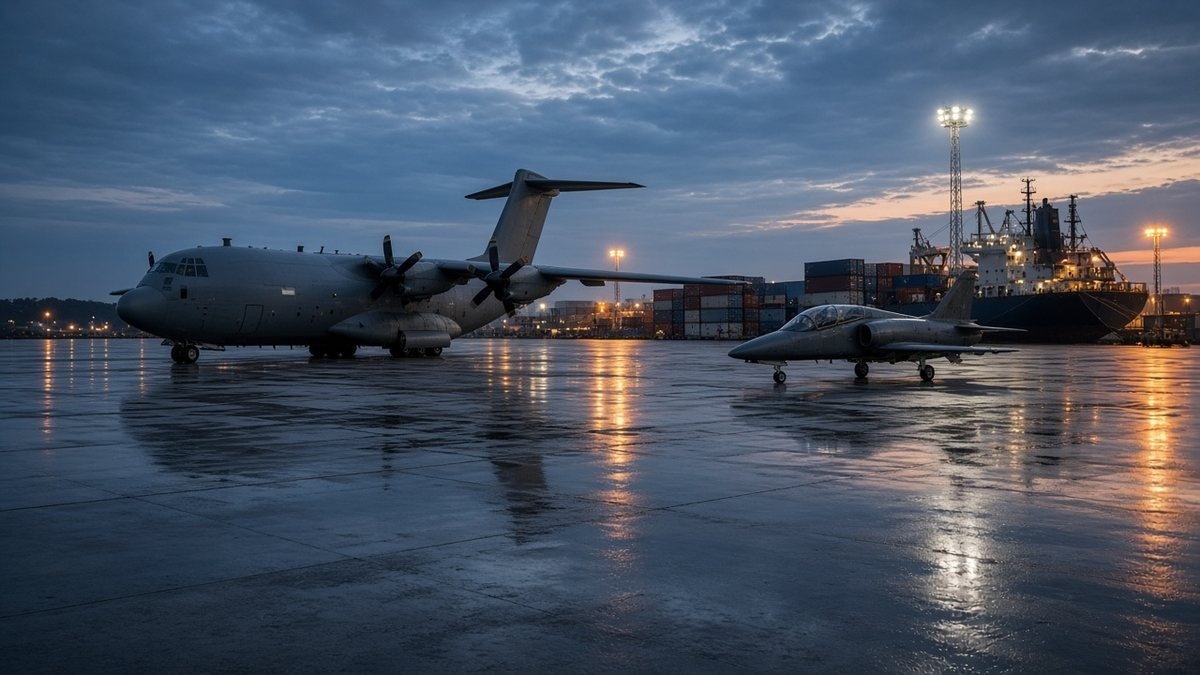
The best-known name is the Yakovlev design bureau, which produces the Yak-130 advanced trainer jet. The State Department said Russia delivered several Yak-130s to Iran in late 2023, sent more equipment in November and December 2025 from a facility in Irkutsk, and has now delivered nearly all of the roughly 24 aircraft it contracted to supply. It also designated MG-Flot, a Russian shipping company, saying its vessels moved close-range ballistic missiles from Iran to Russia in 2024 and carried Iranian air-defense vehicles to Russia in late 2025. Iran’s Saha Airlines, previously designated on Sept. 8, was designated again under the arms authority.
The department said the United States has imposed dozens of new sanctions over the past year and convened representatives from 40 countries on enforcing the UN measures.
Reward offer and the wider campaign
Under its Rewards for Justice program, the State Department offered up to $15 million for information on the financial mechanisms of the IRGC Aerospace Force. It named Brig. Gen. Abdollah Mehrabi, who heads the force’s research and self-sufficiency organization and co-owns a company the department says makes engines for Shahed drones, as well as Ahmed Ja’farabadi and Ali Asghar Norouzi, chairman of the IRGC Cooperative Foundation. Iran International noted that a State Department graphic appeared to show a photo of another Iranian general in place of Norouzi.
Al Jazeera reported that the sanctions touch firms in China even as President Donald Trump touts trade progress with Beijing after hosting Xi Jinping, and that critics question how forcefully Washington will confront Chinese trade with Iran. It also noted that Iran’s currency fell to a record low on Tuesday. The announcements came the same week that Tehran received Washington’s reply to its Hormuz plan through Qatar, and Al Jazeera described the sanctions campaign as aimed at pressuring Tehran into a deal to end the war.
Sources
- U.S. Treasury: Operation Economic Outcast Takes Down Iranian Military Procurement Networks
- State Department: United States Disrupts Iran’s Proliferation-Sensitive Efforts
- Al Jazeera: US sanctions 10 entities for allegedly supporting Iran’s military
- Iran International: US offers $15 million for information on IRGC Aerospace Force leaders