France Unrest Explained: Timeline, Causes and the Islam Debate
Violent school protests have spread across France. A dated timeline, the causes, and what Islam has and has not got to do with it.
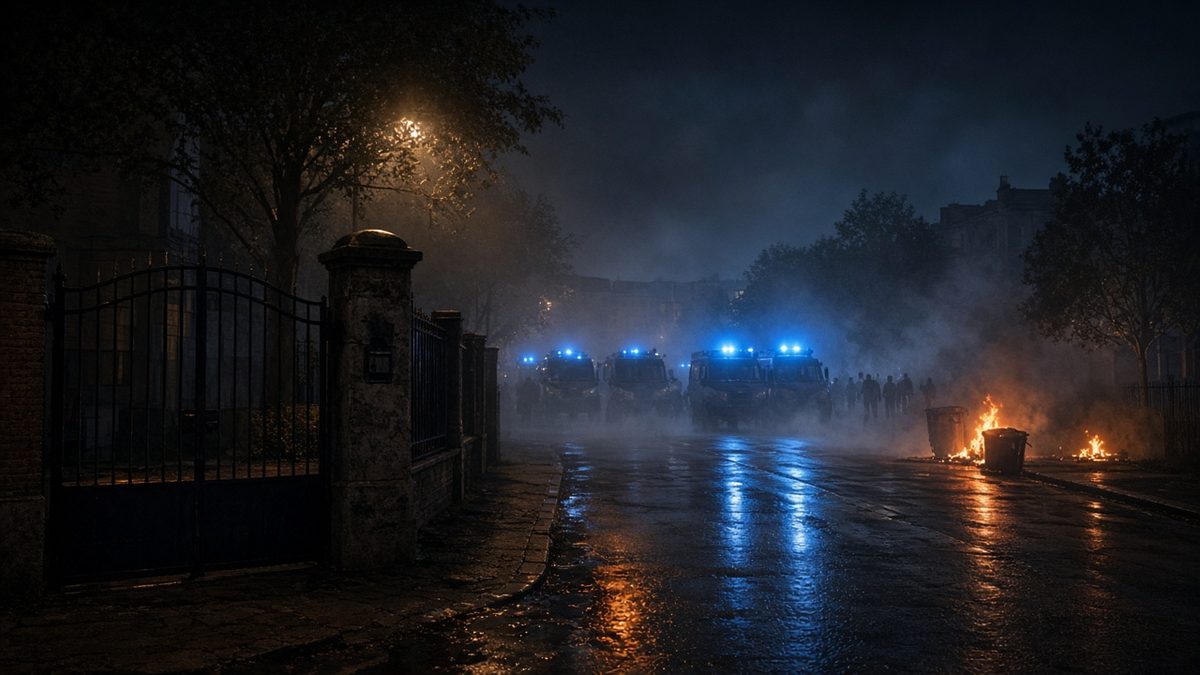
Read this first. The violent unrest in France right now is a nationwide high-school student movement over classroom conditions. We found no official finding or credible reporting that Islam caused it. Islam enters the story in three separate ways, each covered below: jihadist plots and arrests, a government campaign against “Islamist entryism” including mosque closures, and a political argument over who to blame. Figures are from the sources linked, change daily, and differ between outlets. Claims by politicians are attributed to them and are not established fact.
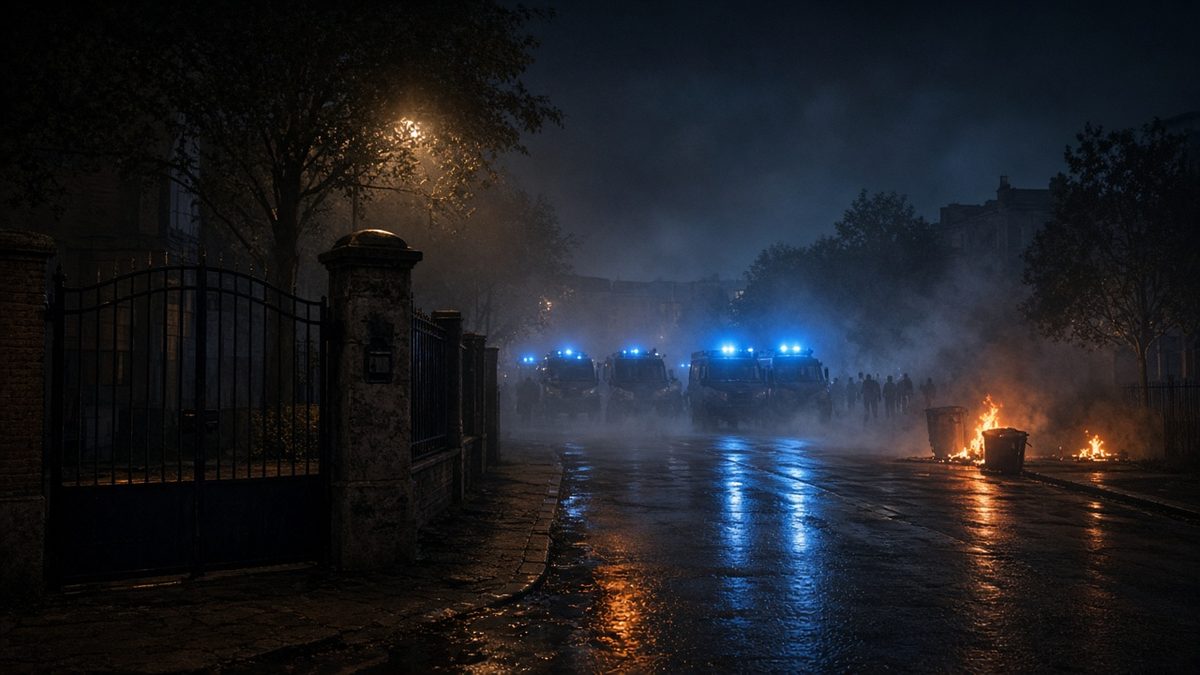
Since late September 2026, French teenagers have blockaded schools, burned bins and fought riot police in cities from Paris to Marseille. Thousands have been detained, hundreds of officers have been injured, and hundreds of schools have closed. It has become the biggest domestic security story in France seven months before the presidential election, and it is being fought over by the far right, the radical left and the government. This article lays out who, what, where and when in order, then the causes, and then the question many readers are asking: what does Islam have to do with it?
The short version
- What: a student movement that began over overcrowded classes, teacher shortages and run-down schools, and turned into nightly clashes with police.
- Where: it began in the Paris region (Créteil, Seine-Saint-Denis) and spread to Lille, Nantes, Rennes, Bordeaux, Lyon, Marseille, Strasbourg, Toulouse and beyond.
- Scale (reported): roughly 2,000 arrests on Thursday 1 October alone and more than 5,000 detained since Monday 28 September, according to officials cited by AFP and others; over 300 police and gendarmes injured.
- Islam: not named by officials as a cause. A separate government crackdown on Islamist networks and a run of jihadist-plot arrests are happening in the same months, which is why the two get mixed up.
Timeline of current events
Dates are 2026 unless noted. Items marked Islam-related belong to the separate security and religion thread, not to the student protests.
Background: the months before
- 16 March – Islamist-entryism bill. Senator Bruno Retailleau files a bill to create a crime of undermining republican principles and widen powers to dissolve associations (French Senate summary). Islam-related. It builds on a May 2025 government report that called the Muslim Brotherhood movement a “threat to national cohesion” while noting it found no sign Muslims in France want an Islamic state (France 24).
- 28 March – Paris bomb plot foiled. Police arrested a man about to ignite a homemade device outside a Bank of America branch. He reportedly told police he was recruited on Snapchat for €600. A source told AFP it looked like the “Iranian threat” against US and Israeli interests rather than a classic jihadist plot (France 24).
- 2 April – Interior Minister Laurent Nuñez announces a new anti-separatism bill and has the annual gathering of Musulmans de France, which he calls a Muslim Brotherhood-linked body, banned at Le Bourget; the organizers challenged the ban in court (Le Parisien). Islam-related.
- 7 May – Jihadist plot arrest. A 27-year-old Tunisian is arrested on suspicion of planning an attack inspired by jihadism, reportedly on a Paris museum and members of the Jewish community (France 24). Islam-related.
- 31 May to 1 June – PSG riots. Celebrations after Paris Saint-Germain’s Champions League win turned into looting, arson and clashes; authorities reported about 890 arrests (RFI). National Rally president Jordan Bardella called them “scenes of civil war” and linked them to immigration (POLITICO). This set the political script used again in October.
- 22 June – Vigipirate overhaul. France moves to a new three-level terror-alert scale and stays at the middle level, “reinforced vigilance” (Oise prefecture). Islam-related.
- 2 July to 7 August – Aulnay-sous-Bois mosque. Assets of the Attaqwa mosque in Seine-Saint-Denis are frozen on 2 July. The prefect orders it closed on 27 July for alleged incitement to terrorism, hatred or violence, and the Montreuil administrative court upholds a six-month closure on 7 August. Authorities allege it praised “armed jihad” and hosted a Salafist preacher who justified the 7 October 2023 attack. The court noted the closure does not stop anyone quoting the Quran. Islam-related.
- 1 September – Three arrests. Counter-terror police arrest three men aged 18 to 26 in Essonne and Indre-et-Loire over a suspected plan to attack the Jewish community and join ISIS in Africa, after surveillance of a WhatsApp group, according to RTL as reported by VINnews (VINnews). These are allegations; the men were charged but not convicted. Islam-related.
- 16 September – Mosque association dissolved. The Council of Ministers dissolves the association that ran the Aulnay mosque, on Nuñez’s proposal (La Croix; actu.fr). Islam-related.
The student unrest, day by day
- Week of 21 September – It starts. Students at Lycée Saint-Exupéry in Créteil, outside Paris, mobilize over teacher shortages and a lack of resources; blockades spread across the Île-de-France region (TIME).
- Monday 28 September – Mass detentions begin. Nuñez later says more than 5,000 people have been detained since this date (France 24).
- Tuesday 29 September – Escalation. More than 400 people are detained, many minors, and 48 officers injured. Rubbish bins are burned and bottles and paving stones thrown; police respond with batons and tear gas in Lille, Nantes, Bordeaux, Rennes, Lyon, Marseille and Seine-Saint-Denis. Nuñez says hydrochloric acid was thrown at police in seven incidents (Al Jazeera). Prime Minister Sébastien Lecornu condemns the violence and accuses opponents of encouraging escalation, while Jean-Luc Mélenchon of La France Insoumise (LFI) calls the police response “brutality” with “a clear racist undertone.”
- Wednesday 30 September – Government blames the far left. After a crisis meeting, the prime minister’s office says intelligence services concluded the movement was “a maneuver orchestrated by” LFI and “its ultra-left proxies,” and calls the situation “urban violence.” LFI’s leaders reject this (Epoch Times, citing AFP).
- Thursday 1 October – Peak day so far. Interior ministry figures reported by CNA: 1,949 arrests, 305 officers injured, 1,027 of about 3,700 lycées affected and blockades at 222. Schools are set on fire in Marseille, Nantes and Le Havre; students burn a fire truck outside Saint-Exupéry high school in Marseille, and several teachers at Marseille’s Victor Hugo high school are splashed with petrol; Marseille public transport is suspended; a car is torched in Strasbourg (TIME). Le Pen calls the unrest “riots organized by professionals,” and Bardella says images of a policewoman chased and beaten show “what France has become after decades of laxity and mass immigration” (GB News).
- Friday 2 October – Fewer schools hit, still violent. About 400 lycées are closed. Depending on the count used, 560 to 735 schools are disrupted, down about 30% from Thursday. Nuñez says 1,747 people were detained that day. Tear gas is used in Strasbourg, Brest, Toulouse and Aubervilliers, fires damage two Paris high schools, and a video of an officer being kicked goes viral. Unions call for a teachers’ strike and new rallies on Tuesday 6 October (France 24).
The numbers, with caveats
Officials cite at least 65 injured school staff (including about 40 principals), around 170 injured students, more than 100 high schools “severely damaged,” more than 300 police and gendarmes injured, and four investigations into alleged police violence. Justice Minister Gérald Darmanin said roughly 2,000 people were in custody, about 90% of them minors, and that “outsiders” had hijacked the movement. Figures come from ministers and wire services, were released at different times, and are not independently audited. Rights groups have accused police of heavy-handedness toward minors.
What is behind it: the causes
- Classroom conditions. Students describe classes of 35, not enough chairs, teacher shortages, overheated classrooms during heatwaves, dilapidated buildings and long timetables (Al Jazeera; TIME). This is the stated, and best-documented, trigger.
- Cost of living. Inflation and high fuel prices add to the anger, according to reporting by AFP and others.
- Election politics. With the presidential vote seven months away and Marine Le Pen the poll frontrunner, every side has an incentive to frame the unrest its own way.
- Policing and mistrust. Mélenchon’s “racist undertone” charge and the four police-violence probes show how quickly the argument moved from schools to policing and discrimination.
- Organized agitation, disputed. The government says intelligence points to LFI and the ultra-left; LFI denies it. Darmanin blames “outsiders.” No court has ruled on these claims, and we have not seen the intelligence assessment.
- Social media. Calls to blockade spread online, as in earlier French riots, and fast-moving videos feed escalation. Specific platform claims remain unverified in the reports we reviewed.
Islam and the unrest: what is established and what is claimed
This is the part most often distorted online, so the line between fact and claim matters.
What the evidence shows
- No official has named Islam as a cause of the student unrest. The government’s explanation is “urban violence” organized by the radical left. The stated grievances are about schools.
- Religious dress is one grievance for some participants. An Epoch Times reporter at a Saint-Denis protest wrote that some young women in Islamic headscarves said school dress rules were their main reason for joining, while other students there cited poor schools and racism. These are individual accounts, not a measured share of the movement. France bans abayas and religious symbols in public schools; the Council of State upheld the abaya ban in 2023 (Guardian). A bill to ban headscarves for minors in public was rejected by a parliamentary committee in January (Anadolu).
- The terror threat is real but separate. Anti-terror prosecutors say there were three attacks in 2025 that killed two people, with seven more foiled, and describe a rise in jihadist violence after a calmer 2021 to 2023. Authorities link current vigilance to the US-Israeli war with Iran and the Gaza conflict (France 24). We found no reporting tying the 2026 plots to the school protests.
- The government’s campaign against Islamism is a policy track. The Aulnay mosque case shows the tools: asset freezes, closure orders and dissolution by the Council of Ministers. The state’s own 2025 report counted 139 places of worship linked to the Muslim Brotherhood, 68 more considered close to it, and 21 establishments tied to the movement (Public Sénat). Socialist senators warned the entryism bill could be unconstitutional.
What politicians and commentators claim
- Bardella (National Rally): the violence reflects “decades of laxity and mass immigration.” In the earlier PSG riots, commentators on the right also argued Islamism and the Israeli-Palestinian conflict were being replayed on French streets (Epoch Times). These are political arguments, not findings.
- Le Pen: professionally organized riots overseen by LFI lawmakers.
- Mélenchon and LFI: the government is cracking down on working-class and minority youth with racist overtones, and is using the unrest for electoral purposes.
- Analysts cited in coverage of the earlier riots have also pointed to poverty, segregation and policing as drivers, which sits uneasily with a single-cause story.
Put plainly: Muslims are not the story of the student unrest, and the existence of jihadist plots does not make the protests Islamist. At the same time, the headscarf rules, the mosque closures and the immigration argument are real parts of the political fight that surrounds the protests, and they will likely shape the 2027 campaign.
Who the main players are
- Sébastien Lecornu, prime minister, who frames the violence as “urban violence” and blames the radical left.
- Laurent Nuñez, interior minister, in charge of policing and of the mosque dissolutions.
- Gérald Darmanin, justice minister, reporting custody figures and blaming “outsiders.”
- Édouard Geffray, education minister, reporting school and staff damage.
- Jean-Luc Mélenchon, LFI leader, denouncing police tactics and rejecting the claim he is behind the movement.
- Marine Le Pen and Jordan Bardella, National Rally, arguing for order and immigration limits.
- Teachers’ unions, calling a strike and rallies for 6 October.
What to watch next
- Tuesday 6 October: teachers’ strike and new student rallies. A larger, calmer union-led mobilization could shift the story back to education; another night of arson would harden the law-and-order framing.
- Courts: how prosecutors handle the roughly 2,000 people in custody, most of them minors, and the four police-violence investigations.
- Parliament: whether the entryism and anti-separatism bills advance before the election.
- Spillover: the protests have already reached some universities and Liège, Belgium, per early reports.
Bottom line
The evidence says France’s violent unrest is a youth revolt over crumbling schools that turned into street fighting and then into an election-season blame game. Islam is part of the wider French political argument and of a real counter-terrorism effort, but the sources do not support calling the student riots an Islamic uprising. We will update this article as the numbers and the official investigations change.
Related coverage: Special report: Russian hybrid attacks and NATO, the Iran news hub for the war behind Europe’s terror alert, and the Gaza and Lebanon news hub. Corrections are welcome through our Contact page.