Donald Trump: Background, Business Career and Second Term
Profile of Donald Trump: Queens childhood, Fred Trump’s real estate, casinos, The Apprentice, two impeachments, a 2024 conviction and a second term of tariffs.
WASHINGTON — Sep 29, 2026 — Donald Trump is the first American since Grover Cleveland to win two non-consecutive presidential terms, and the first current or former president convicted of a crime, according to CBS News. Understanding how a Queens developer’s son became the central figure in U.S. and world politics helps explain the foreign-policy choices now shaping Peter’s World’s core coverage, from the Strait of Hormuz to Ukraine and NATO. This profile draws on historians’ accounts, court reporting and the latest wire coverage, and attributes contested claims to their sources.
From Queens to Manhattan
According to the University of Virginia’s Miller Center, Donald John Trump was born on June 14, 1946, the fourth of five children of Frederick Trump and Mary Anne MacLeod Trump, and grew up in the Jamaica Estates section of Queens. His father ran a real-estate firm that built housing for middle-class families in Queens, Brooklyn and Staten Island. At 13 he was sent to the New York Military Academy, then attended Fordham University before transferring to the Wharton School at the University of Pennsylvania, where he earned an economics degree in 1968.
He joined the family business full time that year. In 1973 the Justice Department accused the company of discriminating against Black renters; it settled without admitting wrongdoing. By the mid-1970s the firm, renamed the Trump Organization, had crossed the East River. Its first major Manhattan project, the Grand Hyatt on the site of the old Commodore Hotel, relied on a long city tax abatement and Fred Trump’s political connections, the Miller Center reports. Trump Tower on Fifth Avenue followed in the 1980s.
Casinos, Bankruptcies and the Brand
Trump then pushed into Atlantic City, building Trump Plaza and Trump Castle and, in 1990, the Taj Mahal at a cost of nearly $1 billion. Heavy borrowing left the properties strained. Trump casino companies filed for bankruptcy protection in 1991 and 1992, again in 2004 and 2009, and in 2014, according to the Miller Center. Trump has said he used bankruptcy law to reduce debt; critics argue his casinos struggled even in good years for Atlantic City. Either way, he shifted toward licensing his name to golf courses, hotels and consumer products.
His public profile grew further with The Apprentice, the NBC reality show that ran from 2004 to 2015 and made “You’re fired” a catchphrase. The Trump Organization, which he handed to sons Donald Jr. and Eric in 2017, is a web of roughly 500 privately held entities, which is why its finances have never been fully public.
Politics: 2016 to the 2024 Return
Trump launched his first campaign on June 16, 2015, with an escalator ride at Trump Tower and a message of tough immigration limits and skepticism toward trade deals and foreign alliances. He beat Hillary Clinton in the Electoral College, 304 to 227, despite losing the popular vote by about 2.8 million ballots. His first term produced two impeachments: the House impeached him in December 2019 over pressure on Ukraine’s president, and again in January 2021 for incitement of insurrection after the January 6 attack on the Capitol. The Senate acquitted him both times.
After losing to Joe Biden in 2020 by 306 electoral votes to 232, Trump refused to concede and made false claims of a stolen election; courts rejected the challenges. He announced his comeback bid in November 2022, survived an assassination attempt in July 2024 and defeated Kamala Harris on November 5, 2024, by roughly 2.5 million votes, the Miller Center records.
Legal Cases
In 2024 a Manhattan jury convicted Trump on 34 felony counts of falsifying business records tied to a $130,000 payment to Stormy Daniels. He received an unconditional discharge, meaning no jail time or restrictions. CBS News and the Associated Press reported on August 28, 2026, that U.S. District Judge Alvin Hellerstein again refused to move the case to federal court, saying hush-money payments are not official presidential acts; Trump’s lawyers have appealed, and a separate state appeal is pending. Trump denies wrongdoing and calls the case political.
The Second Term: Tariffs, War and Alliances
Since returning to office in January 2025, Trump has pursued the themes he campaigned on: tariffs, mass deportations and an “America First” foreign policy. Tariffs hit a legal wall on February 20, 2026, when the Supreme Court held that the International Emergency Economic Powers Act does not authorize them, according to a Holland & Knight analysis; Trump responded within hours with a 10 percent global tariff under a different statute. On September 18 he signed the Lindsey O. Graham Sanctioning Russia and Iran Act, which King & Spalding says authorizes duties of up to 500 percent on Russian goods and up to 100 percent on buyers of Russian energy.
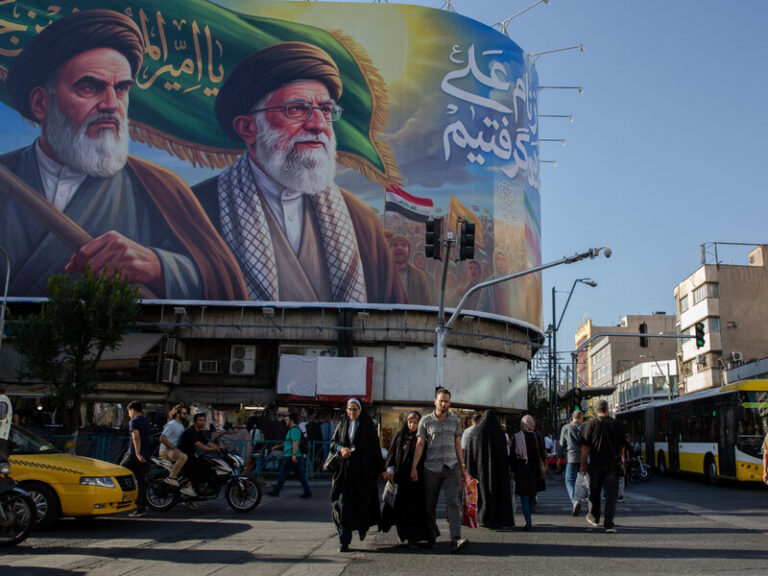
On Iran, the conflict has entered its eighth month, and the Associated Press reported on September 28 that Qatari-led mediators were still seeking a deal even after Trump publicly rejected Tehran’s latest proposal to reopen the Strait of Hormuz; Brent crude was above $108. Peter’s World has followed the talks in detail, including Waltz’s account of the Hormuz negotiations.
On Ukraine, envoys Jared Kushner and Steve Witkoff carried a U.S.-backed peace plan to Moscow and Kyiv in early September; the Christian Science Monitor reports Zelenskyy rejected it, while Russian analysts say Moscow holds the upper hand. On NATO, the Center for Strategic and International Studies notes allies pledged at The Hague in 2025 to reach 5 percent of GDP on defense and security by 2035, and Defense Secretary Pete Hegseth has announced a six-month review of U.S. force posture in Europe.
At home, NBC News reported on Sept. 25 that voters have soured on his handling of the economy and immigration, and its polling average put Trump’s approval at 39 percent, with 59 percent disapproving, as the November midterms approach. Supporters point to his 2024 mandate and his tariff and border agenda; opponents point to the courts, prices and the Iran war. That contest will test how voters judge a second term still unfolding.
Sources
- Miller Center: Donald Trump, Life Before the Presidency
- Miller Center: Donald Trump, Campaigns and Elections
- CBS News/AP: Judge again rejects Trump’s bid to erase hush money conviction
- AP via PBS: Mediators still working on U.S.-Iran deal