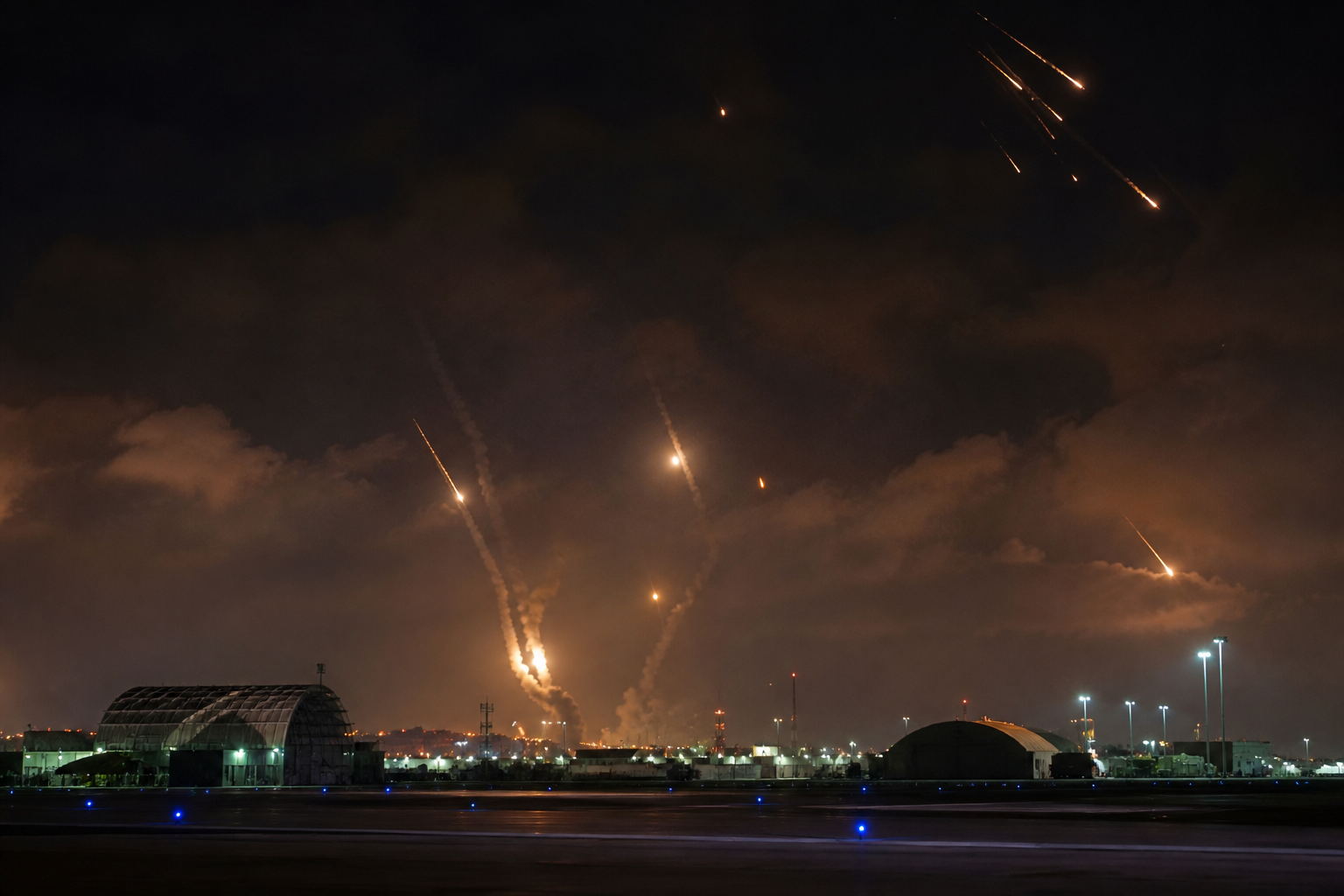
Iran answered the latest U.S. airstrikes with a multi-country missile and drone barrage against American-linked facilities in Jordan, Bahrain, Kuwait, Iraq, and the United Arab Emirates, marking the widest Iranian retaliation since July and reopening a dangerous theater of indirect war across the Gulf.
According to Iranian military and IRGC statements early Wednesday, September 2, 2026, Tehran launched ballistic missiles and drones toward U.S. bases and related infrastructure after American forces hit targets along Iran’s southern coast and elsewhere. Iranian claims included strikes on Sheikh Isa Air Base in Bahrain, Prince Hassan air base and a Marine facility in Jordan, Ali Al Salem air base in Kuwait, and U.S.-linked sites around Erbil in northern Iraq. Tehran also said it targeted assets connected to U.S. drone operations.
Gulf governments activated air defenses. Jordan, Kuwait, and Bahrain reported intercepts or defensive responses; Kurdish authorities in Iraq said they intercepted explosive-laden drones near Erbil. Public statements from those capitals emphasized protection of national airspace and did not independently confirm Iran’s more maximalist damage claims, including alleged U.S. casualties.
President Donald Trump warned that further Iranian retaliation could bring heavier American punishment. Tehran ignored the warning. IRGC messaging framed the response as both revenge for the latest U.S. strikes — including the disputed wedding deaths in Kuhestak — and part of a longer campaign to push U.S. forces out of the regional basing network built up over decades.
The geography of the response is deliberate. By firing into multiple host countries rather than only at U.S. ships or Iran’s immediate littoral, Tehran forces Washington’s partners to choose between hosting American forces and absorbing Iranian blowback. That is classic coercive strategy: raise the political cost of alliance for Arab and Jordanian hosts while keeping Iran’s own homeland under American pressure.
The exchange also lands in a constrained U.S. military and political environment. American commanders have previously warned about munitions expenditure and diminishing high-value target sets after earlier intense bombing phases. At home, the conflict’s economic and political costs are rising ahead of November midterms. Abroad, every Iranian salvo against a host nation risks widening the war beyond a bilateral U.S.–Iran duel into a multi-state crisis.
For now, both sides still describe their actions as limited and retaliatory. The pattern on the ground looks less like de-escalation and more like a ratchet: strike, deny excess, retaliate wider, threaten harder. Unless diplomacy reopens a corridor that both capitals can accept — including over Hormuz — the Gulf remains one misfire away from a broader conventional clash.