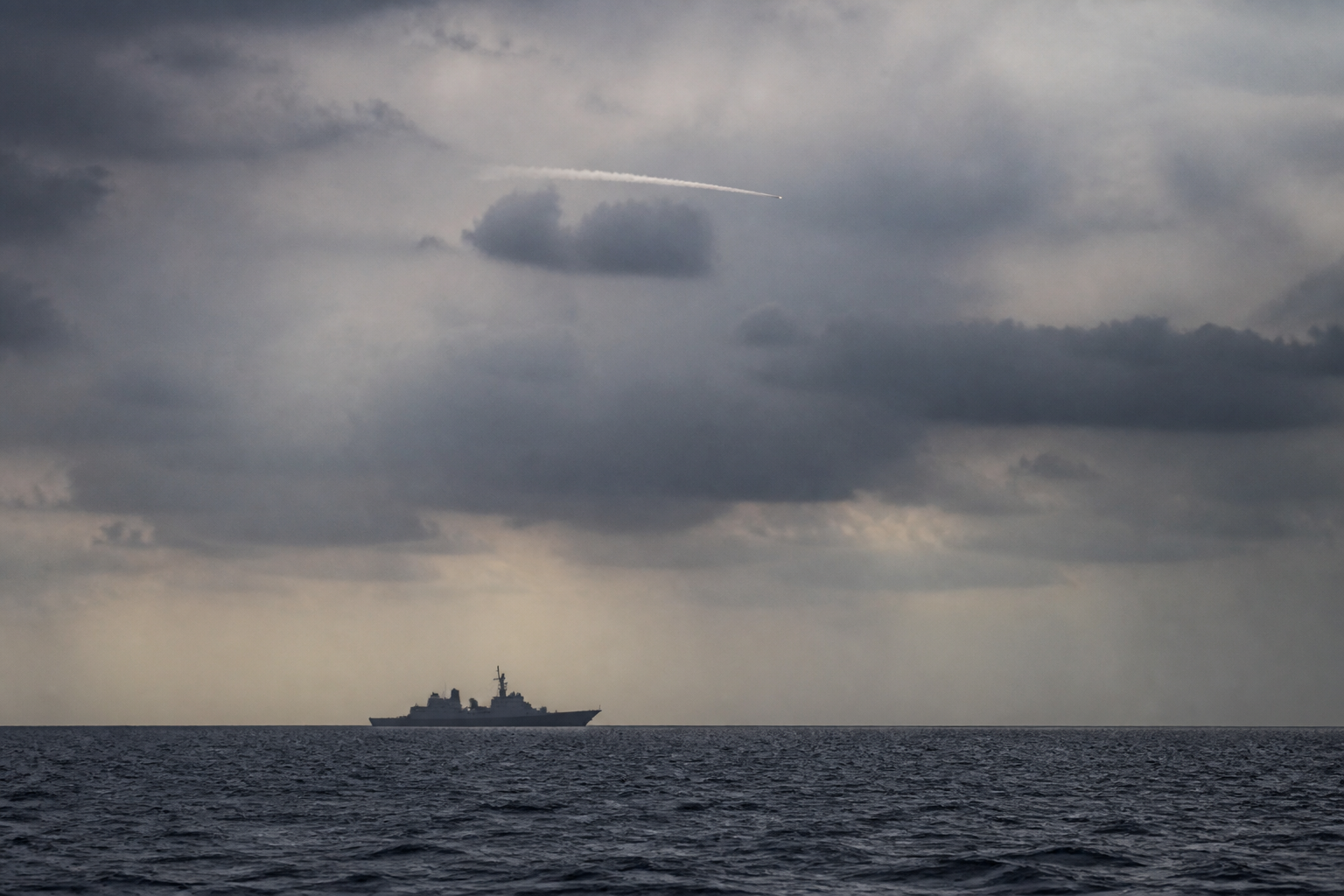
DUBAI — September 8, 2026. Iran said it had fired an advanced Qassem Basir ballistic missile at U.S. warships and threatened Washington with “economic warfare,” raising the risk of another maritime spiral days after both sides traded blows over oil tankers and naval targets. Iranian state media reported the missile launch, and Supreme National Security Council secretary Mohsen Rezaei framed recent firings as a “clear warning” that Tehran has recalibrated its posture toward U.S. ships and bases. Reuters and RTE summarized the claims alongside Tehran’s vow to announce a new Gulf exclusion zone and Hormuz corridor maps in the coming days.
What makes the Qassem Basir claim strategically notable is less the named missile than the doctrine wrapped around it. Rezaei’s pairing of advanced missile warnings with a threatened maritime exclusion zone and Iranian sanctions lists for ships entering restricted waters is an attempt to turn a naval duel into a rules-of-the-road war—one fought with insurance markets, AIS silence, and corridor permits as much as with warheads. U.S. officials continue to argue that Navy pressure is restoring flows; Iranian officials continue to argue that Hormuz remains closed on their terms.
Six months into a conflict that began with U.S. and Israeli strikes on February 28, neither side has found a diplomatic off-ramp, and each new missile claim tightens the coupling between energy markets and fleet movements. If Tehran’s Qassem Basir narrative is meant to deter further tanker strikes, Washington’s weekend hits suggest deterrence is still being tested the hard way—at sea, in public, and with oil prices watching every launch.
The exchange sits on top of Saturday’s CENTCOM strikes that disabled or destroyed three Iranian oil tankers Washington linked to an IRGC financing network, including action near Kharg Island. Iranian forces had previously targeted U.S. naval units with missiles that caused no American casualties, according to U.S. accounts; CENTCOM commander Adm. Brad Cooper warned that Washington could impose an “even higher economic cost.” Iranian Parliament Speaker Mohammad Bagher Qalibaf answered U.S. Defense Secretary Pete Hegseth’s warning that Iranian tankers were “defenseless” by arguing that American oil and gas companies across Gulf waters “share that exposure.”