Iran’s Supreme National Security Council secretary Mohsen Rezaei told state television on September 7, 2026, that Tehran will announce a restricted and prohibited maritime zone outside the Strait of Hormuz within days, framing the step as a direct answer to what he called a United States Navy blockade line pushed into the Persian Gulf. According to summaries carried by CNA and Al Jazeera, Rezaei said vessels that enter the zone with the intent of crossing Hormuz will be placed on an Iranian sanctions list, a bureaucratic threat designed to raise insurance and compliance costs even before any kinetic enforcement is tested.
Rezaei’s most consequential claim was not the zone itself but the maps. He said charts for a new international corridor running through Iranian and Omani waters—under Iranian management—have already been agreed and are due to be signed soon. In the same broadcast, he insisted Iran will only commit to keeping Hormuz open once Washington stops what he described as sabotage, threats, and attacks. Modern Diplomacy and Independent reporting that compiled Reuters and AP wire material placed the remarks against a weekend of sharp escalation: U.S. Central Command strikes on three Iranian oil tankers after Islamic Revolutionary Guard Corps missiles targeted U.S. warships, followed by IRGC claims of retaliation against tankers and U.S.-linked vessels.
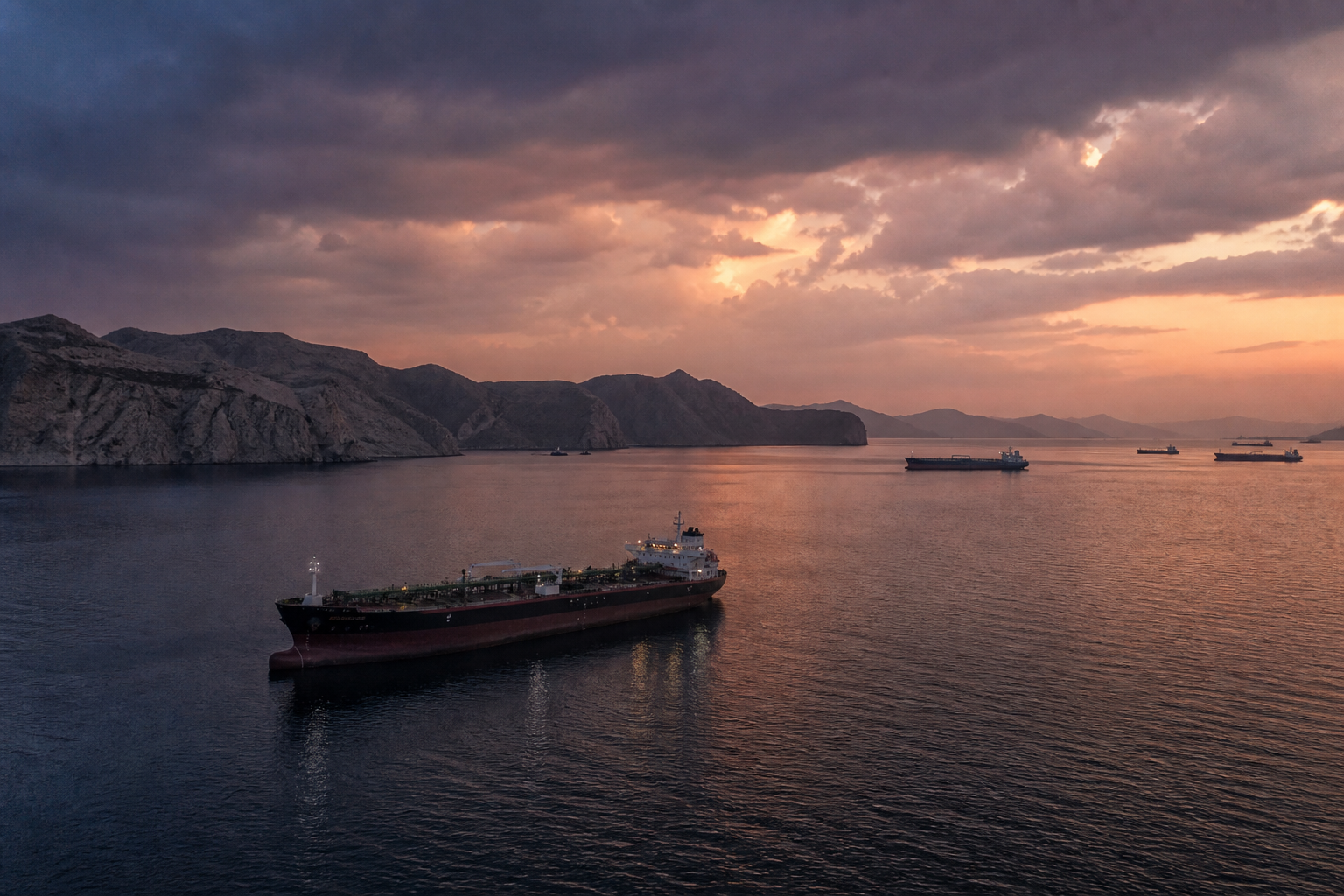
Oil markets took note. Benchmark prices moved higher into Monday trading as traders priced in both physical risk at the chokepoint and the possibility that Tehran is trying to rewrite the informal rules that have governed Hormuz traffic for decades. A restricted zone starting from a U.S. blockade line would, if enforced, force commercial captains to choose between Iranian-managed corridors, longer diversions, or higher war-risk premiums. That is leverage aimed as much at insurers and charterers as at the Pentagon.
The corridor-with-Oman concept is politically useful for Tehran even if the legal details remain murky. By pairing Iranian management with Omani waters, Rezaei can present the plan as regional stewardship rather than unilateral closure, while still reserving the right to blacklist ships that ignore Iranian instructions. Oman has historically preferred quiet mediation over public alignment; whether Muscat signs anything resembling Rezaei’s description will be one of the clearest near-term tests of how far this initiative goes beyond television rhetoric.
For Washington, the announcement lands after CENTCOM already demonstrated a willingness to hit Iranian tankers at sea. For Tehran, promising maps within days keeps diplomatic and market pressure high without immediately firing another missile. The practical question for Monday’s market open is narrower: how many shipowners will wait for the maps, and how many will simply avoid the approaches until the zone is either published—or quietly walked back.