Full Transcript: U.S. House, Iran War Powers Debate (July 22, 2026)
Full Congressional Record text of the House floor debate on July 22, 2026 over H.Con.Res. 89, the Iran war powers resolution, with summary and key quotes.

Speaker: Brian Mast and others (Gregory Meeks), U.S. Representative (R-FL), Chairman of the House Foreign Affairs Committee
Date: July 22, 2026
Venue / event: House floor debate on H.Con.Res. 89 (Iran war powers), Congressional Record
Type: Hearing · Country / body: United States
Original source: Congressional Record (U.S. Government Publishing Office)
License: US federal government work, public domain (GPO notice; 17 U.S.C. § 105)
Translation: Delivered in English; no translation.
Verified against source: yes, on October 3, 2026. Every paragraph was compared with a saved copy of the original page. 7,341 words.
How we label text. Text in quotation marks or marked Verbatim is copied word for word from the cited source. Text marked Summary or Editor’s note is our paraphrase; we keep it to a minimum.
Summary (paraphrase)
Summary (paraphrase, Peter’s World)On July 22 the House debated H.Con.Res. 89, a War Powers Resolution measure to remove U.S. forces from hostilities with Iran, with one hour of debate.
Contents
- Summary (paraphrase)
- Key quotes (Verbatim)
- Full transcript (Verbatim)
- Source and license
- Related coverage
- Corrections and takedowns
Key quotes (Verbatim)
Short verified excerpts from this transcript, copied word for word and each linked to its entry in the tracker.
- “This operation is bringing a reckoning for the hundreds of times Iran has attacked and killed people of the United States of America.” (Brian Mast). See in the Quote Tracker
- “…that Constitution also says that Congress determines when we send our women and men into war.” (Gregory Meeks). See in the Quote Tracker
Full transcript (Verbatim)
Jump to a speaker: Mr. MAST · The SPEAKER pro tempore · Mr. MEEKS · Ms. JAYAPAL · Mr. MOULTON · Mr. CROW
The text below is reproduced under the license named in the byline. Speaker labels are as printed by the publisher; the wording is unchanged (verbatim).
DIRECTING THE PRESIDENT PURSUANT TO SECTION 5(C) OF THE WAR POWERS RESOLUTION TO REMOVE UNITED STATES ARMED FORCES FROM HOSTILITIES WITH IRAN
Mr. MAST. Mr. Speaker, pursuant to the order of the House of July 22, 2026, I call up the concurrent resolution (H. Con. Res. 89) directing the President pursuant to section 5(c) of the War Powers Resolution to remove United States Armed Forces from hostilities with Iran, and ask for its immediate consideration in the House.
The Clerk read the title of the concurrent resolution.
The SPEAKER pro tempore. Pursuant to the order of the House of today, the concurrent resolution is considered as read.
The text of the concurrent resolution is as follows:
H. Con. Res. 89
Resolved by the House of Representatives (the Senate concurring),
SECTION 1. TERMINATION OF USE OF FORCE.
(a) Termination.–Pursuant to section 5(c) of the War Powers Resolution (50 U.S.C. 1544(c)), Congress hereby directs the President to remove the use of United States Armed Forces from hostilities against the Islamic Republic of Iran or any part of its government or military, including potential ground forces in a combat role or used for occupation, unless explicitly authorized by a declaration of war or specific authorization for use of military force against Iran. (b) Rule of Construction.–Nothing in this section may be construed to– (1) prevent the United States from defending itself, its Armed Forces, its diplomatic facilities, or allied states from imminent attack; (2) prevent the United States Armed Forces from maintaining a troop presence in the region for defensive purposes; or (3) force the removal of United States Armed Forces in the region who are not engaged in hostilities against Iran.
SEC. 2. RULE OF CONSTRUCTION RELATING TO INTELLIGENCE SHARING.
Nothing in this resolution may be construed to influence or disrupt any intelligence, counterintelligence, or investigative activities relating to threats in or emanating from Iran or surrounding countries conducted by, or in conjunction with, the United States Government involving– (1) the collection of intelligence; (2) the analysis of intelligence; or (3) the sharing of intelligence between the United States and any coalition partner, if the President determines such sharing is appropriate and in the national security interests of the United States.
SEC. 3. RULE OF CONSTRUCTION RELATING TO NONAUTHORIZATION OF THE USE OF MILITARY FORCE.
Consistent with section 8(a)(1) of the War Powers Resolution (50 U.S.C. 1547(a)(1)), nothing in this concurrent resolution may be construed as authorizing the use of military force.
The SPEAKER pro tempore. The concurrent resolution shall be debatable for 1 hour equally divided among and controlled by Representative Mast of Florida, Representative Meeks of New York, and Representative Jayapal of Washington, or their respective designees.
The gentleman from Florida (Mr. Mast), the gentleman from New York (Mr. Meeks), and the gentlewoman from Washington (Ms. Jayapal) each will control 20 minutes.
The Chair recognizes the gentleman from Florida.
General Leave
Mr. MAST. Mr. Speaker, I ask unanimous consent that all Members may have 5 legislative days in which to revise and extend their remarks and include extraneous material on the resolution under consideration.
The SPEAKER pro tempore. Is there objection to the request of the gentleman from Florida?
There was no objection.
Mr. MAST. Mr. Speaker, I yield myself such time as I may consume.
Mr. Speaker, I will take some of my time and give recognition to those who we have lost in the fight to end the Iranian terror regime. I am going to say their names, going to tell you where they served, and I am going to show you their photo:
Sergeant Angel S. Rampersad, United States Army;
Private First Class Isabella Gonzales, United States Army;
First Lieutenant Tyler James Feehan, United States Army;
Sergeant Michael Emmanuel Swinton, United States Army;
Lance Corporal Kevin Melendez, United States Marine Corps;
Tech Sergeant Tyler Simmons, United States Air Force;
Tech Sergeant Ashley Pruitt, United States Air Force;
Captain Curtis Angst, United States Air Force;
Captain Seth Koval, United States Air Force;
Captain Ariana Savino, United States Air Force;
Major John “Alex” Klinner, United States Air Force;
Sergeant Benjamin N. Pennington, United States Army;
Chief Warrant Officer 3 Robert Marzan, United States Army;
Major Jeffrey Robert O’Brien, United States Army;
Sergeant Declan J. Coady, United States Army;
Sergeant First Class Noah L. Tietjens, United States Army;
Sergeant First Class Nicole M. Amor, United States Army; and
Captain Cody A. Khork, United States Army.
{time} 1850
The sacrifice of these servicemembers will never be forgotten by me, and
their commitment to their country, our country, the United States of America; their commitment to their loved ones; their commitment to seeing Iran’s reign of terror and regime finally come to an end; and their commitment to ending the regime that killed countless American lives.
That is what these servicemembers have been fighting against. That is what they gave their lives fighting against, a regime that has been attacking and taking the lives of United States of America’s servicemembers and citizens for years.
To belittle this mission is to belittle and demean the very service these members gave their lives for. Their sacrifice was not meaningless. This operation is bringing a reckoning for the hundreds of times Iran has attacked and killed people of the United States of America.
What were those times? I am not going to go all the way back to the Beirut bombings. I wouldn’t have time for that in tonight’s debate with the time that we are limited to. I am only going to go back for the last couple of years to talk about what Iran has been doing to the United States of America, though my colleagues will argue that there has never been any imminent threat against the United States of America by Iran.
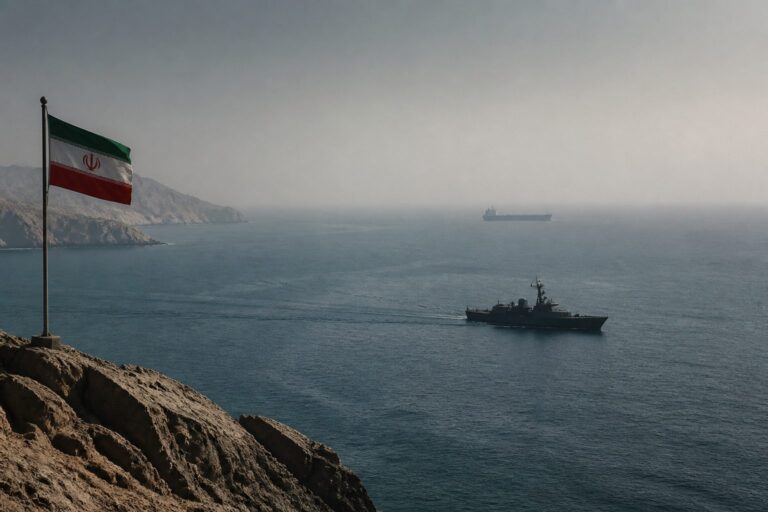
IRGC naval forces capture 10 American sailors and two boats.
Separate incident: Four patrol boats from Iran’s IRGC attack the USS Nitze.
Separate incident: United States Naval Ship Invincible attacked by multiple approaching IRGC fast-attack boats, small attack boats.
Separate incident: IRGC vessel attacks USS Thunderbolt in Persian Gulf.
Separate incident: Iranian drone attacks the USS Nimitz as fighter jets are landing.
Separate attack: IRGC naval personnel place and detonate limpet mines on two Saudi-, one UAE-, and one Norwegian-registered ships.
Separate incident: IRGC Navy attacks four ships–Saudi ships, Norwegian ships, and a UAE ship.
Separate incident: IRGC Navy attack one Japanese ship and one Norwegian-owned ship as they transit the Gulf of Oman.
Separate incident: IRGC shoot down U.S. aircraft operating over international waters, over the Strait of Hormuz.
Separate incident: IRGC Navy seizes British-flagged, Swedish-owned tanker, and they hold the crew hostage for more than 2 months. On that same day, the IRGC also detained a Liberian-flagged tanker.
Separate incident: Iran attacks, by helicopter and drone, a U.S. Navy ship in the Strait of Hormuz.
Separate incident: IRGC Navy attack and seize Hong Kong-flagged tanker.
Separate incident: 11 IRGC Navy small boats attack five U.S. Navy vessels.
Separate incident: Iran vessels attack U.S. ships, including U.S. Coast Guard cutter.
Separate incident: Iranian personnel board a Liberian-flagged tanker.
Separate incident: IRGC attack and seize South Korean tanker, in the Strait.
Separate incident: Tanker MT Mercer attack by Iran off of Oman, killing two people.
Separate incident: Asphalt Princess attacked off of UAE, boarded by Iranians.
Separate incident: Iranian forces seized two Greek vessels as they attacked them.
Separate incident: Tanker Pacific Zircon was hit by an Iranian drone.
Separate incident: Iran’s Navy capture off the Marshall Islands a Marshall Islands-flagged tanker.
Separate incident: IRGC seize Panamanian-flagged oil tanker in Strait of Hormuz, in international waters.
Separate incident: Iran Navy seize Marshall Islands-flagged oil tanker St. Nikolas while transiting the Gulf of Oman.
Separate incident: IRGC seize containership MSC, in a helicopter, and also raided in the Strait of Hormuz.
Separate incident: IRGC seize another tanker, the Talara.
Separate incident: IRGC seize foreign oil tanker in the Strait of Hormuz.
Separate incident: U.S.-flagged tanker attacked by Iranian gunboats in the Strait of Hormuz.
The list goes on and on. I could keep reading this for probably another at least 10 minutes with the pages that I have of these.
That is what our U.S. servicemembers are fighting against, an Iran that chooses to wage war against the United States of America day in, day out, week in, week out.
Prior to Epic Fury ever beginning, the 30 months prior to Epic Fury beginning, Iran attacked us over 350 times. That is what our U.S. servicemembers are fighting against, the Iran that, prior to Epic Fury ever beginning, killed three U.S. servicemembers at Tower 22. That is what our U.S. servicemembers are fighting against.
My colleagues will say that no imminent threat ever existed. They are the same colleagues that used to tell us we should use any and all means necessary to prevent Iran from obtaining a nuclear weapon. Why? Because they recognized back then that that is the Iran that we have been dealing with day in, day out, week in, week out, year in, year out, the Iran that has been relentlessly attacking the United States of America tankers and containerships, United States Navy vessels, Coast Guard vessels, firing on our personnel in Iraq, Syria, Jordan, anywhere in the Middle East that they could fire on them.
What has changed since these attacks? Everything that I listed off happened well before Operation Epic Fury. What has changed? The Ayatollah that ordered the attacks on our bases, on the bases of our allies, is now rotting 6 feet under.
What has changed? Their navy that carried out countless attacks on our cargo ships, all those that I listed off just now, the navy that was attacking, seizing, holding hostage, they are sitting at the bottom of the waters that they used to float in.
{time} 1900
Their Air Force that carried out attacks on our bases and against our allies, they have been grounded and obliterated.
Those are just a couple of the things that have changed.
This was not a war of choice. This was not President Trump’s war of choice. This is and always has been Iran’s choice that they made each and every day for the last 47 years. What I gave you were just some of the incidents of the last couple years.
We simply said: No more wars. Instead, we are putting a stop to the old ones. This ends here. This ends now.
That country, their IRGC, their proxies that have been attacking us endlessly will no longer exist and will not obtain a nuclear weapon, whether my colleagues forgot that they voted to say that or not.
Mr. Speaker, in regard to today’s War Powers Resolution that asks for the removal of our U.S. Forces, as my colleagues have done week in and week out, forgetting about every single thing that our servicemembers are out there fighting against, I urge a “no” vote on their legislation.
Mr. Speaker, I reserve the balance of my time.
Mr. MEEKS. Mr. Speaker, I yield myself such time as I may consume.
Mr. Speaker, the hardest part of this job for me for all the time that I have been in Congress, all the bills that we have to vote on– when I put my hand up and swore that I would abide by and protect the Constitution of the United States of America, that Constitution also says that Congress determines when we send our women and men into war. I have had to vote on that several times previously in this Congress. It is a responsibility that is tough, to make that determination of when our men and women are sent to war. Presidents, based upon that Constitution, should come to this body and make their case, and then we have the awesome responsibility of making the determination of whether or not they should or should not. Those have been the toughest votes for me to have and for me to make as a Member of the United States Congress.
Unfortunately, in this instance, we didn’t have a voice. My heart goes out to the 18 members of the United States armed services who lost their lives. To them, their families, they are patriots, just as Mr. Mast doing his service and Mr. Crow and Mr. Moulton.
I thank them for their service because if this Congress says, Go to war, they put their lives on the line. I wish I had the opportunity to talk to all 18 families who lost loved ones in this war. Unfortunately, I can’t do all 18.
One of the three that lost their life over the last weekend, Sergeant Angel Rampersad, is from my district, my constituent, in Ozone Park, New York, who was killed on July 17 in Jordan. I am going to visit that family when I get back to New York on Friday. My office has already reached out to them. I am going to have a flag flown on top of the Capitol.
Mr. Speaker, I rise today in strong support of Representative Jayapal’s Iran War Powers Resolution because I believe that the President needs to come to us so that we can make that decision and take on that responsibility, as the Constitution says.
Let me be clear: This body has already spoken. The War Powers Resolution passed with bipartisan support in the House and in the Senate. The Trump administration was required to end its hostilities against Iran. It has not.
A dual-Chamber concurrent resolution has never been struck down by the courts, certainly not in the war powers context. Any claim otherwise is simply wrong.
I will also be introducing legislation that would require the Speaker to bring suit against the administration to force it to abide by Congress’ vote on the War Powers Resolution.
We are here today because the administration broke the law. Three more U.S. servicemembers have made the ultimate sacrifice for an illegal, unauthorized war that the American people don’t want.
This administration has never sought an Authorization for Use of Military Force from Congress, and most Republicans in this Chamber continue to enable it.
As I have said before on this floor, this war has achieved none of our core objectives, and more bombings will not change the reality that is on the ground.
With respect to Iran’s nuclear program, its hard-line regime, its closure of the Strait of Hormuz, or any of its malign practices, none of that has changed. Addressing those threats requires diplomacy, not more war. Diplomacy must be led by seasoned diplomats and nonproliferation experts, not real estate developers.
We need our European allies, our Gulf partners, and, yes, our adversaries back at the table because just bombing without strategy, Mr. Speaker, is not a foreign policy. It is a tantrum. It is a tantrum by a President who cannot clean up the mess that he has made.
Let us make no mistake: The President’s tantrum is why gas prices are back over $4 a gallon, and they will keep climbing now that the Houthis have threatened their own blockade of the Red Sea. That tantrum is why American troops are under fire. It is why our munitions stockpiles are being drained, and it is why we are teetering on the edge of the forever war we warned this would be.
To my Republican colleagues, this war is indefensible. Deep down, many of them really know it. I say: Let’s just simply uphold the oath that we took when we took this office, uphold the Constitution of the United States. Stand with us, and let’s make clear once again that this President is not a king. He is not a dictator. He is the President of the United States. But there are two bodies called the House of Representatives and the Senate that are equal to the executive branch.
{time} 1910
He cannot go around this. It is in violation of the Constitution, and he cannot wage war without our consent.
If Republicans still believe this war should continue, then I say, fine. Vote in support of this measure and demand the administration come to this Congress and demand that he tells us what his plan is, how it is going to end, and how much money it is going to cost the American people. Also he should follow the Constitution as the law requires.
Mr. Speaker, I reserve the balance of my time.
Ms. JAYAPAL. Mr. Speaker, I yield myself such time as I may consume.
Mr. Speaker, I rise to urge the United States House of Representatives to pass my War Powers Resolution to end President Trump’s illegal and unconstitutional war in Iran.
Let me be clear: We should not have to be here, yet again, voting on another War Powers Resolution. For the first time in history, both the House and Senate passed a War Powers Resolution to rein in this reckless war and reassert our constitutional authority under Article I, Section 8 to authorize the use of military force.
However, the President is, once again, showing his contempt for Congress and for the Constitution, continuing this destructive, deadly, and costly war despite Congress having already passed a War Powers Resolution that has the force of law declaring that this war must stop.
Instead of respecting Congress’ Article I sole constitutional authorities over war, the President has doubled down on more illegal strikes, escalating the situation in the region and leading to more Iranian strikes that killed two United States soldiers as well as an additional servicemember who was killed during a controlled detonation of a downed Iranian attack drone.
Gas prices across the country have gone up again. The memorandum of understanding has turned into a deadly memorandum of misunderstanding with the Iranian Government continuing to utilize leverage over the Strait of Hormuz.
This is an illegal and unconstitutional war waged without authorization from Congress and at a tremendous cost of a total of 18 U.S. servicemembers who have lost their lives and hundreds more who have been injured.
I give tremendous honor and respect to our servicemembers, those who serve, those who have sacrificed their lives, including U.S. Air Force Captain Ariana G. Savino who is from my home State of Washington.
The cost of this war is incalculable. Not only have we lost 18 U.S. servicemembers, but this war has been waged at the cost of thousands of civilians who have been displaced or killed in the region, and all on the backs of U.S. taxpayers who desperately want this administration to focus on the crisis of their pocketbooks: The basic inability of Americans in the richest country in the world to afford healthcare, gas, groceries, and housing.
From the beginning, this war has had no clear mission, no strategy, no end goal. It has been driven over and over again by a President who won his election by telling the American people that he would end forever wars and instead has launched us into more forever wars to distract the American people from the real issues they are facing at home.
As the secretary of forever wars, Pete Hegseth, announced, we have already spent $37.5 billion on this illegal and unconstitutional war. Donald Trump has called affordability a hoax, stated that we have no money for healthcare, and refused to sign a bipartisan bill to help address the housing crisis that this country is facing. Today, on the House floor, Republicans have put bills forward to demand $1.15 trillion for the Pentagon, the only Federal agency that has actually failed eight consecutive audits, and he is about to put another $73 billion into this illegal war.
What an insult to the tens of millions of Americans who have lost healthcare and nutrition assistance, all to pay, initially, for $4 trillion in tax breaks for giant corporations and billionaires.
Again, let’s be very clear. The American people are paying the price of this war literally through our tax dollars that Donald Trump refuses to spend to benefit the lives of Americans here at home; through the lives of our United States servicemembers who ask only that their willingness and their pride in serving be rewarded with our real thoughtfulness of purpose before sending them into war; through the pain at the gas pump and the grocery store as prices continue to tick up; through the broken relationships with allies around the world who no longer believe that the United States is a real partner to them; through the sacrifices of the American people who desperately want this administration and this Congress to focus on making their lives affordable so they can actually thrive rather than just barely survive.
Regime change, Mr. Speaker, doesn’t work. It never has, and it never will. In Iraq, more than 4,000 troops were killed and 32,000 were injured. In Afghanistan, 2,400 troops were killed, and 20,000 were injured. Those two wars alone cost at least $2.4 trillion, and neither led to freedom or peace for the people of Iraq and Afghanistan, and the toll on our own people–lives lost and ruined, PTSD, wasted dollars–is immense.
We have got to stop thinking that bombs are the answer. They are not. Let us remember that it was Donald Trump in his first term who pulled us out of the Iran nuclear deal, the JCPOA, a landmark agreement negotiated by President Obama that required 2 years of careful negotiations to restrict Iran’s ability to enrich and stockpile enriched uranium and to ensure regular inspections of Iran’s nuclear facilities, supply chains, and uranium mines. Had the JCPOA been left in place, we would not be in this situation today. It would have worked to minimize Iran’s nuclear threat and strengthen Iranian civil society instead of slapping sanctions on and deepening the brutal regime’s hold.
I want to thank Ranking Member Meeks for his tremendous leadership on this issue. I want to thank my Democratic and Republican colleagues who are voting for this bill for their clarity of conscience and of Constitution. I also want to thank Congressman Crow for his partnership on this War Powers Resolution as well as the bipartisan group of Members who have cosponsored, many of whom have served in uniform for our country and uniquely understand the immense sacrifice and duty of serving in our Armed Forces.
I hope that there are even more on the other side who listen to this debate and are moved to join us in passing this War Powers Resolution with even more strength in votes than the last one. Our Founders knew that going to war was one of the most solemn decisions that our country would face and that it had to be debated and authorized only by the elected Representatives of the people of the United States of America, Congress, not by a President who ignores his obligation to the institution and his obligation to the people of the United States.
Mr. Speaker, I urge a “yes” vote on this War Powers Resolution. We must end this war now.
Mr. Speaker, I reserve the balance of my time.
Mr. MAST. Mr. Speaker, I yield myself such time as I may consume.
Mr. Speaker, both of my colleagues said forever war. I stood here and read for about 15 minutes about the attacks that Iran has been leveling against us just for the last couple of years: 350 attacks, 30 months, 200 wounded, four killed. That is the forever war. It has been going on for 47 years, but that is just the last 30 months of the forever war Iran has been waging against us.
{time} 1920
To end a war that is waged against us every single day, you have to end the people that are waging that war. That is what is taking place.
Mr. Speaker, I reserve the balance of my time.
Mr. MEEKS. Mr. Speaker, I yield 4 minutes to the gentleman from Massachusetts (Mr. Moulton), a cosponsor of this resolution.
Mr. MOULTON. Mr. Speaker, part of our job in Congress is to answer tough questions. When the people have tough questions, they deserve honest answers.
The toughest question I have ever received in my life is not here in Congress but in Iraq from an 18-year-old lance corporal, who simply asked: Sir, why am I risking my life for this?
There are a lot of young Americans, the best of the best, those few brave enough to put their lives on the line for our country and for all of us here, who are asking that question today. Why am I risking my life for this?
They are asking that question today as they fight and die in a war Trump did not need to start, a war that he is not winning, a war that has made Iran more dangerous, not less, and a war that is costing every American back home, though none more so than the American heroes and their families who have already made the ultimate sacrifice for this folly.
As of this past weekend, the casualty toll from the war has risen to 18. There are 18 Americans dead in a war that Congress never voted to authorize. In addition to the heroes we have already lost in this war prior to this weekend, we now mourn the lives of Private Isabella Gonzales, First Lieutenant James Feehan, Sergeant Angel Rampersad, and Sergeant Michael Emmanuel Swinton.
When the military commander in charge of this operation came before the House Armed Services Committee a few weeks ago, I asked him: How many more Americans have to die for this mistake? He refused to answer, just as Trump and his henchman Hegseth have refused to take any responsibility, any accountability for this massive failure of a war, for losing this war to Iran.
Yes, part of our job in Congress is to answer tough questions, though it is easier here than out there in the Middle East.
Part of our job is also to ask tough questions, tough questions of this administration before it kills more Americans in this mistake. Too many of our colleagues refuse to do so.
Thankfully, a large number of Democratic veterans do not. We are asking these tough questions of the administration on behalf of the American people and on behalf of our troops. They all demand answers.
That is why we have demanded this vote. It is long past time for a plan, we are long overdue for accountability, and we are tired of the President losing this war and making it worse for our troops and for everyone here at home.
Enough is enough, Mr. Speaker. Enough of the President’s war in Iran that has been an utter disaster for everyone except Iran and maybe China. Enough is enough, Mr. Speaker. Enough is enough.
Ms. JAYAPAL. Mr. Speaker, I yield 3 minutes to the distinguished gentleman from Colorado (Mr. Crow).
Mr. CROW. Mr. Speaker, I join all Americans, my colleagues, and Chairman Mast in mourning those lost who have made the ultimate sacrifice for our Nation, once again. I honor greatly the service of the chairman. We served in these wars together. He knows sacrifice. He, in fact, sacrificed and gave more than I did.
He also deeply understands the threats. He was right when he outlined those threats. Iran is a malignant regime. Iran does and has posed a threat to Americans, as has North Korea, Russia, and many other regimes, countries, and terrorists around the world. The important thing is not just to recognize the threat and say if there is a threat that we automatically have to go to war, because that is the start of the analysis, not the end of it.
The next questions and the important questions are what do we do about it. Do we go to war? Do we assemble a coalition? Do we use sanctions? Do we use soft power? How do we meet that threat? It is a fact that in the 20 years in Iraq and Afghanistan we stopped asking that essential question and just assumed that war was the answer and would solve it. That is what led us to 20-plus years, trillions of dollars, and thousands of American lives lost for wars that ended poorly.
I am unwilling to not learn that lesson.
I want to be really clear about Iran, in particular. There was no intelligence showing that Iran was proceeding with the development of a nuclear weapon. If there was intelligence, we would be having a different discussion here. There wasn’t, and that fact matters.
That leads us to the second part of it: What do we do? How do we meet this threat that has been posed for 40-plus years? What is clear is that Americans are done with an endless cycle of conflict in the Middle East.
When I was in Afghanistan, our adversaries, the enemies that we fought, would often say: Americans have all the clocks, but we have all the time. They simply want to wait us out knowing that we will just spend more money, have more combat deployments, that we will just continue to do it year after year until we wear out.
The SPEAKER pro tempore. The time of the gentleman has expired.
Ms. JAYAPAL. Mr. Speaker, I yield an additional 1 minute to the gentleman from Colorado.
Mr. CROW. When I am facing my constituents who are losing their homes, losing their farms, and losing their healthcare, who can’t answer the simple question of how this is making them safer or how this is improving their life, I can’t answer that. I am unwilling to perpetuate yet another quagmire and endless cycle of conflict.
It is time for us to restart the accountability loop here in Congress. All these rules, all the authorizations that we debate, why it matters is because this Congress, this body, has the duty to take a vote, to have this debate, and
then go home and stand in front of those constituents who are losing their homes, losing their farms, and losing their healthcare, and say why we should or shouldn’t do it. That is what this is about.
Mr. Speaker, I implore my colleagues to learn this lesson from the last 20-plus years and end this endless cycle of conflict. Let’s bring our folks home. Let’s focus on healthcare, housing, and meeting the needs of our constituents and serving our military families in the way that they need to be served.
Mr. MAST. Mr. Speaker, I would say to my colleague that I thank him for the recognition of my service, and I recognize him for his service, as well.
I am proud to have brothers in arms, but I cannot let what was said, that is unequivocally false, stand.
{time} 1930
Number one, North Korea and Russia have not killed 4 Americans, wounded 200, and attacked over 350 times in the 30 months just prior to Epic Fury beginning. There is no comparison. That is what Iran has done.
Unequivocally, Iran was working to develop a nuclear weapon in their research facilities and development facilities of Natanz, Isfahan, and Fordow. You need only listen to the words of Iranian generals and the Ayatollah in the last couple weeks and months saying they will not cease their pursuit of a nuclear weapon.
Don’t take my word for it. Just listen to the words of the Iranian leadership.
Mr. Speaker, I reserve the balance of my time.
Mr. MEEKS. Mr. Speaker, I reserve the balance of my time.
Ms. JAYAPAL. Mr. Speaker, I yield myself the balance of my time.
Mr. Speaker, this vote is a vote of conscience. We are begging our colleagues here in Congress to stand up for our fellow Americans, for the Constitution, and for our Article I powers that our Founders thought so carefully about when they wrote the Constitution.
This war is remarkably unpopular. It is so unpopular that it is America’s least popular war since polls began, and that has been true since the first bombs were dropped. This war is unpopular even amongst President Donald Trump’s own supporters.
Back in May, only half of self-proclaimed MAGA Republicans thought that the war was worth the cost. Now, 2 months later, only about a third do. That is a 13-point drop in just 2 months. Amongst all Americans, a staggering 70 percent disapprove of this President’s handling of the war and almost two-thirds of all Americans, including over half of MAGA supporters, blame Trump’s war on Iran for their rising prices.
I think it is important for us to understand that these moments of conscience in our country require a strength of conviction and courage that our constituents expect us to have.
When they elect us, they expect us to honor the oath of office that we took. They expect us to understand the implications of the responsibilities that are conferred on us by that United States Constitution. They expect us to vote regardless of party for the thing that will keep Americans safe. They expect us to take care of the needs that they have right here at home.
What we have seen over and over again is a refusal of this administration to do that. The lack of clarity about the reasons for this war are quite remarkable. The administration has continued to flip-flop between claiming that we have won the war and then later that more bombs are needed.
After Operation Midnight Hammer in June 2025, the Trump administration told us that U.S. strikes on Iran had destroyed their military and obliterated nuclear programs. After the initial strikes on Iran, Secretary Hegseth said that the Iranian military was “destroyed” and “made combat ineffective.”
In April, he declared Operation Epic Fury was a “historic and overwhelming victory” and that the United States achieved “every single objective,” but this is plainly false, and the American people know it.
Months after Hegseth claimed victory, Iran continued to strike American assets in the Middle East, kill American servicemembers, and close the Strait of Hormuz. The administration has clearly gotten us into a war that they have no clue how to get us out of.
Americans deserve a clear strategy, not shifting explanations that change by the day. They deserve thoughtful diplomacy, not tweets like the one the President just released today: “From this point forward, any time the Islamic Republic of Iran shoots at a ship in the Strait of Hormuz, whether it be by missile, rocket, drone, or any other device or weapon, the United States will bomb and destroy ONE BRIDGE OR POWER PLANT, including those located next to, or in, the Capital City of Tehran. Thank you for your attention to this matter, President Donald J. Trump.”
This is irresponsible behavior from the President of the United States. It is irresponsible behavior on the backs of War Powers Resolutions that passed in a bipartisan way in both the House and the Senate, telling the President to end this illegal and unconstitutional war.
It is irresponsible behavior that is going to lead to more deaths of United States servicemembers and civilians around the world. It does not deescalate. It does not create coalitions of allies. It does not do anything to address the issues that Americans are facing right here at home.
Mr. Speaker, I close where I started. This is a vote of conscience. This is a vote that requires us to find the strength to do what is right for the American people and to send the clearest, even stronger message to this President of the United States that the United States Congress, the House of Representatives, is reasserting our authority over war. This war must end. Vote “yes” on this War Powers Resolution.
Mr. Speaker, I yield back the balance of my time.
Mr. MEEKS. Mr. Speaker, I yield myself the balance of my time.
Mr. Speaker, I say to my colleagues that it has been 144 days of a senseless and a pointless war. The President says he is there to prevent Iran from having a nuclear weapon. In his first term, the President ripped up the JCPOA, as the gentlewoman from Washington has indicated.
I was in Congress at that time when the JCPOA was implemented. The United States was not by itself. It was a well-thought-out, diplomatic document that was produced that was clear. It wasn’t something that was done by individuals who heretofore only was involved in real estate. It was done with diplomats around the world and even some of our adversaries in Russia and China, the P5+1.
I traveled several times to Geneva to have dialogue and conversation with the head of the IAEA, and I, along with some other colleagues, was told that at that particular time, for the first time, they had their eyes on Iran and its nuclear capabilities. They had cameras watching everything. All of the individuals said that Iran was, at the closest, a year to a year and a half, and could not progress because of what we were doing in a collective manner to prevent them from having a nuclear weapon.
The IAEA was there until when? The President ripped it up.
{time} 1940
That is when the cameras and the watching of what was taking place there and the agreement that had been made through a diplomatic channel ended, and Iran pushed us out. That is when we no longer could see what was taking place.
Diplomacy was preventing Iran from having a nuclear weapon without the Strait of Hormuz being closed, without the death of the men and women of our military, without the cost of rising prices of food because fertilizer couldn’t get through the strait, or the cost of gas. We had allies with us.
Are we better off now when we are doing all of this basically by ourselves? Because everyone advised this President of the United States not to do it.
Mr. Speaker, with 18 lives of servicemembers, too many Iranian civilians, including more than 100 schoolgirls, and injured countless more, tens of billions of taxpayer dollars spent, and the administration still refuses to give us a full accounting of where that money went.
Now, even as they refuse to explain the cost, guess what? They are asking for billions more for a war that they
never asked the United States Congress to authorize, a war that the people of the United States of America never asked for. As indicated by the gentlewoman from Washington, 70 percent of Americans are against this war.
But you know what, Mr. Speaker, the House and the Senate have spoken. They have already voted in a bipartisan way to end this war. Today, let’s vote again, and I believe we will get an even greater margin in this House.
Let’s not give this President another blank check to wage an illegal war. This is not what the Constitution demands of us. This is not what our constituents expect of us. They expect us to do our jobs. They expect us to abide by the Constitution of the United States of America. They expect us to stand up and tell this President that this illegal war must come to an end once and for all.
Vote “yes” on this War Powers Resolution, and let the American people know that we will not be altered from doing our job.
Mr. Speaker, I yield back the balance of my time.
Mr. MAST. Mr. Speaker, I yield myself the balance of my time.
Mr. Speaker, I am going to begin by agreeing with something that my colleague said. We didn’t ask for this. We didn’t ask for Iran, again, as I have said already, to attack us over 350 times in just the 30 months prior to Operation Epic Fury. We did not ask for that.
I want to read from the concurrent resolution offered by my colleague from Washington: “Remove United States Armed Forces from hostilities with Iran,” with the exception of forces that would “prevent the United States from defending itself, its Armed Forces, its diplomatic facilities, or allied states, from imminent attack.”
Mr. Speaker, I yield 10 seconds to the gentlewoman from Washington (Ms. Jayapal) to tell us which units, which ships she would like removed.
Ms. JAYAPAL. Mr. Speaker, how I would like to respond to the gentleman is: We actually need a strategy.
Have you seen a strategy of which ships are where? What are we planning to do? What is our end goal? How do we intend to achieve a mission?
The SPEAKER pro tempore (Mr. Haridopolos). The time of the gentlewoman has expired.
Ms. JAYAPAL. We have had no classified briefings, not a single classified– The SPEAKER pro tempore. The gentleman from Florida is now recognized.
Mr. MAST. Mr. Speaker, I would read from the resolution again: Remove United States Forces from hostilities against Iran, except for those that are tasked with defending it, its armed forces, its diplomatic facilities from imminent attack.
Mr. Speaker, I yield 10 seconds to the gentlewoman from Washington (Ms. Jayapal) asking what forces she would like removed.
Ms. JAYAPAL. Mr. Speaker, I would again respond to the chairman by asking: When will we have a single classified briefing, a single hearing in the House Committee on Foreign Affairs on this war?
Is the chairman prepared to say that we will have that hearing on this war?
Why are we so afraid of having a public hearing on the issue of whether or not we should be at war in Iran? Where is the chairman’s commitment to the American people?
Mr. MAST. Mr. Speaker, again, we have an author of this bill that is demanding U.S. Forces be removed, and the author of this bill has absolutely no clue what forces she wants to remove. That is beyond irresponsible, to say the least, to write a resolution, bring it to the floor, demand something with the weight of this issue, a nuclear-armed Iran, an Iran that has been attacking us, killing our people for years–350 attacks, 4 dead, 200 wounded just in the 30 months before Epic Fury began. She says remove all forces–that is the legislation before us–and has no clue what forces she wants to remove.
There are a lot of adjectives I could use, but my words will be taken down if I start to use them, so I am going to close.
My colleagues keep saying that this is a war of choice. The Islamic Republic has made their choice. They chose to attack Americans every day. I read off for 15 minutes the attacks that have been coming against us. They chose to support terrorist proxies, killing of Americans and our allies to develop weapons of mass destruction and missiles to reach out and touch our homeland and our allies.
They also chose to scrap the MOU that President Trump put in place when he ended Epic Fury and to again engage in hostilities and attempt to extort the world for shipping through the Strait of Hormuz.
We do have a choice, Mr. Speaker, and sometimes the only choice is whether you are going to hit back when you, yourself, are getting hit. We have been hit, day in, day out–I read it off–and for the first time, we are finally responding.
Mr. Speaker, I yield back the balance of my time.
The SPEAKER pro tempore. All time for debate has expired. Pursuant to the order of the House of today, the previous question is ordered on the concurrent resolution.
The question is on adoption of the concurrent resolution.
The question was taken; and the Speaker pro tempore announced that the ayes appeared to have it.
Ms. JAYAPAL. Mr. Speaker, on that I demand the yeas and nays.
The yeas and nays were ordered.
The SPEAKER pro tempore. Pursuant to clause 8 of rule XX, further proceedings on this question are postponed.
____________________
Source and license
- Original: Congressional Record (U.S. Government Publishing Office) (opened and saved on October 3, 2026).
- License: US federal government work, public domain (GPO notice; 17 U.S.C. § 105). Terms page: https://www.govinfo.gov/about/policies.
- Credit: Source: Congressional Record, U.S. Government Publishing Office (GovInfo).
- Translation: Delivered in English; no translation.
- Editor’s note: GPO page markers are omitted; the Record can reproduce material that is under third-party copyright.
- Editorial method: Whitespace, paragraph breaks and speaker labels are normalised; the wording is not edited. Part of the Speech and Interview Transcripts library.
Related coverage
- Senate Rejects Iran War Powers Resolution, 49-50
- 2026 Midterms: What Is at Stake on Nov. 3
- Quote and Transcript Tracker
- Speech and Interview Transcripts: search all transcripts
Corrections and takedowns
Spotted an error, or a rights holder who wants an item changed or removed? Email [contact@petersworld.org](mailto:contact@petersworld.org). We correct mistakes promptly and note the change.