
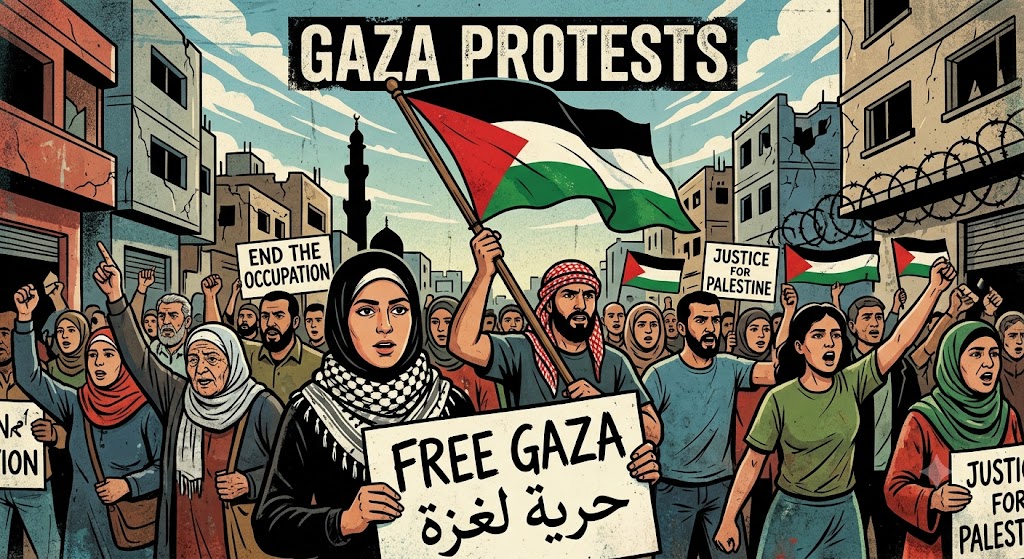
In the war-ravaged Gaza Strip, where a fragile ceasefire has held since late 2025 but reconstruction has largely stalled, Palestinian activists have mobilized via social media for mass demonstrations on June 26, 2026. Dubbed the “June 26 Revolution” or part of campaigns like “We Want to Live,” the calls urge residents to protest against Hamas’s continued rule, demanding dignity, better living conditions, an end to displacement and suffering, and accountability for governance failures.
As of mid-afternoon on June 26, reports indicate small anti-Hamas demonstrations have occurred in parts of Gaza City and northern areas, despite a heavy security presence by Hamas forces deploying armed operatives to patrol streets and prevent larger gatherings. Hamas-affiliated media has claimed the protests largely failed, citing footage of empty locations, while acknowledging some activity.
Background: War, Ceasefire, and StagnationHamas has governed Gaza since seizing control in 2007. The October 7, 2023, attacks on Israel triggered a devastating war that caused widespread destruction, with estimates of tens of thousands killed, massive displacement, and infrastructure collapse. A ceasefire took effect around October 2025 under a U.S.-brokered framework, but Phase 2—focused on Hamas disarmament, transitional technocratic governance, and large-scale reconstruction—has stalled amid disagreements and ongoing violations.
Today, much of Gaza remains in ruins. Over 80% of buildings have been damaged or destroyed in prior fighting, generating tens of millions of tonnes of rubble, of which only a tiny fraction (~0.5%) has been cleared. The vast majority of the population lives in tents or overcrowded shelters amid the debris. Reconstruction needs are estimated in the tens of billions of dollars, but progress is minimal due to security concerns, funding conditions tied to disarmament, and continued Israeli strikes (with Hamas-run health authorities reporting over 1,000 additional deaths since the ceasefire).
Residents face poverty, limited access to medical care (including difficulties traveling abroad for treatment), unreliable aid, and daily hardships in displacement camps.https://artifacts.grokusercontent.com/third-party-image
Devastated urban landscape in Gaza, illustrative of the widespread destruction and rubble that has hindered recovery.Waves of Protest in 2025Public dissent against Hamas is not new but has been rare and risky due to the group’s tight control over security and media. In March 2025, hundreds to thousands of Palestinians protested in northern Gaza, particularly Beit Lahia, chanting slogans such as “Hamas out,” “Enough wars,” and calling for an end to the conflict. These demonstrations, described by some observers as among the largest against Hamas since October 2023, spread to other areas and continued intermittently for weeks.
Crowds of Palestinians march in Gaza during rare anti-Hamas protests in 2025, chanting against the group’s rule amid the ruins.Smaller protests occurred in southern Gaza in May 2025. Demonstrators expressed war-weariness and frustration with Hamas’s leadership. Hamas authorities largely downplayed them as anti-war actions or suppressed them through intimidation, arrests, interrogations, and reported use of force, including allegations of torture and executions of organizers (reported by outlets like Ynet and documented in patterns by human rights groups such as Amnesty International).
The June 26, 2026, CampaignThe current push gained traction in early June 2026 through social media campaigns and diaspora activists, including Egypt-based journalist and activist Abdul Hamid Abdul Ati and others like Hamza al-Huwaiti in Germany. Organizers frame it as a grassroots effort for “a better life and a promising future” and the “people’s right to decide their fate.” Demands center on ending the status quo of tents, displacement, corruption in services (e.g., health ministry issues), and lack of progress toward normalcy and reconstruction. Some explicitly call for new governance or an end to Hamas’s political and military dominance.
Activists emphasize the movement is not foreign-orchestrated, not against the Palestinian people or their resilience, and seeks to amplify internal voices for dignity and accountability. A small protest outside Nasser Hospital in Khan Younis on June 18 highlighted complaints about inadequate medical care and alleged corruption.Hamas Response and CrackdownHamas has moved preemptively to suppress the planned demonstrations. Security services summoned suspected activists (reports cite at least 100) for interrogation and threats, often at facilities reportedly based in hospitals. There have been intimidation campaigns targeting families, warnings to journalists against coverage, and efforts in mosques to discourage participation on religious grounds. Hamas spokespeople have accused organizers of serving external agendas or being quick to “eulogize” the movement, while asserting Hamas’s deep roots among the people and focus on resistance and eventual reconstruction.
On June 26 itself, armed operatives have been deployed in areas like Deir al-Balah to prevent gatherings. This fits a long pattern of Hamas suppressing dissent since taking power, including violent crackdowns in 2019 and earlier.Underlying Grievances and Broader ContextProtesters and organizers cite accumulated frustrations: the human and material toll of the war (which many link to Hamas’s October 2023 actions and subsequent strategy), stalled recovery under the ceasefire, perceived prioritization of military capabilities over civilian welfare, and governance shortcomings like corruption or inefficiency in aid and services. Many express a simple desire to “live” normally after years of conflict and blockade.Hamas maintains it represents resistance to Israeli occupation and policies, and that internal divisions weaken the Palestinian cause. It has consolidated control post-ceasefire in areas under its influence while facing challenges from Israeli buffer zones and control over significant territory portions.Analysts note these protests reflect genuine war fatigue and legitimacy questions for Hamas among segments of the population, though fear, coercion, and the group’s organizational strength limit their scale. External actors and narratives sometimes amplify or distort the events.OutlookWhether the June 26 actions evolve into sustained pressure or are effectively contained will depend on turnout, Hamas’s response, and the broader political environment. Past movements dissipated under pressure, but persistent hardships could fuel further discontent. For Gaza’s roughly two million residents, the protests highlight deep divisions over governance at a time when reconstruction and stability remain elusive.The situation underscores the complex interplay of internal Palestinian dynamics, the lingering effects of war, and stalled diplomatic efforts toward a durable resolution.Sources include reporting from The Times of Israel, Asharq Al-Awsat, Reuters, CNN, Wikipedia compilations of events, Amnesty International references, and real-time social media reports as of June 26, 2026. Images are illustrative of documented protest and destruction scenes from recent years.