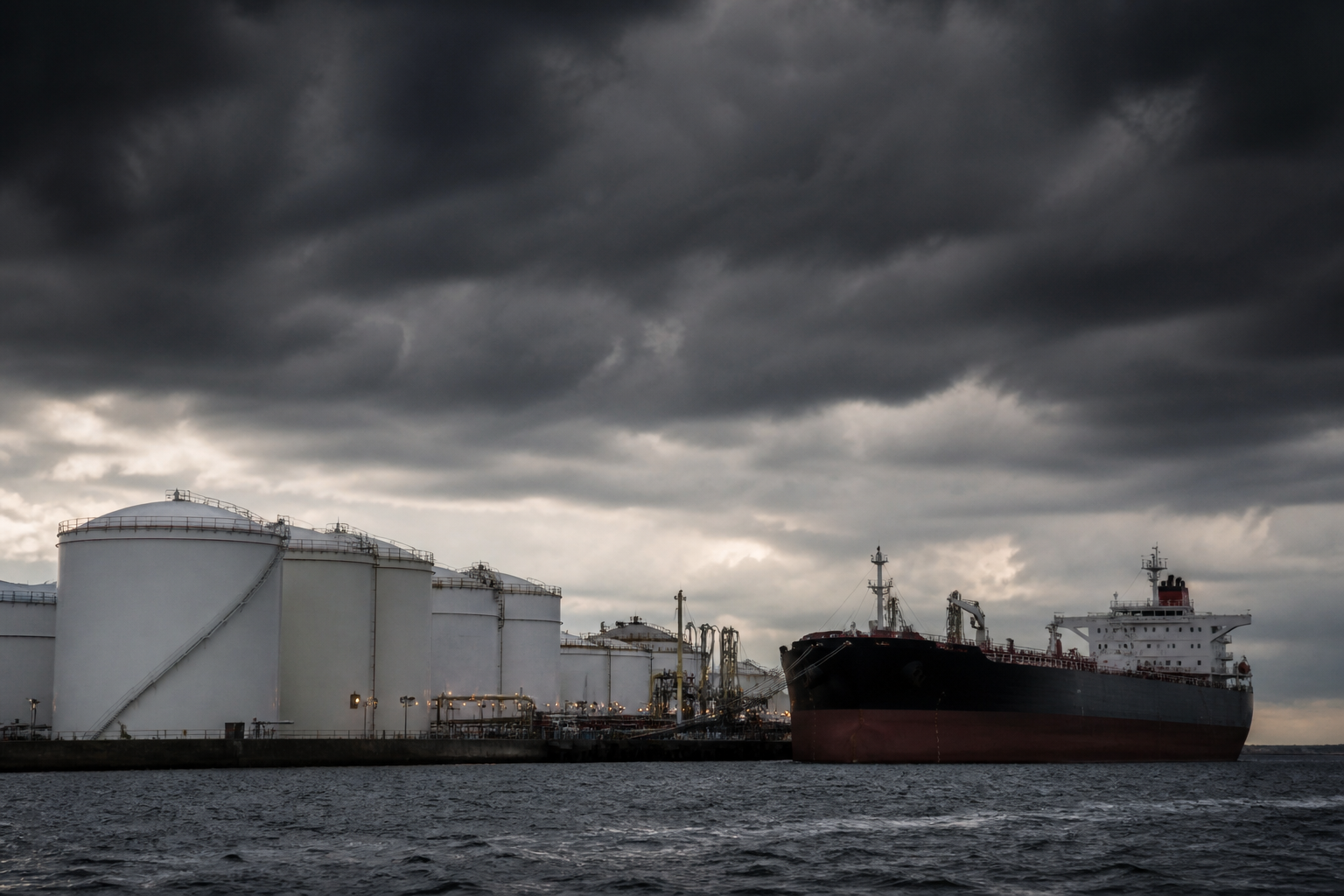
September 6, 2026. Oil markets are treating the U.S.-Iran confrontation as a shipping crisis, not merely another exchange of fire. Brent settled near $96.28 a barrel at the end of the week, close enough to $100 that traders are now pricing the duration of disruption rather than asking whether a premium exists. The strikes on three Iranian-linked tankers, followed by Iranian threats over Hormuz routes, have made the waterway’s commercial reliability the central variable for the next move.
The Strait of Hormuz does not need to be formally closed to damage supply. A message warning ships away from an “unauthorized” route, an insurance suspension or a queue of tankers waiting outside the strait can reduce flows before any blockade is declared. Freight and war-risk premiums rise first; then owners divert, refiners bid more aggressively for replacement barrels and governments draw on inventories. Markets respond to the missing flexibility, not only to barrels physically destroyed.
India is an important case because it imports roughly 85–90 percent of its crude requirement, even though officials and analysts say a significant share of current purchases comes from outside Hormuz. That diversification provides time, not immunity. Gulf grades, LPG and LNG have different substitution options, and a prolonged disruption would raise freight, insurance and replacement costs across the basket. A weaker rupee would make the same barrel more expensive in local currency.
The impact would spread beyond petrol and diesel. Airlines, trucking firms, chemicals producers, tire makers and electricity-intensive businesses would face higher input costs. Refiners could protect margins by passing costs through, but households would feel the shock through transport and food distribution. For importers, the question is therefore not simply whether Brent crosses a psychological threshold; it is whether expensive crude remains high long enough to change inflation expectations and central-bank policy.
There are buffers. Strategic stocks, alternative suppliers and a negotiated maritime corridor can soften a short spike. But none eliminates the insurance problem created when a major route becomes a battlefield. The market is sending a clear warning: Hormuz is an infrastructure asset whose value depends on predictable passage. If Washington and Tehran keep testing each other around tankers, the price of that uncertainty will be paid far beyond the Gulf.