IDF Says It Killed Hamas Commander Linked to Hostage Detention
The IDF says it killed Hamas commander Mahmoud Awad, accused of helping hold seven Israeli hostages in a tunnel complex in the Gaza City area.
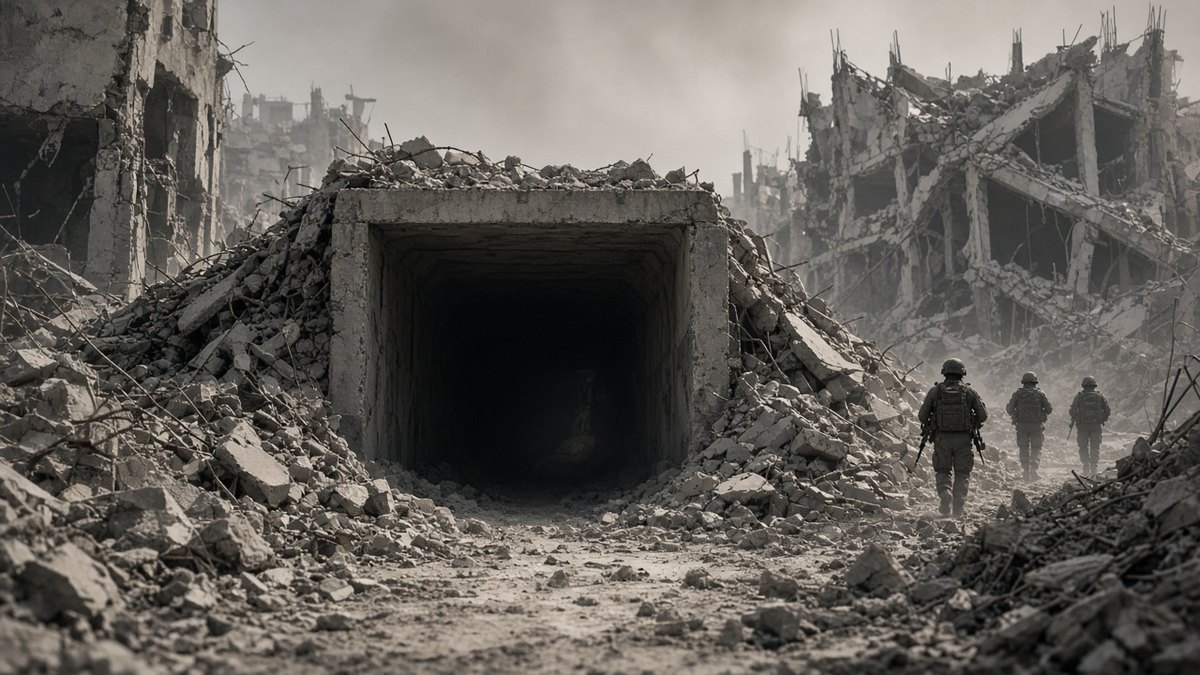
GAZA CITY / JERUSALEM — September 24, 2026. The Israel Defense Forces said Thursday it had killed Mahmoud Abd al-Fattah Awad, a Hamas military-wing commander it accuses of helping hold seven Israeli hostages in an underground tunnel complex in the Gaza City area and of later working to restore attack capabilities in violation of ceasefire terms.
According to the military’s September 24 announcement, Awad died in an airstrike conducted in the Gaza City area over the previous weekend. The IDF identified him as a commander inside Hamas’s armed wing and said he had played a role in the captivity of Israeli hostages during the Gaza war, specifically in holding seven Israelis underground. More recently, the military alleged, he had been planning and advancing attacks on Israeli civilians and troops and participating in efforts to rebuild Hamas’s military capacity — activity Israel frames as systematic ceasefire violation.
The announcement arrives in a familiar pattern of attribution warfare that accompanies every fragile pause in Gaza. Israel argues it retains the right to strike individuals linked to immediate threats and to organizational reconstitution; Hamas and aligned voices routinely reject such characterizations and accuse Israel of using “commander” labels to justify continued strikes under a ceasefire umbrella. Independent confirmation of Awad’s precise underground role and of the timing of any post-ceasefire plotting was not available from open sources on Thursday, leaving the IDF statement as the primary public record.
Leadership Targeting and Its Two Audiences
Operationally, the strike fits Israel’s preference for leadership targeting even when broader ground maneuvers are constrained. Eliminating mid-tier commanders associated with hostage infrastructure serves two audiences: domestic constituencies that measure progress by named removals, and negotiating tables where Israel argues Hamas has not demilitarized. For mediators tracking hostage accounting, any claim tying a killed commander to seven underground detainees will be cross-checked against surviving captive lists and prior tunnel discoveries — a forensic and political exercise that often lags the strike announcement by weeks.
Regionally, the killing lands beside unresolved Lebanon tracks and continuing southern Lebanon strikes that Lebanese and U.S. mediators fear could unravel framework talks. Gaza and Lebanon files remain linked through Iranian-aligned networks even when ceasefire calendars diverge. A named Hamas commander strike does not by itself reopen full-scale Gaza ground war, but it signals Jerusalem’s refusal to treat a pause as a shield for reconstitution.
What September 24 adds is specificity: a name, an underground detention allegation involving seven Israelis, and an explicit ceasefire-violation charge. Whether that package hardens or softens hostage diplomacy depends on whether mediators can separate accountability messaging from live talks. Until Hamas and Israel publish matching tallies of remaining captives and verified demobilization steps, leadership strikes will continue to define the “ceasefire” as much as any signed annex.
Sources
- The Media Line: Hamas commander who held 7 Israeli hostages, finance chief eliminated
- Israel National News: IDF eliminates Hamas commander who held seven hostages
- Israel.com: IDF says strike in Gaza City killed Hamas commander who held seven hostages



2 Comments