
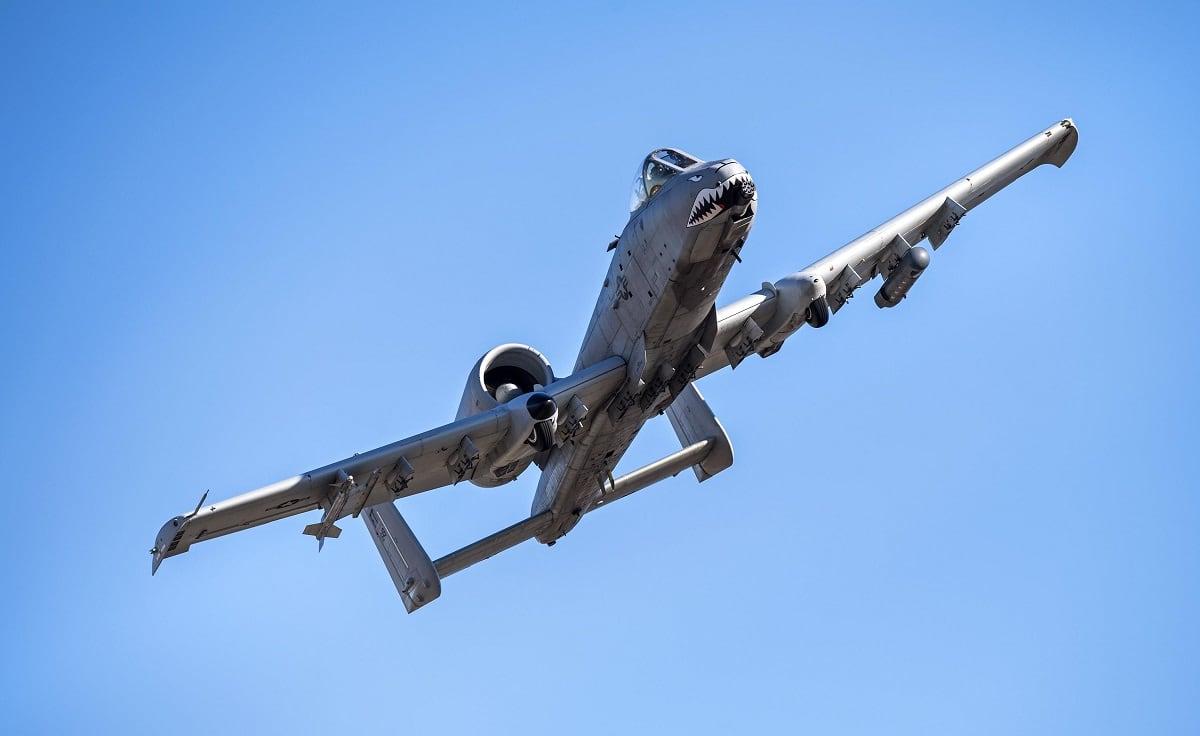

The Fairchild Republic A-10 Thunderbolt II, commonly known as the “Warthog”, is one of the most recognizable military aircraft ever built. Designed specifically for close air support (CAS), the A-10 provides direct support to ground forces by attacking enemy tanks, armored vehicles, artillery, and fortified positions. Since entering service in 1977, it has earned a reputation for durability, firepower, and the ability to survive heavy enemy fire.
Development
The A-10 was developed during the Cold War after the U.S. Air Force identified the need for an aircraft dedicated to destroying Soviet armored formations in Europe. Fairchild Republic won the Air Force’s A-X competition, and the first prototype flew on May 10, 1972. Production aircraft entered operational service in 1977.
Mission
The A-10’s primary missions include:
- Close Air Support (CAS)
- Destruction of enemy tanks and armored vehicles
- Battlefield reconnaissance
- Combat Search and Rescue support
- Armed overwatch for friendly ground troops
Unlike high-speed fighter aircraft, the A-10 was designed to fly slowly over the battlefield, allowing pilots to accurately identify and engage targets while remaining in communication with troops on the ground.
GAU-8/A Avenger Cannon
The aircraft’s defining feature is the 30 mm GAU-8/A Avenger, one of the most powerful aircraft-mounted cannons ever built.
Key facts include:
- Seven-barrel rotary cannon
- Fires up to 3,900 rounds per minute
- Carries approximately 1,174 rounds
- Designed to destroy heavily armored vehicles and tanks
The cannon is so large that the aircraft was effectively designed around it, with the nose landing gear offset to accommodate the weapon.
Survivability
One reason the A-10 remains famous is its ability to survive battle damage.
Its protective features include:
- Titanium “bathtub” armor protecting the pilot
- Self-sealing fuel tanks
- Redundant hydraulic systems with manual flight controls
- Engines mounted high to reduce damage from ground fire
- Ability to operate from short, rough airfields
Many A-10s have safely returned to base despite sustaining extensive combat damage.
Performance
| Specification | Value |
|---|---|
| Crew | 1 |
| Length | 53 ft 4 in (16.2 m) |
| Wingspan | 57 ft 6 in (17.5 m) |
| Maximum Speed | Approximately 420–518 mph |
| Service Ceiling | 45,000 ft |
| Engines | Two GE TF34 turbofan engines |
| Maximum Weapons Load | Up to 16,000 lb |
Weapons
Besides the GAU-8 cannon, the A-10 can carry:
- AGM-65 Maverick missiles
- Laser-guided bombs
- GPS-guided JDAM bombs
- Hydra 70 rockets
- AIM-9 Sidewinder air-to-air missiles
- Electronic warfare pods
- Targeting pods
- Conventional bombs
Its 11 external hardpoints allow it to carry a wide variety of precision and conventional weapons.
Combat History
The A-10 has served in numerous military operations, including:
- Operation Desert Storm
- War in Afghanistan
- Iraq War
- Operations against Islamic State
During the 1991 Gulf War, the A-10 became famous for destroying large numbers of Iraqi tanks, armored vehicles, artillery, and other military targets while providing continuous support to coalition ground forces.
Modern Upgrades
The A-10 fleet has been modernized into the A-10C configuration, featuring:
- Digital cockpit displays
- GPS-guided weapons capability
- Helmet-mounted cueing system
- Modern targeting pods
- Advanced communications and data links
- Improved fire-control systems
These upgrades allow the aircraft to employ modern precision-guided munitions while retaining its close air support role.
Strengths
- Exceptional close air support capability
- Extremely durable design
- Long loiter time over the battlefield
- Highly accurate against ground targets
- Lower operating costs than many modern fighter aircraft
Limitations
While highly effective in permissive environments, the A-10 has limitations:
- Relatively slow speed
- Vulnerable to advanced surface-to-air missile systems
- Limited survivability in heavily defended airspace without support
- Aging airframe requiring increasing maintenance
These factors have led the U.S. Air Force to gradually reduce the fleet as it modernizes its aircraft inventory, although the A-10 continues to serve in active units.
The A-10 Thunderbolt II remains one of the most respected close air support aircraft in military aviation history. Built around its devastating 30 mm GAU-8/A cannon, its combination of heavy firepower, rugged construction, and ability to directly support ground forces has made it a favorite among soldiers and pilots alike. Although newer aircraft are gradually replacing portions of the fleet, the A-10’s legacy as one of the most effective battlefield support aircraft ever built is firmly established.